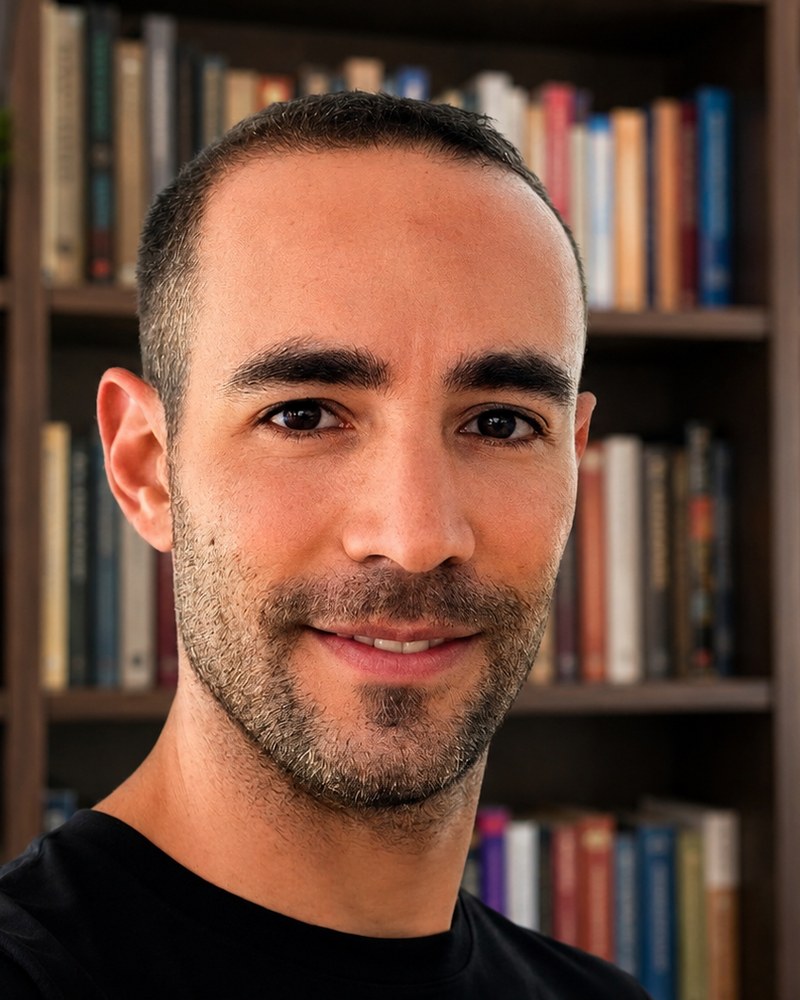
Alex Jinich-Diamant
Psychedelics, contemplative practice, and fasting are physiologically unrelated interventions that nevertheless converge, across cultures and centuries, on a common experiential endpoint: the mystical state. Here I propose that this convergence reflects shared disruption of a single computational architecture, the precision-weighted predictive hierarchy, through three mechanistically distinct but functionally convergent routes. Serotonergic psychedelics sensitize layer 5 pyramidal neurons and disinhibit higher-order thalamic nuclei, relaxing the gain on top-down priors; open-monitoring meditation shifts thalamocortical coupling geometry toward diffuse, matrix-type connectivity, elevating cortical entropy; and caloric restriction attenuates the metabolic machinery sustaining high-level attractor states, destabilizing the default mode network from below. All three routes terminate in a transient near-critical regime characterized by relaxed priors, scale-free cortical dynamics, and expanded degrees of freedom in the brain's generative model, conditions I identify as the neurobiological substrate of mystical experience. Critically, the depth of this state, not its pharmacological or procedural occasion, is the primary predictor of lasting therapeutic benefit, implicating conscious experience itself as the mechanistic agent of change. I further argue that near-critical dynamics may constitute the conditions under which field-theoretic and quantum-coherent contributions to consciousness become empirically detectable. This theoretical framework generates empirically falsifiable predictions across molecular, circuit, and phenomenological levels, contributing to positioning the neuroscience of mystical states as a tractable frontier for understanding how the brain constructs, maintains, and fundamentally reorganizes its model of reality.
Alex Jinich-Diamant, PhD, is a Mexican neuroscientist and anthropologist in the department of anesthesiology at UC San Diego. He combines neuroimaging, molecular biology, and ethnographic/phenomenological research to deepen our understanding of the biology of belief, the mind-body connection, and altered states of consciousness. He has presented his research at the Society for Neuroscience and International Society for Contemplative Research, and his most recent publication in Communications Biology has over 160K accesses. He holds a M.S. and a Ph.D. in Cognitive Science from UC San Diego and an honors bachelors from Columbia University.