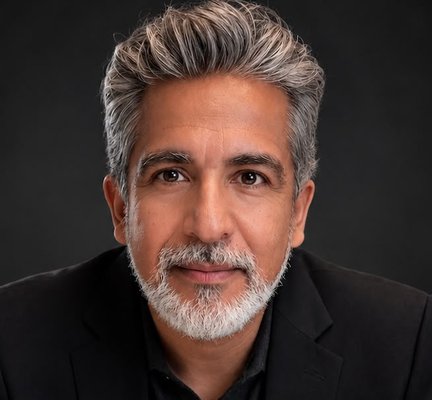
Alfredo López Parra
Dominant theories of consciousness — Global Neuronal Workspace, Integrated Information Theory, and Predictive Processing — share a common omission: they treat the body's autonomic regulatory state as background noise rather than as a computational parameter. Emergent Flow Theory (EFT) proposes a formal correction. EFT posits that autonomic coherence (γ), indexed by HRV/RMSSD, functions as a gain parameter modulating the probability of conscious integration across nested temporal windows: ΔTi (~50–200 ms, vagal-brainstem proto-self encoding), ΔTp (~200–500 ms, global ignition and P3b), and ΔTf (~500 ms–3 s, narrative binding via theta-gamma phase-amplitude coupling). This architecture is formalized in a published dynamic equation (Parra, 2026; Frontiers in Integrative Neuroscience; DOI: 10.3389/fnint.2026.1772467). A critical pre-neural domain (ΔTv) — encompassing allostatic and epigenetic conditioning, DeltaFosB-mediated synaptic scaling, and slow-wave sleep calibration of baseline γ — sets the gain state before any perceptual cycle begins. This layer converges with Michael Levin's framework of bioelectric signaling as a computational substrate for organismal intelligence: both proposals assert that body-wide, non-synaptic signaling defines the boundary conditions for higher-order cognitive integration. EFT provides a measurable temporal formalization of this interface. EFT generates two falsifiable predictions. P1: HRV and perturbational complexity index (PCIst) should covary with a sigmoidal profile across neuromodulatory interventions. P2: transcutaneous vagus nerve stimulation should increase P3b amplitude and gamma synchrony within the ΔTp window, moderated by baseline HRV — testable with existing TMS-EEG protocols. An exploratory multimodal feasibility study (N=1, 32 weeks) identified candidate biomarkers and refined measurement protocols via resting-state fMRI and EEG pre/post neuromodulation. Controlled replication is the next phase. EFT does not replace existing theories — it operationalizes the autonomic precondition that current frameworks leave implicit, opening a tractable bridge between cellular bioelectricity, autonomic regulation, and the temporal architecture of conscious experience.
Alfredo López Parra is a neurosurgeon, psychologist, and independent consciousness researcher based in Mexico City. He holds a medical degree and neurosurgery training from UNAM (2006) with subspecialties in spine, stereotaxy, and neuromodulation, plus a diplomado in neuromodulation. He is the creator of Emergent Flow Theory (EFT), a temporal-autonomic framework proposing that autonomic coherence functions as a gain parameter for conscious integration. His first EFT paper was published in Frontiers in Integrative Neuroscience (2026). He presented EFT at ASSC 2026 in Santiago de Chile.