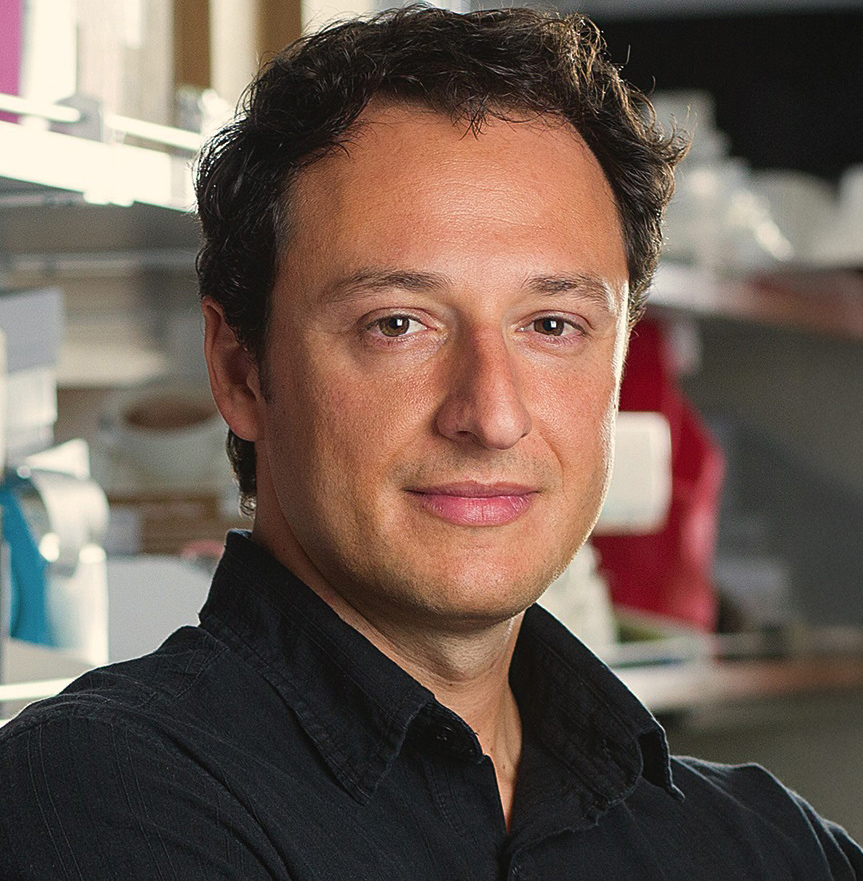
Alysson Muotri
The emergence of consciousness remains one of the greatest unresolved questions in neuroscience. Traditional animal models and conventional cell cultures have provided important insights into neural development, yet they are limited in their ability to model uniquely human aspects of cognition and network complexity. Human brain organoids provide a transformative platform for investigating the biological foundations of consciousness by enabling the study of self-organizing human neural networks in vitro. Derived from induced pluripotent stem cells (iPSCs), brain organoids recapitulate key features of early cortical development, including neuronal diversification, synaptogenesis, oscillatory activity, and synchronized network behavior. Over time, these systems exhibit increasingly coordinated electrophysiological signatures resembling stages of human neurodevelopment, offering an unprecedented opportunity to study how complex neural dynamics emerge. Unlike reductionist neuronal cultures, organoids enable investigation of integrated network states and adaptive information processing driven by human-specific developmental programs. A major advance in this field has been the integration of bioelectronic interfaces with living organoid networks. Dr. Muotri’s laboratory has pioneered the use of graphene-based microelectrode systems, including the GraMOS platform, to achieve high-resolution recording and bidirectional neuromodulation of organoid circuits. GraMOS enables continuous monitoring of neural activity while delivering controlled stimulation patterns that can shape activity-dependent maturation and plasticity. This approach provides a foundation for experimentally probing how external modulation influences synchronization, information integration, and emergent network states associated with higher-order neural processing. Building on these technologies, closed-loop learning systems offer a new paradigm for studying adaptive behavior in human neural tissue. By coupling real-time electrophysiological recordings from organoids to artificial intelligence-driven feedback systems, organoid networks can be trained using reinforcement-based paradigms that reward specific activity patterns. These adaptive architectures enable direct investigation of how human neural circuits learn, reorganize, and encode information in response to environmental stimuli. The incorporation of psychedelic compounds further expands this experimental framework by enabling direct modulation of neural plasticity. Psychedelics such as psilocybin are known to alter network connectivity and promote critical-period-like plasticity in the human brain. In organoid systems, these compounds can be used to investigate how altered neuromodulatory states reshape neural dynamics and enhance adaptive capacity. Together, these converging technologies establish human brain organoids as a next-generation platform for studying the emergence of consciousness. By integrating stem cell-derived neural systems, advanced bioelectronics, adaptive machine learning interfaces, and pharmacological modulation of plasticity, this framework enables direct experimental interrogation of how complex neural activity emerges and adapts in human-specific tissue. Beyond advancing fundamental neuroscience, this work may provide transformative insights into neurodevelopmental disorders, brain-machine interfaces, and biologically inspired artificial intelligence.
Dr. Muotri is a professor at the Departments of Pediatrics and Cellular & Molecular Medicine at UC San Diego. He is also the Director of the Sanford Stem Cell Education and Integrated Space Stem Cell Orbital Research (ISSCOR), the Director of the Archealization Center (ArchC), and Associate Director for the Center for Academic Research & Training in Antropogeny (CARTA). Dr. Muotri earned a BSc in Biological Sciences from the State University of Campinas in 1995 and a Ph.D. in Genetics from the University of São Paulo, Brazil, in 2001. He moved to the Salk Institute as a Pew Latin America Fellow in 2002 for postdoctoral training in neuroscience and stem cell biology. His research focuses on brain evolution and modeling neurological diseases using human induced pluripotent stem cells and brain organoids. He has received several awards, including the prestigious NIH Director’s New Innovator Award, NARSAD, Emerald Foundation Young Investigator Award, Surugadai Award, Rock Star of Innovation, NIH EUREKA Award, and two Telly Awards for Excellence in Science Communication, among several others.