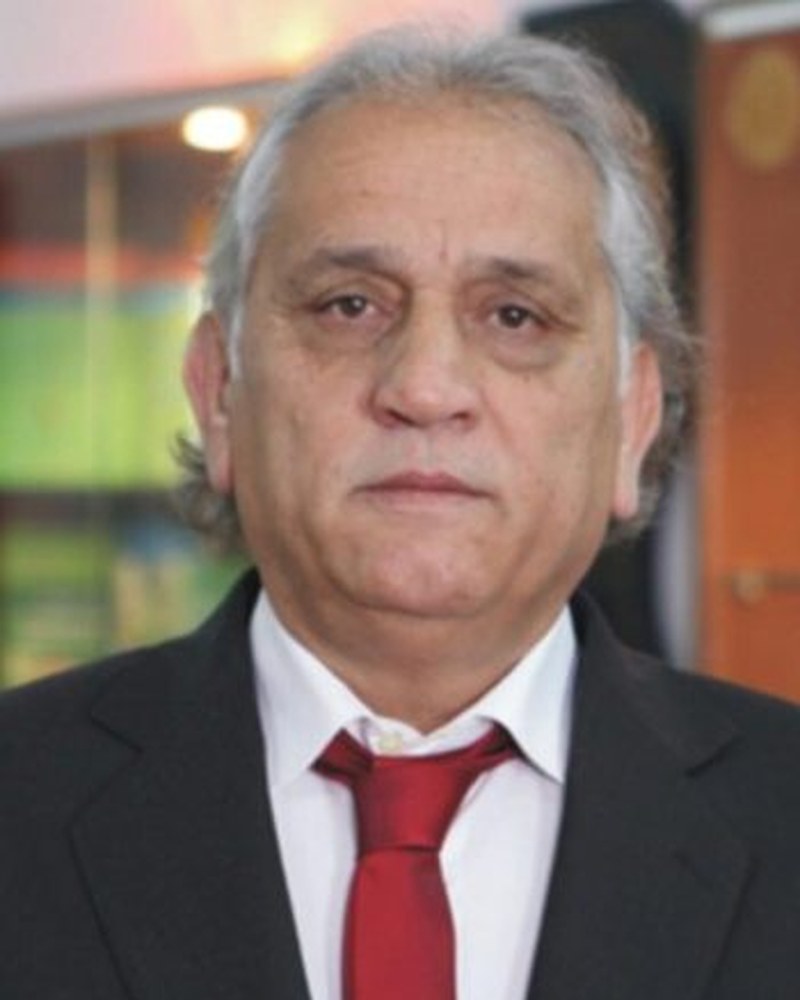
Apostol Vaso
“Let no one ignorant of geometry enter here.” This study proceeds from Aristotle’s philosophy of objects of thought and perception, in an attempt to understand Soul through the precise verification of geometrical solution of squaring the circle and the discovery of a “mean proportion”. In this framework, the law of life is considered object of thought and prior to matter. The principle is that “God eternally geometrizes.” Since God geometrizes, the fundamental law of creation consists in the Chaos of Myth. Chaos, in our interpretation, constitutes the community of gods equidistant from the geometrical Law of the Creator. According to Aristotle, “ὁ θεὸς ζῷόν ἐστιν ἀλλ' οὐκ ἔστιν βίον” God is alive in His eternal Reality. This perspective yields two distinct realities: the metaphysical reality of thought and the physical reality perceived through the senses, as Xenophanes described God as a sentient Being without organs of sense. At the origin stands Myth, Aristotle’s living God — eternal actuality and thought thinking itself (Metaphysics Λ). From this divine source flows Love, understood as the fundamental logos of equidistance within the living system. Through Love, Myth generates alive Chaos. This is the metaphysical Circle: a perfect, self-defining form rather than formless void. In this Circle, the center (Myth) maintains perfect equidistance toward all creations. The chords in this Circle, however, introduce geometrical structures of inequidistance. Within this living Circle, the Euclidean point functions as an object of thought possessing inherent duality. When positioned upon the diameter, it participates in the equidistance of Love, representing the status of unity, rest, and ariston (the best). When situated upon a chord, it departs from equidistance, introducing difference, rhythm, order, position, length and motion: the domain of telion (completion, associated with the square). The intersection of diameter and chords marks the Earlier Perfect Realization in rest serving as the common center of squaring the circle, demonstrating with geometric precision the perfect living Circle with its completed realization in the square: the mean proportion arising from the commensurability(of the ratio from the circle and square) between diameter and chords, as rigorously developed in the first four definitions of Euclid’s Elements, Book X. In relation to the endless chords, the Earlier Perfect Realization generates a second circle (βίον). Euclid serves as the divine key that decodes Aristotle (Ariston + Telion) geometrically. This demonstration does not replace the metaphysical Circle of Love but serves as its sensible image, showing how the soul emerges as a conscious Compound (mikton), in which dunamis becomes energeia. In circular motion, “like is affected by like” manifests as matter and as Compound “like knows like,” (βίον) grounding consciousness in the registration of changes in rhythm, order, and position, as well as in the awareness of inequidistance. The perfect thereby knows the imperfect; the primordial Circle comprehends every second circle. This constitutes the conscious compound and the source of unified sensation. “Gnothi seauton” — Know thyself.
Dr. Apostol Vaso is an Albanian physician, anesthesiologist, pain specialist, and clinical researcher with more than four decades of experience in chronic pain medicine. His research on phantom limb pain has contributed to neuroscience and pain medicine by emphasizing the role of peripheral nervous system mechanisms, including peripheral nerves and dorsal root ganglia, in phenomena that had often been interpreted primarily through cortical or psychological models.
His clinical work has been based on direct observation of patients with phantom limb pain and other complex chronic pain syndromes, combined with targeted interventional pain procedures. In particular, he has investigated how peripheral and paravertebral interventions may immediately modify phantom limb pain, phantom sensation, posture, and body perception. These clinical observations led him to study phantom sensation as a broader phenomenon: not only as pain after amputation, but as evidence of how the body persists in consciousness despite sensory absence, distortion, or reorganization.
His theoretical work, including Da Vinci’s Vitruvian Man, the Perceivable, the Unperceivable and the Phantom Sensation, extends this inquiry from clinical amputation to the symbolic, geometrical, and mathematical body. Through the idea of “theoretical amputation,” he explores how a body part may be absent, hidden, or unperceived within bodily representation while remaining present in sensation, imagination, and consciousness.
Dr. Vaso’s recent presentations have connected phantom sensation with hunger and thirst, posture according to Kendall, and Aristotelian concepts of imagination. His proposed oral presentation aims to bring a clinically grounded perspective to consciousness studies, linking phantom sensation, peripheral neurophysiology, body representation, posture, and embodied self-awareness.