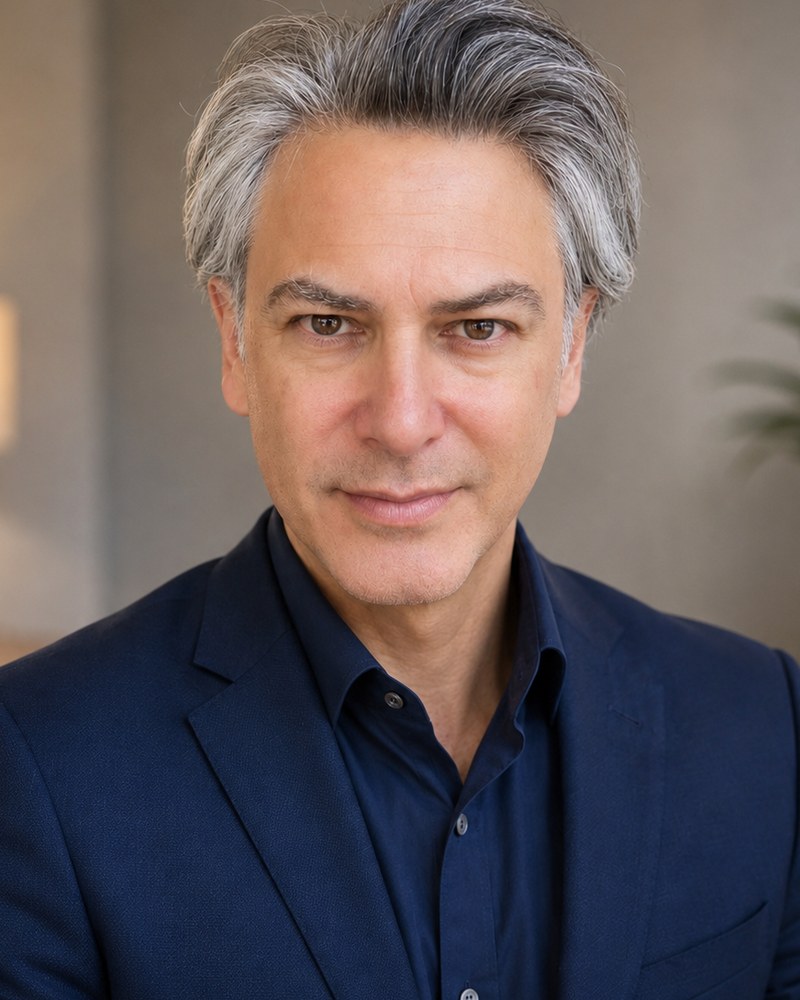
Arik Shimansky
This paper proposes that consciousness emerges as an evolutionary response to a temporal coordination constraint driven by umwelt information content (UIC): the information-processing demand imposed on an organism by its ecological niche, as filtered through its sensory biology. The term umwelt is used in the tradition of von Uexküll to denote the organism's species-specific perceptual world. We introduce a quantitative index computed from three independently measurable parameters: sensory dimensionality, environmental state-space cardinality, and temporal resolution. As UIC increases across phylogeny, neural architectures deepen, and the time required for global integration (T_R) approaches the time available for adaptive response (T_E). When this gap becomes sufficiently large to threaten survival, subjective valence emerges as a pre-reflective signal that is understood here in a functional rather than phenomenological sense. Its role is to initiate action without waiting for complete hierarchical processing. As UIC continues to increase, valence alone can no longer resolve the gap, and reflexive consciousness emerges as the organism's capacity to model itself in relation to its world. Preliminary cross-species data correlating UIC scores with neural complexity metrics are presented as corroborating evidence for this progression; the temporal threshold mechanism is offered as a testable prediction rather than an established finding. The framework provides a principled basis for inferring the likelihood of reflexive consciousness in any organism from independently measurable properties of its sensory biology, ecological niche, and neural architecture. Current theories do not offer a unified approach that can infer this. The temporal coordination constraint is substrate-independent in the sense that the formal conditions do not themselves specify a physical medium; however, valence and reflexive consciousness are here proposed to emerge only in systems subject to evolutionary selection pressure, since it is survival demand that constitutes the relevant threshold condition. The hard problem is reframed within this account as a threshold question that asks under what conditions subjective experience arises, rather than an origin question about why any physical process gives rise to experience at all. The framework is compatible with physicalist and non-physicalist accounts, including protopanpsychist positions, without requiring commitment to any particular metaphysical stance.
Arik Shimansky is an independent researcher based in Lisbon. He holds an MSc in Quantum Chemistry from the University of the Witwatersrand and a BSc in Mathematics and Physics from the Hebrew University of Jerusalem. Following a twenty-five-year career in institutional finance — including Director roles at Citi London and Managing Partner at Capital International — he now works at the intersection of sensory ecology, neuroscience, and information theory.
His research examines how environmental information-processing constraints shape the evolutionary emergence of valence and reflexive consciousness. He is developing a framework that links sensory dimensionality and temporal coordination demands to neural architecture, treating the temporal gap between integration time and response time as the threshold condition for consciousness. He presented "Do Scallops Feel Pain?" at The Science of Consciousness conference in Taormina (2023). His current work extends this framework toward substrate-independent models with potential application to the evaluation and design of conscious computer systems.