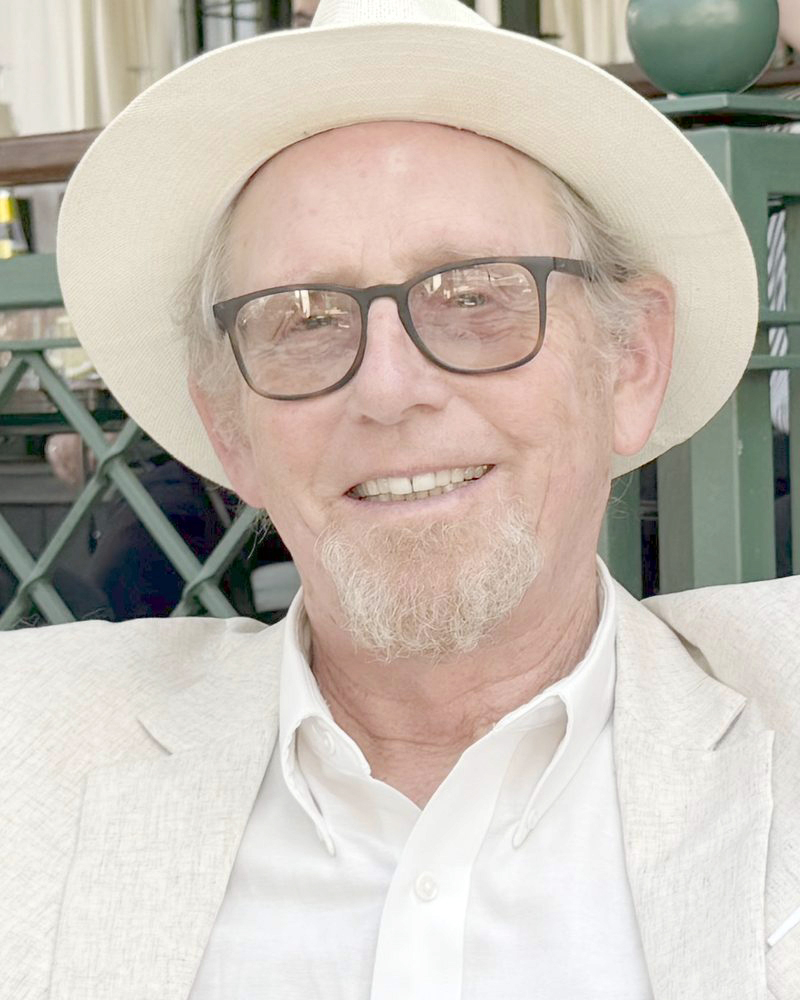
Christopher Tyler
To start with a definition, the focus of this analysis is on phenomenal consciousness, the direct experience of waking life that occurs when accessing information from some source in the brain, usually with an external referent in the world (intentionality). However, the primary experiential sources of consciousness in the brain are pleasure, pain and neutral experiences like the eigengrau seen with closed eyes, which are inherently non-referential in nature. Although they may be associated with a causal referent (e.g., a pain caused by the prick of a pin), these qualia are experienced as intrinsic to our mental space, not as referential images of anything external. This observation disposes of the concept that consciousness is inherently referential (the intentionality debate); it is sui generis. However, most experiences of life have, in fact, the dual nature of being both a) referenced to objects in the external world but also b) transformable with detached scrutiny to a non-referential quality of being experienced as an internal sui generis sensation comparable with eigengrau. This analysis should be placed in the context of the triune concept of consciousness of Tyler (2024). For referential elements of experience, there must be three substrates: a) a domain-specific experiential substrate, b) a referential substrate of the source of the experience in the external world, and c) the substrate of the Cartesian ‘I’ or the experiencer of these conscious qualia. In a group survey, most participants reported that eigengrau with closed eyes was experienced as being somewhere near the front of their head, not in the outside world, but at a different cerebral location from the ‘I’ of themselves, which was experienced near the back of their head, and which was reported as a formless vantage point. This location probe confirmed the triune concept of: the experience per se, the situating world, and the experiencing self, raising the question of the neural basis of each aspect. There is ample evidence that the substrate of the CONTENT of consciousness is largely in cortical sensory and association areas; the substrate of the SITUATING WORLD to which the experience is projected is the posterior medial cortex of the pre-cuneus, the retrosplenial area, and the hippocampal structures such as the “parahippocampal place area (PPA)”, and the functions of the SELF have long been associated with the pre-frontal cortex, since the days of frontal lobotomies that destroyed the capability of self-reflection, personal identity or willful action. But, although lesions in each of these areas delete its functional role from conscious experience, they did not remove the experiential aspect of phenomenal awareness itself, for which four main subcortical brain structures have been proposed: the brainstem reticular activating system (RAS), the claustrum, the representational cortex for each particular experience, and the pre-frontal cortex as the broadcast center of the theatre of consciousness. Evidence will be presented for a new proposal that its substrate is the central column of interstitial nuclei, from brainstem RAS through the interstitial thalamic and internal capsule nuclei to the claustrum.
PhD, DSc in Neurocommunication, Psychophysics and Neuroscience of human visual processing, participant in the Tuscon II conference on the Science of Consciousness.