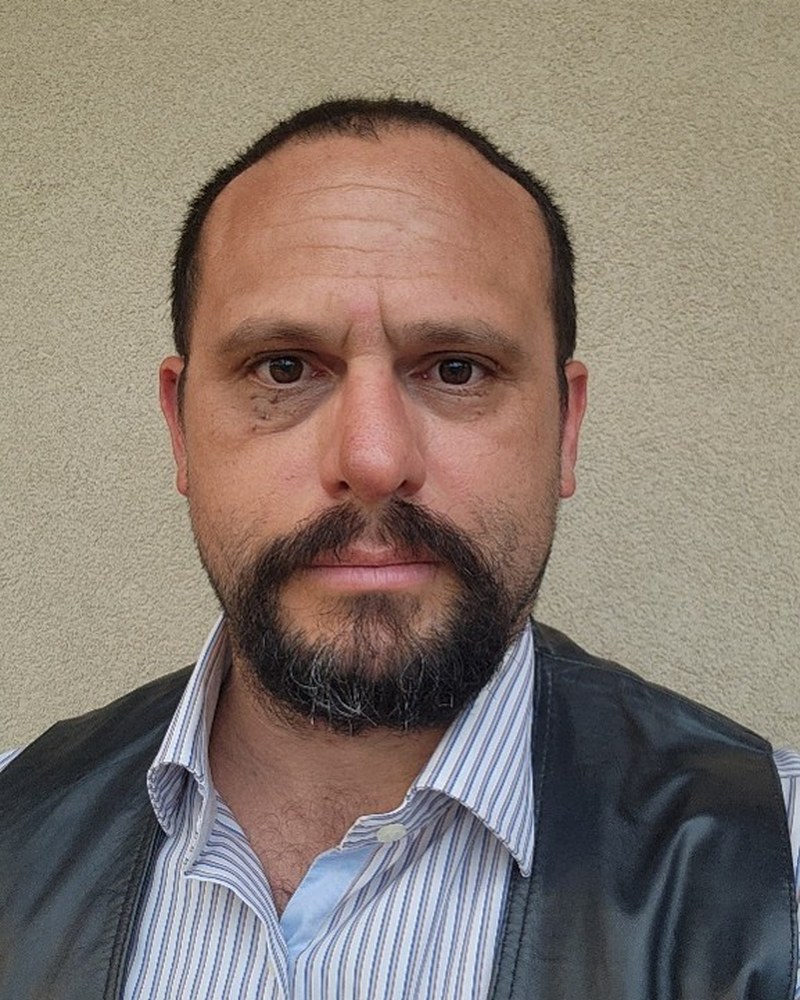
David Mascarenas
This work lays out a framework for artificial conscience engineering that leverages Thomistic/Aristotelian metaphysics frameworks, with Llullian ideas on rigorous mechanical computation over metaphysical concepts and probabilistic frameworks that have emerged to analyze morality and ethics under uncertainty. The concepts of consciousness and conscience have traditionally been recognized to go hand-in-hand. In particular, beings with rational consciousness have generally been considered to be personally responsible for their actions. As a result, Judaism and Christianity have recognized that conscience is one of the first and most fundamental cognitive process that humans exercise and actively should be formed to result in the development of a moral and ethical human being capable of engaging in healthy relationships with other persons. Therefore, as we increasingly develop artificial intelligence systems that increasingly approximate rational consciousness, it is imperative that we likewise develop approaches to artificial conscience engineering so these systems can operate in harmony with human people and the environment. The work of Aristotle and Thomas Acquinas on metaphysics and ethics offer a particularly intriguing path to enabling artificial conscience engineering. Thomistic spirituality relies on the coherent cooperation of faith, natural reason, virtue and grace to come into personal relationship with ultimate Truth and good. Thomistic spirituality does not tolerate contradiction, and it assumes the fundamental metaphysical and moral first principles do not change across time and space. Raymund Llull introduced the concept of mechanized reasoning over semantic primitives. The wholistic, rationalist, non-contradictory nature of Thomistic spirituality make it highly amenable to mechanized deployment and evaluation at scale using emerging information technology to aid moral/ethical reasoning for individuals, communities and artificial agents. In recent years a number of technologies have arisen that open up very interesting opportunities to encode significant elements of Thomistic spirituality into forms suitable for autonomous computation and highly trusted databases/networking. These technologies include semantic web tools (e.g., formal taxonomies and ontologies), reasoning engines (e.g., Pellet, Lean4), cryptography/blockchain (e.g., cryptocurrencies, non-fungible tokens, smart contracts, interplanetary file system), and information provenance technologies such as physically unclonable functions (PUFs). We are at a unique point in history where old arguments against the possibility of mechanization of reasoning are increasingly irrelevant in the face of the statistical reasoning offered by large language models (LLMs) and the formal reasoning offered by proof assistants. At this time encoding structured Thomistic metaphysics in a form that is amenable to mechanical reasoning, in an explainable, formal/rigorous manner, would be highly fruitful. The foundation of computational Thomistic-Llullianism is built on a formal ontology of Thomistic spirituality that is amenable to being queried by formal reasoning engines. These ontologies will then facilitate performing rigorous moral reasoning. Once the technical infrastructure for Thomistic spirituality is realized a number of psycho-spiritual applications can be enabled. These include the ability to perform artificial conscience engineering for AI alignment, and an architecture for enabling truth-based communal governance.
David Mascareñas founded the Institute for Computational Theology LLC (ICT) in the summer of 2025 with the intention of developing tools for enabling veridic artificial superintelligence. The Institute leverages Christian theology with advances in technical/scientific fields including theoretical computer science, cryptography, quantum mechanics, control theory, neuroscience, biology, robotics and cyber security to enable advances in theology, science and engineering. This work is inspired by the long Christian tradition for information authentication and computation (e.g., lead seals, fisherman’s ring, Devil’s Advocate, noosphere). The Institute is particularly interested in developing a complete, blockchain-backed compendium of the magisterium of the Catholic Church, and formal ontologies of the magisterium of the Catholic Church that are compatible with reasoning engines and learning-based artificial intelligence architectures. These tools will be rigorously tested against benchmarks for accuracy with the additional goal of being interpretable. The Institute plans to use this infrastructure to develop a variety of tools including trustworthy/explainable Catholic question and answering, Catholic artificial conscience for agentic AI, blockchain-based tools for verifiable knowledge transfer. The Institute is highly interested in developing educational media in order to disseminate this school of thought and encourage the adoption of a theoretical computer science perspective in theology. David was the primary author of the white paper, “The Catholic Church & Blockchain Technologies,” published by the Catholic Crypto Network. David has a bachelor’s degree in mechanical engineering and a master’s/PhD in structural engineering. He has extensive prior experience in signal/image/video processing, automation, neuromorphic engineering, embedded sensor networks and aerial robotics.