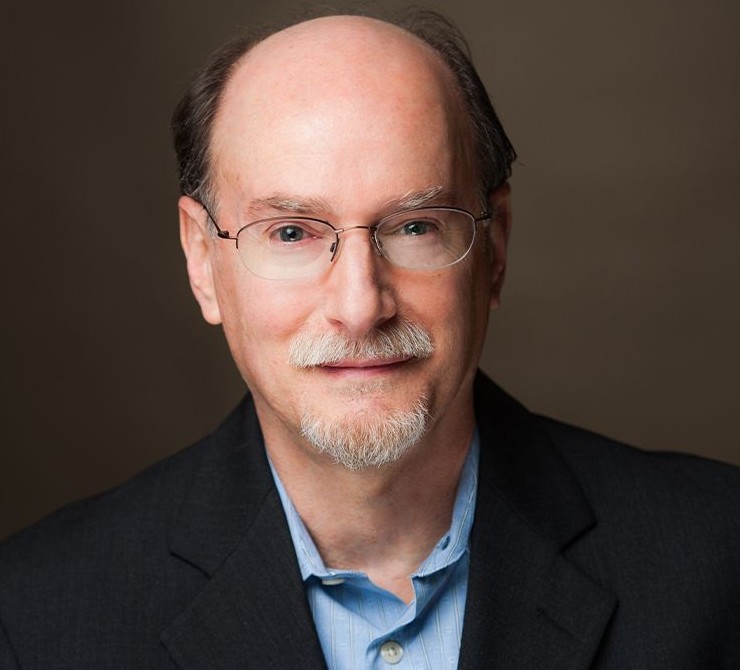
Dean Radin
The role of observation in quantum mechanics remains one of the most persistent open questions in science. From the earliest formulations of quantum theory, it was clear that measurement plays a special role, yet precisely what that role entails is still debated. One of the more provocative ideas, associated with proposals by von Neumann and others, is that conscious observation is required to collapse the quantum wavefunction. While this idea has long occupied a marginal position in physics, it continues to attract serious interest at the intersection of quantum theory, philosophy of mind, and consciousness studies. Of greater importance, the idea is testable. The title of this talk reflects both the unconventional status of the consciousness-collapse hypothesis and the fact that many of the relevant experiments have involved conscious modification of interference fringes in quantum optical systems. In this talk, I review experimental efforts that have explicitly or implicitly tested observer-dependent collapse. Although the experiments differ widely in methods and interpretations, and their results have evoked vigorous debate, they collectively form a body of empirical work reported by 10 laboratories. These results are not uniformly accepted, but they are also not easily dismissed, and they point toward an interpretation that mainstream physics has studiously avoided for decades.
Dean Radin is Chief Scientist at the Institute of Noetic Sciences (IONS), Associated Distinguished Professor at the California Institute of Integral Studies, and cofounder and chairman of the neuroengineering company, Cognigenics. He earned a BS in electrical engineering with honors in physics from the University of Massachusetts, Amherst, and an MS in electrical engineering and a PhD in psychology from the University of Illinois, Urbana-Champaign. In 2022 he was awarded an Honorary DSc from the Swami Vivekananda University in Bangalore, India.
Before joining the IONS research staff in 2001, Radin worked at AT&T Bell Labs, Princeton University, University of Edinburgh, and SRI International. He has given over 850 talks and interviews at university, government, industrial, and popular venues, is co-inventor on 14 patents or patents-pending, and is author or coauthor of 350+ scientific and popular articles, book chapters, and five award-winning books translated into 16 foreign languages: The Conscious Universe (1997), Entangled Minds (2006), Supernormal (2013), Real Magic (2018), and The Science of Magic (2025).