Derwin Pritchett
The nature of consciousness has always been intertwined with our sense of identity, both of which we will explore through the lens of Cartesianism. In this article, I strive to establish an approach for human beings to seize control of their identity and their free will through a true and practical definition of common sense. This is an extension of the framework originally presented in Nous: The Common Sense of Humanity, designed to be prescriptive and to outline a path toward a collective consciousness. The article culminates in a proposed methodology for increasing the consciousness of human beings by objectively measuring and enhancing transient hypofrontality, otherwise known as the “flow state”. In the proposed methodology, I seek to optimize the flow state of (everyday) individuals by using Nousian Ethics to interpret the subjective challenges and skills that determine the quality of human experience. Common sense, by (my) definition, helps individuals navigate the open normative order of our increasingly digital society to better locate their life of meaning (ikigai), thereby precipitating time spent in the flow state. Just like most endeavors in life, living as a human being takes practice; there isn’t a single skill or task we perform that isn’t first learned. Therefore, the aggregate performance of all human tasks can also be classified as a skill: the skill of how to live (well). Qualification and quantification of the skill of ‘living well’— which for our case is inseparable from happiness— is the only thing standing in the way of uniting humanity. In other words, we are attempting to heuristically and empirically define what it means to be a “good person”. There is a spectrum of human experience which describes how well we live— from nihilism to eudaimonia— and which can be directly correlated with how good of a person we are. Creating a system for widespread conscientious self-development requires a clear structural approach and goalposts; if effective, it will enable us to become better people and better (insert functional role/skill category here. E.g., plumbers, therapists, stonemasons, communicators etc.) by extension. All qualities and characteristics we possess flow from our humanity— as nothing that exists by nature is habituated to be other than it is— so improving our humanity will intrinsically improve other facets of our lives. All that’s left is to do the work. It is my thesis that by studying various levels of eminence, an AI agent capable of augmenting our human intelligence(s) can be built which allows each person, and society as a whole, to maximize their true (skill) potentials to reach happiness. My goal is to convince readers to believe, as I do, that it is possible to achieve such internal and societal harmony through a (multimodal) Common Sense AI (CSAI).
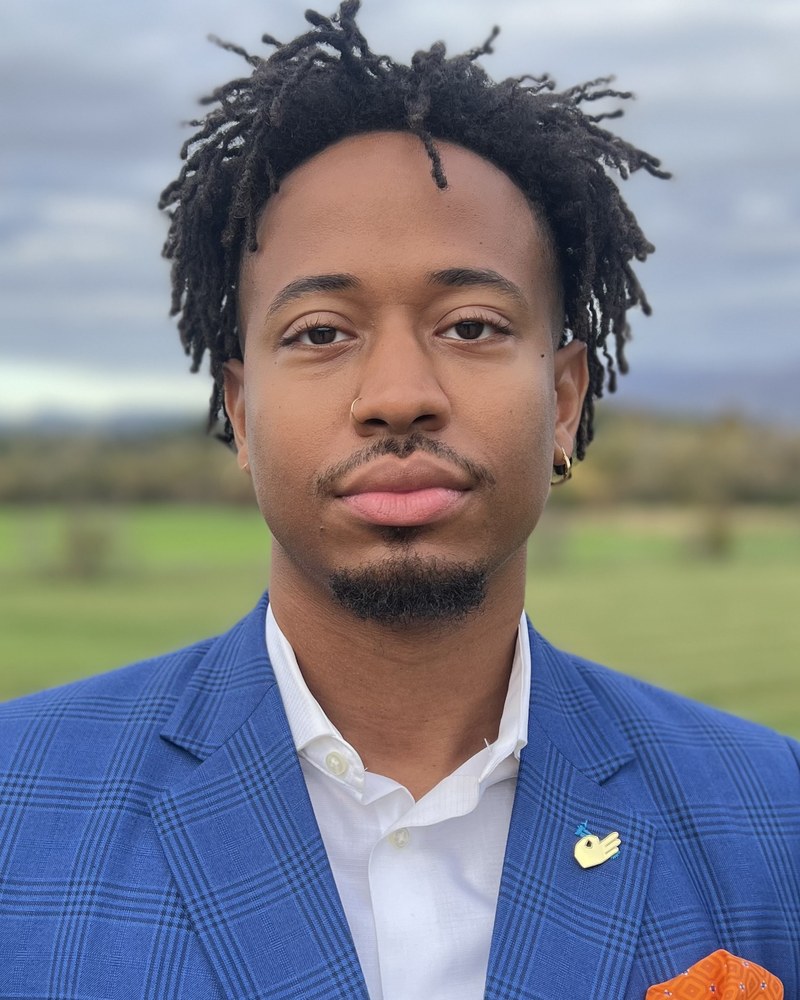
Antione is a native of Baltimore and Prince George's County Maryland with a background in consulting and entrepreneurship. He graduated summa cum laude from the Bowling Green State University Honors College with a B.S. in Business Administration in 2018. His activities since graduating include starting several companies of his own, passing progressive state and local policies in Maryland and Washington D.C., and philanthropically volunteering with his fraternity Kappa Alpha Psi. Antione's areas of interest include the philosophical foundations of physics, the science of consciousness, yoga, contemporary art, socioeconomics and artificial intelligence. He is a 2024 graduate of the Wolfram Summer School Al Philosophy and Strategy track.