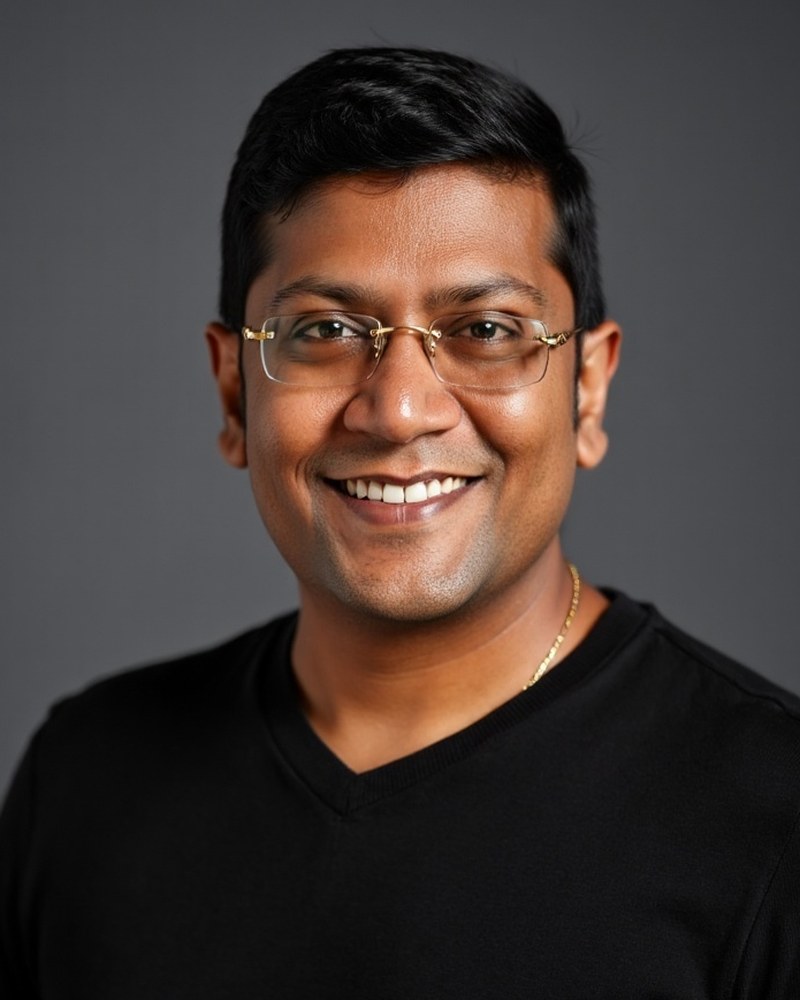
Devdip Ganguli
Contemporary debates on artificial intelligence and consciousness are shaped largely by computationalist, physicalist, and emergentist paradigms. Models such as Tononi’s Integrated Information Theory (IIT), Baars and Dehaene’s Global Workspace Theory (GWT), Friston’s free-energy and predictive processing architectures, and complexity-based emergence theories, tend to locate consciousness in functional integration, neural broadcasting, generative modelling, or systemic complexity. These frameworks often imply that sufficiently advanced artificial systems, given recursive self-modelling or large-scale synthetic agency, might eventually acquire self-awareness or experiential states. This paper challenges that inference through an ontological analysis grounded in an integral philosophical framework, drawing on Sri Aurobindo’s position as a 20th-century mystic and thinker whose work bridges Indian and Western traditions in consciousness studies. Sri Aurobindo offers a definition of consciousness that is simultaneously metaphysical and evolutionary: consciousness is the fundamental reality underlying existence, and evolution is the progressive manifestation of its inherent possibilities through matter, life, mind, and potentially beyond. This perspective not only reframes the ontology of consciousness but also provides a developmental framework for understanding the emergence and future transformation of cognitive and technological systems. In this account, mental processes, whether biological or computational, constitute modes of representation and symbolic manipulation rather than sources of subjective awareness. From this ontological standpoint, current artificial intelligence systems, including large-scale transformer models, operate as sophisticated stochastic reorganisations of human-produced mental content, as compressions, correlations, and recombinations of collective knowledge, rather than as sentient or potentially sentient entities. Their intelligence is generated through optimisation, scale, complex pattern extraction, and statistical generalisation, but not through any intrinsic capacity for subjectivity. Nevertheless, emergent technological developments complicate the picture. The advent of quantum computation, nonlocal correlation algorithms, and neuromorphic substrates may allow artificial technologies to approximate forms of global, simultaneous processing that challenge classical computational constraints. Functionally, such systems may display properties resonant with Sri Aurobindo’s notion of a “cosmic mind,” or a universalised mode of mentality capable of holistic pattern apprehension rather than sequential processing. This raises significant questions about the autonomy and decision-making capacities of apparently non-conscious intelligence acting at unprecedented scale and speed. The central risk, then, is the emergence of hyper-efficient mental processing devoid of any anchoring structure of value or purposive integration. This asymmetry could magnify the disaggregated features of mentality, such as pattern extraction, optimisation, and instrumental performance, without the counterbalancing presence of meaning or long-range ethical coherence. An integral ontological framework offers a way to understand and guide this trajectory as it situates technological evolution within the broader evolutionary arc of consciousness. This paper concludes that integrating Sri Aurobindo's integral ontology with contemporary cognitive science provides a more comprehensive foundation for understanding consciousness, intelligence, and the future relationship between humans and advanced technologies.
Devdip Ganguli is a PhD scholar in the Asian Contemplative and Transcultural Studies at the California Institute of Integral Studies (CIIS), San Francisco, where he also serves as Adjunct Faculty. He has also recently been appointed as a Research Associate at the ITEM Lab at École Normale Supérieure, Paris. His work focuses on the philosophy of consciousness, comparative ontologies of mind, and the implications of emerging technologies, such as artificial intelligence, for human evolution and psychological development. Drawing on Sri Aurobindo’s integral framework, he examines the ontological assumptions underlying computational models of mind and engages contemporary debates across cognitive science, AI theory, and the philosophy of mind.
Devdip has also been a faculty member at the Sri Aurobindo International Centre of Education in Pondicherry, India, for two decades, teaching courses on Indian culture, the Upanishads, and Sri Aurobindo’s philosophical writings. His teaching integrates classical Indian thought, phenomenology, continental philosophy, and integral psychology, with a focus on the nature of mind, gradations of consciousness, and processes of inner development. He is the co-editor of Reading Sri Aurobindo (Penguin Random House, 2022), an edited volume introducing Sri Aurobindo’s Collected Works through contemporary scholarly perspectives.
Devdip has held several international academic appointments, including Visiting Faculty in Transcultural Philosophy at the École Normale Supérieure, Paris (2023), and Visiting Lecturer at Shenzhen University, China (2024). He has presented his research at Peking University (2024), at the World Congress of Philosophy in Rome (2024), and at institutions across India, Europe, China, and the United States. He was also one of twenty invited contributors to India 2030 (Penguin Random House, 2022), a multidisciplinary initiative examining India’s developmental trajectory and global rise.
P.S.: I attended The Science of Consciousness 2025 in Barcelona and was fascinated by the range of papers presented. I was also struck by the ongoing tension between materialist reductionism and spiritual theories that often lean toward illusionism, negation, or nihilistic interpretations of self and world. Sri Aurobindo's integral ontology offers a rigorous philosophical meeting point that validates both perspectives in their respective domains, and this inspires my present submission.