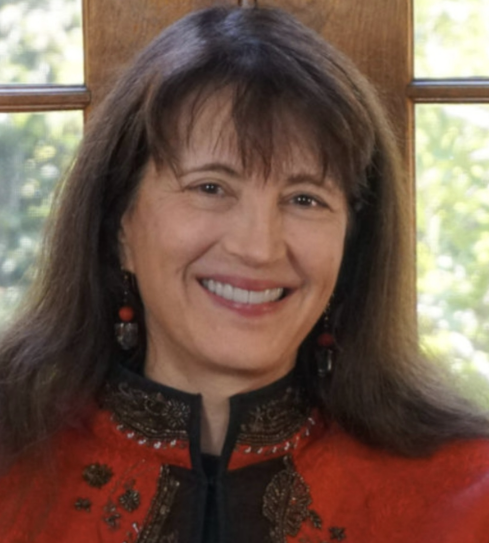
Diane Hennacy Powell
Contemporary neuroscience generally assumes that conscious experience is generated through neural computation that is constrained by hierarchical sensory processing and predictive inference. An alternative possibility is that the brain functions as a transductive filter, regulating access to a broader informational field while shaping perception through selective gating. This talk examines convergent evidence from nonspeaking autism, early blindness, prolonged dark retreat, dreams, and psychedelic journeys to evaluate whether altered access states may reveal a broader reality that is not ordinarily available during consensual waking states. Despite their distinct developmental and physiological origins, these conditions frequently produce overlapping phenomenological reports, including intensified internally coherent imagery, altered self-world boundaries, expanded perceptual awareness, unusual cross-modal integration, and access to structured experiential content often described as hyper-real or ontologically significant. Such consistencies suggest that these states may reflect alterations in neural access rather than unrelated anomalies of perception or cognition. A mechanism is proposed in which variations in thalamocortical gating and inhibitory regulation modulate the degree to which sensory information is filtered before reaching conscious awareness. Under ordinary conditions, adaptive filtering stabilizes perception by constraining informational throughput to behaviorally relevant signals. When these constraints are reduced, reorganized, or developmentally atypical, previously excluded information may become available to conscious processing. This framework offers a unified interpretation of several otherwise disparate findings. In early blindness, cross-modal cortical recruitment expands nonvisual representational capacity beyond canonical sensory specialization. Psychedelic compounds such as dimethyltryptamine are associated with transient disruption of top-down predictive constraint and altered thalamic gating, frequently accompanied by reports of immersive alternate perceptual realities. Extended dark retreats similarly reduce exogenous sensory input, allowing endogenous perceptual phenomena to emerge with unusual vividness and complexity. In nonspeaking autism, atypical sensory gating and reduced cortical filtering also appear to permit forms of perception and information integration inaccessible to those with neurotypical cognitive profiles. Rather than treating these phenomena as pathological deviations or purely hallucinatory artifacts, neural transduction theory (NTT) interprets them as natural examples of altered informational access. If consciousness is filtered rather than produced by neural systems, such states may reflect changes in transductive parameters that expose latent dimensions of experience ordinarily suppressed by adaptive sensory regulation. This model could generate empirically testable predictions regarding thalamic inhibition, oscillatory coherence, cross-network integration, and sensory gating across altered states of consciousness. More broadly, it invites reconsideration of whether ordinary waking awareness reflects the full scope of conscious access or only its most biologically efficient subset.