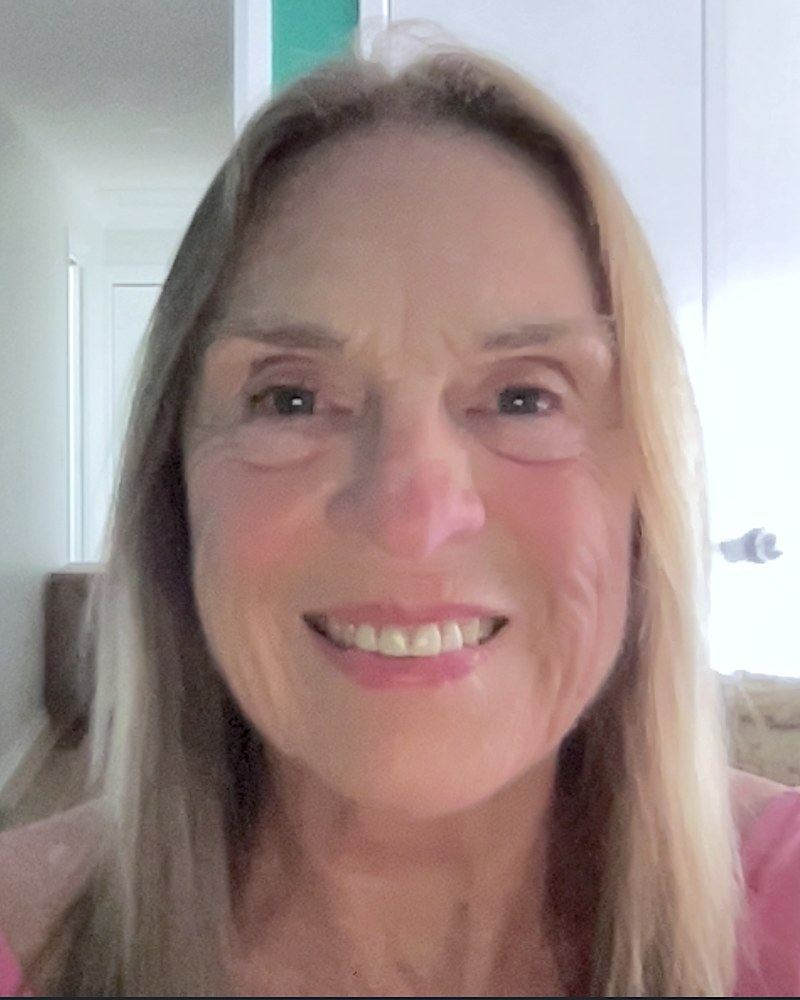
Dianne Trussell
Aim: To examine the interaction of human consciousness in normal and meditative states, physiological and psychological wellbeing, worldview, and the quantum field. Postulate and hypothesis: The ‘randomness’ of the REG represents a homeostasis or harmony of the universal quantum field in which consciousness is fundamental. Aroused mental/emotional states are a deviation from universal harmony and could be revealed as such by the REG. Quantitative assessment of consciousness interacting with the quantum field is amenable to controlled research when panpsychism and subjectivity are built into experimental design. Methods: Psyleron FieldREG was directed by experimenter intention to register conscious states of remote subjects, a method only possible with quantum information panpsychism. Male and female psychologically profiled subjects performed 3 repeats of 10-minute sessions before, during and after meditation or normal activities. BACARQ tested non-materialist worldview. PWB tested psychological wellbeing. Very Low Frequency of Heart Rate Variability (HRV-VLF) was measured by Welltory app. 20 instances of a single participant in various degrees of mood and valence were recorded by the REG. Opus 4.8 calculated absolute area-under-curve (AUC) of REG recordings above and below baseline, and performed statistical analyses. Results: Meditation increased HRV significantly (120%). Non-materialist worldview (BACARQ) and psychological wellbeing (PWB) were strongly positively correlated with each other and with physiological health (HRV). Meditation produced a mean 38% reduction in REG above-baseline (emotionally charged) AUC, a large effect towards ‘baseline hugging’. In contrast below-baseline depressed condition was virtually unaffected by meditation. Highly charged mental/emotional states produced strong upward deviations above the REG baseline. Depressed/anxious states produced downward deviations below the REG baseline. A trend indicated non-materialist worldview may show a bigger REG shift with meditation. Within-subject data was normal but not between-subject data. Discussion: The results indicate that meditation increases physiological health, and reduces mentally or emotionally aroused (disharmonious) states of consciousness at the quantum level. Strong, significant correlations between BACARQ and PWB scores, and between these measures and VLF, suggest that people with a transcendental/non-materialist worldview experience higher psychological wellbeing, and measurably better physiological health. The REG AUC results combined with post-session discussions with subjects indicate that an upwards deviation from baseline represents an excitation or arousal (either positive or negative) while a downwards deviation represents mild depression or anxiety - both being deviations from universal/quantum harmony. Conversely ‘baselining’ (ie. no REG deviation) represents stillness of consciousness and a harmonious alignment with the universal/quantum field. The interactions between psychology, physiology, meditation and the quantum field, and intentional REG ‘tuning’, have profound implications for scientific research methodology and consciousness-correlated human wellbeing. Large individual variation, worldview and selective effects of meditation on REG deviation, must be investigated in the planned full-powered experiment. Two fundamental states of consciousness exist at the quantum level: harmonious or disharmonious with the universal field, and these underpin diverse psychologically, subjectively experienced mental and emotional states. The results support the non-materialist, non-local view of consciousness, ie. ‘Quantum Information Panpsychism’ of Faggin and D’Ariano.
Dianne Trussell’s research background in Australian university medical schools was primarily on gut, urinary, and brain neuroanatomy. Working on prefrontal cortex in 1997 a realization came of the brain as a responsive transducer and modifier rather than the origin of consciousness. She now researches consciousness as a non-local, universal field, and dives into agentic AI as a research support tool. Since 2019 she has presented at the conferences of the SSE and TSC.