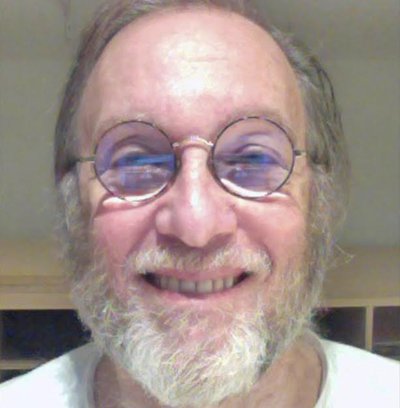
Donald Mender
The science of consciousness is burdened with the baggage of three problematic metaphysical constructs: solipsism (potentially making the Hard Problem moot), zombies, and the self. Physics from time to time has progressed by transforming the apparent insolubility of an era’s key outstanding conundrums into axiomatic “laws of the impossible” (or, per Edmund Whittaker, “postulates of impotence”), thereafter enlisted as starting points for productive new theories. An axiomatized law of the impossible in physics generalizes Popperian falsifiability by fully grounding the essence of a scientific conjecture in a logically necessary modus tollens relationship with experimental implications. It will be argued that the science of consciousness might progress by taking cues from this strategy of physics, i. e. by raising to axiomatic principles the intractable scientific challenges posed by consciousness. Historical instances of apparently insoluble problems raised to axiomatic “laws of the impossible” in physics have included the design of perpetual motion machines dispatched by the second law of thermodynamics, the quantum crisis of determinism dispatched by the uncertainty principle, and the detection of luminiferous ether dispatched by special relativity. Today as in the past, the science of consciousness retains an unaddressed heritage of the three stubborn metaphysical problems listed above. Solipsistic ontology, in the absence of Descartes’ divine rescuer, can be neither proven nor ruled out, with coherence of the Hard Problem hanging in the balance; zombies and other minds cannot be empirically distinguished from one another; self as the first person reference frame “owning” qualia may be deconstructed. It behooves interested parties to consider raising all three of these problems to the level of novel axioms upon which to base a new, scientifically productive metaphysical system. Such a project might endeavor 1) to flesh out experimentally falsifiable implications of relationships a) between solipsistic and realistic perspectives, b) between other minds and mindless others, and c) between first and third person reference frames, and then 2) to maximize generality by identifying superordinate invariances when a), b), and c), with regard to expermentally falsifiable implications, are interchanged. One important warning should inform this sort of undertaking. History is littered with irrational resistance to scientifically justifiable assertions of the impossible, misinterpreted as bad news. The unwelcome insights tend to challenge human illusions of omnipotence that will not go quietly into that good night of obsolescence.
BA Williams College, MD University of Pennsylvania, neurology residency Hospital of the University of Pennsylvania, psychiatry residency Payne Whitney Clinic, EEG fellowship Mayo Clinic, independent theoretical investigator, multiple past TSC posters and concurrent talks. Now retired.