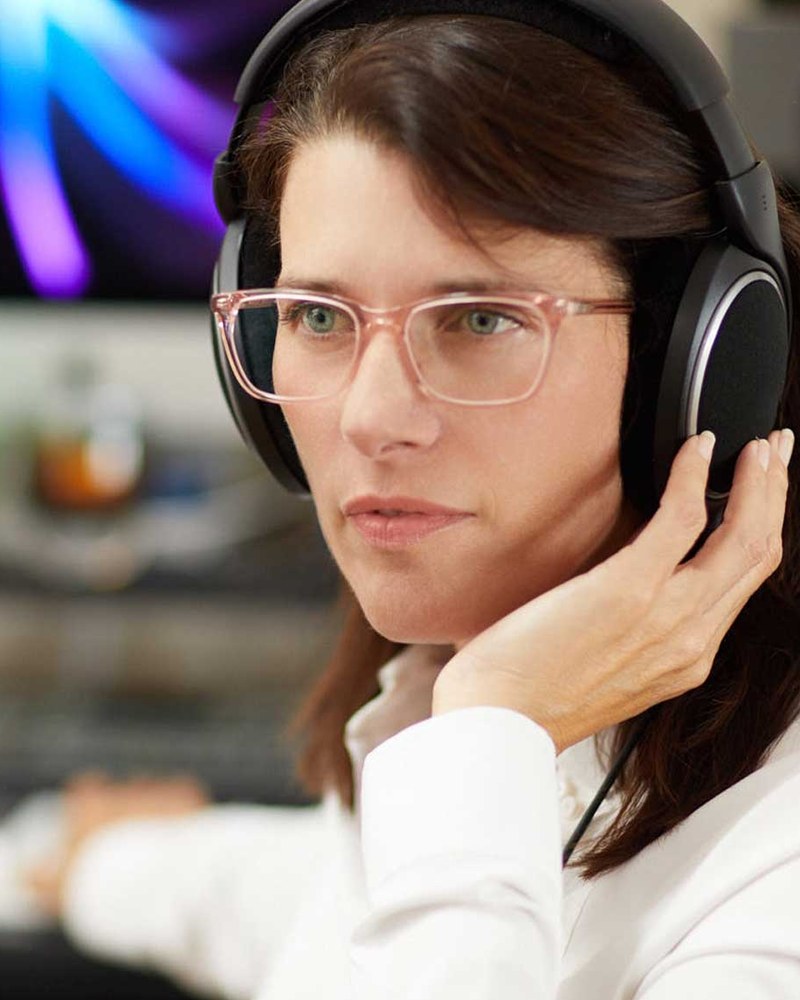
Elizabeth Krasnoff
Humans have long sought to alter their mental states through various cultural practices, specifically through the cross-cultural phenomenon of using rhythmic sound to cause altered states of consciousness (American Psychological Association, 2018; Van Pool, 2009). Sound and Psychedelics are but two spokes on a wheel, whose center point and goal is: altering our states of consciousness. BB result from listening to two different sound frequencies, one in each ear, which cause the perception of one illusory sound. BB have gained status as a new type of “digital drug” due to their potential to alter mood and perception (Aparicio-Terres et al., 2025). The altered states of consciousness induced by rhythmic sounds are usually felt as deep relaxation. The mechanism of the altered states may be explained by entrainment of thalamocortical brain pathways with low-frequency tones—a state that resembles psychedelic experience (Aparicio-Terres et al., 2025). Thalamocortical pathways play an important role in hearing by transmitting sound information from the thalamus to the cerebral cortex of the brain (Winer, 2011; Hackett, 2011). These pathways support the brain in perceiving features of sound including pitch, intensity, and location (Winer, 2011; Hackett, 2011). Psychedelics act primarily through serotonin 5-HT2A receptors, altering communication across cortical networks and between the thalamus and cortex, which can change how sensory information is filtered and integrated. Both psychedelic compounds and rhythmic auditory stimulation can alter conscious experience and neural dynamics through distinct mechanisms, with thalamocortical processing representing a potential point of convergence (Aparicio-Terrés et al., 2025; Preller et al., 2018; Vollenweider & Preller, 2020). If you are curious and would like to experience a binaural beats meditation, please come to a Sound Medicine® Live meditation session during lunch in the Garden Room Monday through Thursday. You can listen to original BB music tracks that I have created in a group setting, choosing Sleep, Relax or Focus as your intention. Alpha theta BB are known to induce relaxation and a heightened mood in listeners (Sharma et al., 2017). Beta-frequency binaural beats have been shown to enhance cognitive performance, including accuracy and processing speed during demanding cognitive tasks (Kim et al., 2024). Delta-frequency binaural beats have been shown to improve sleep maintenance, increasing deep (N3) and REM sleep and reduce nighttime awakenings (Dabiri et al., 2026).You may listen as long as you want, but please note that research shows that BB require stimulation duration of 10 minutes (Colzato et al., 2017; Galvez et al., 2018) although up to 20–30 minutes has been shown to affect perception (Jirakittayakorn & Wongsawat, 2017).
Elizabeth W. Krasnoff, PhD, is a lover of music and sound, and a singer/songwriter, with eight studio albums. She reviewed the transformative effects of sound, in her dissertation "The Effects of Auditory Binaural Beats on Consciousness and the Human Nervous System." She has hearing issues such as deafness, tinnitus and misophonia, resulting in years of personal study of sound, hearing and the human voice. Elizabeth has been published in Frontiers in Human Neuroscience, the Journal for Scientific Exploration, the World Futures Journal, The Society for Consciousness Studies, Journal of Conscious Evolution, Maria Shriver's Sunday Paper, Energy Magazine, and SFYogamag. She has a bi-monthly column in SF Yoga Mag and Energy Magazine. She presents internationally on sound and consciousness at venues such as the Bishops University, Quebec, CAN; Carelton University, Ottawa, CAN; plus Usona Institute; the Tuscon Science of Consciousnes Conference; Yale Divinity School; The Graduate Institute, CIIS, CIHS; the Academy of Intuition; the Globe Sound Healing Conference and JFK University.