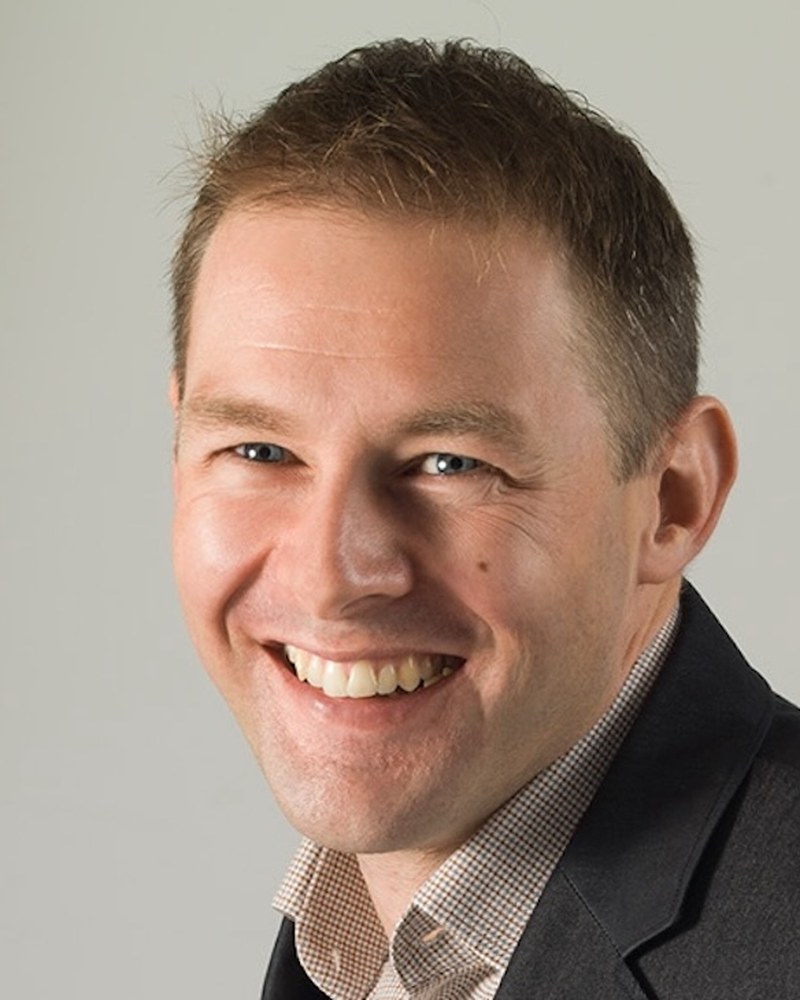
Enej Kuscer
The science of consciousness may rest on the wrong question. The hard problem asks how physical processes generate experience; its persistent resistance suggests the generative premise may be a category error. Negentropic Conscious Field Theory (NCFT) proposes instead that consciousness is a fundamental, field-like feature of reality with which all matter interacts. Physical systems do not create consciousness but couple to and locally disclose it, with the richness and organisation of disclosure set by their structure. NCFT proposes quantum-coherence density as the principal coupling variable: the capacity of a system to sustain integrated quantum indeterminacy across an organised domain. This principle is substrate-general. Neural systems, containing complexly organised aromatic-rich structures, may constitute one highly developed architecture of strong, structured coupling, but are not its prerequisite. Non-neural organisms, cellular collectives and larger integrated systems may form differently organised loci of disclosure. Conscious subjects are coherence domains individuated by integration, not scale. Because integration can superpose across scales rather than partition exclusively, the decombination problem confronting cosmopsychism dissolves: there is no cosmic subject to divide, but an unindividuated ground locally concentrated into bounded perspectives by structure, just as a prism does not make light but gives it local form. Subjects may therefore nest, extending Levin's cognitive light cone into a realist, scale-free ladder. Anaesthesia and fragmentation should reduce integration depth and "detune" the receiver, while psychedelic states may weaken the ordinary ego boundary while producing expansive experience when coherent integration is reorganised across a wider cognitive and phenomenal span. NCFT further proposes that the conscious field is physically non-idle. Familiar fundamental fields each couple through a property of matter and act reciprocally, like gravity to mass-energy or the Higgs to its coupling constant, and in no case does matter source a field that fails to act back. Coherence density is proposed as the conscious field’s coupling variable: a pervasive field whose presence confers a graded character by differential coupling, non-idle without being a force. A rock couples to the conscious field as a nearly-massless particle does to the Higgs; an integrated brain as a heavy one. The theory's mathematical programme seeks a common information geometry for quantum coherence, QFI, quantum formulations of IIT and FEP dynamics. NCFT proposes their unification on a Fisher–Bures-type state-space geometry in which coherence density modifies the effective metric and generates a negentropic gradient toward increasingly integrated organisation — rooted in the information geometry of time, consciousness organising against the thermodynamic arrow as matter complexifies from plasma to mind. NCFT yields empirical constraints rather than depending on one decisive experiment. Phenomenologically distinct forms of ego dissolution should separate by integration depth and domain span; coherence-sensitive measures should explain conscious organisation beyond classical connectivity; and manipulations that expand or contract multiscale integration should alter the boundaries and structure of conscious disclosure. NCFT is offered as a bold but disciplined synthesis: consciousness is fundamental, subjects are nested coherence domains, and biological and physical evolution progressively climb the negentropic gradient of integration; informational without and conscious within, at cosmic scale.
Enej Kuscer, PhD, is a biotechnologist and biotech entrepreneur whose work spans molecular and cellular biology, systems biology, and integrative multiomics applied to computational functional health. He completed doctoral research at the University of Cambridge and has spent his career at the interface of experimental biology and large-scale biological data, treating the living system as an integrated, dynamical whole rather than a list of parts.
His scientific foundation is in the molecular and cellular machinery of life — the pathways, networks, and regulatory logic through which cells maintain themselves — extended, through systems biology and multiomics, into how these components integrate across scales into the coordinated behaviour of tissues, organs, and organisms. In functional and longevity health he has focused on integrating genomic, transcriptomic, proteomic, and metabolomic layers into computational models of the individual: a shift from single markers to the integrated state of the whole system, and from static measurement to the dynamics by which biological order is sustained against entropy.
He is the founder and chief executive of THE NU B.V. (Amsterdam) and co-founder of ACIES BIO (Ljubljana) and COMET (Amsterdam), the latter acquired by a pharmaceutical company. Across these ventures his through-line has been one conviction: that biology is best understood as an integrated, self-organising, information-processing system, and that health, cognition, and life itself are properties of that organisation rather than of any isolated component.
He regards his current work as a continuation rather than a departure: the questions that animate systems biology and multiomics — how integration across scales produces coordinated, self-sustaining wholes — are, pushed to their limit, the same questions the science of consciousness must confront. Negentropic Conscious Field Theory is his independent research programme on that relationship, treating consciousness not as a late biological accident but as a fundamental, field-like feature of reality, disclosed through the same quantum-coherent, integrated organisation that biology builds against the entropic tide. Rooted in the biological sciences and developed outside the academy, it is offered as an open, collaborative synthesis, and he actively seeks critical readers and co-authors in physics, mathematics, and consciousness science to develop and test it.
He approaches the field as a disciplined radical: bold in the ontology he proposes, conservative about what he claims to have settled, and committed to pairing ambitious hypotheses with explicit falsification conditions.