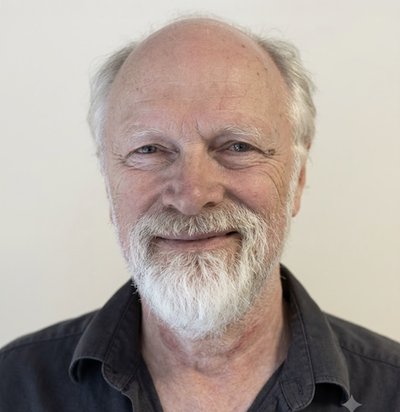
Eric Halgren
The cerebral cortex integrates processed sensory information from all modalities, current and recent events, strategies, constraints, values, and objectives, to arrive at a coherent mental experience including intentional actions. This integration is central to the physical manifestation of the conscious mind, but currently proposed neurophysiological mechanisms are highly speculative, functionally inadequate, and/or logically flawed. Using extensive micro- and macro-array recordings of local field potentials and large numbers of single units in thinking humans we recently discovered a possible mechanism for the synchronous integration of association cortex (and related limbic areas) across all lobes and both hemispheres: a network of zero-lag phase-locked ~100ms long ~90Hz oscillations connected as coupled oscillators. Such ‘co-ripples’ appear to facilitate and organize the co-firing of neurons in distant cortical and limbic locations during cognitive tasks and spontaneous mentation. Specifically, we propose a theory where an extensive network of cortical oscillators attains integration when those oscillators couple, synchronizing and growing exponentially to represent experience. This process is mathematically similar to quantum computing. In a quantum computer, Qubits are first set up to represent the problem. We found a similar process, named Seeding, when the the wordform area co-ripples with widespread cortical locations but those areas do not co-ripple with each other. In quantum computing, a solution is found when the qubits' spins (i.e., oscillations) align interactively as a group when entangled (i.e., collapse of the correlated wave functions), which is analogous to the Integration of coupled oscillators we found in the cortex. Unlike the currently dominant proposed mechanisms of cortical integration, co-ripple enabled integration is: emergent not directed, synchronous not sequential, distributed not focal, consensual not deductive, and democratic not hierarchical. Furthermore, this mechanism is deeply consistent with known neuroanatomy and neurophysiology. I acknowledge the essential collaboration of Charles Dickey, Jacob Garrett, Ilya Verzhbinsky, and Sierra Wilson in this research.
PhD Neurosciences