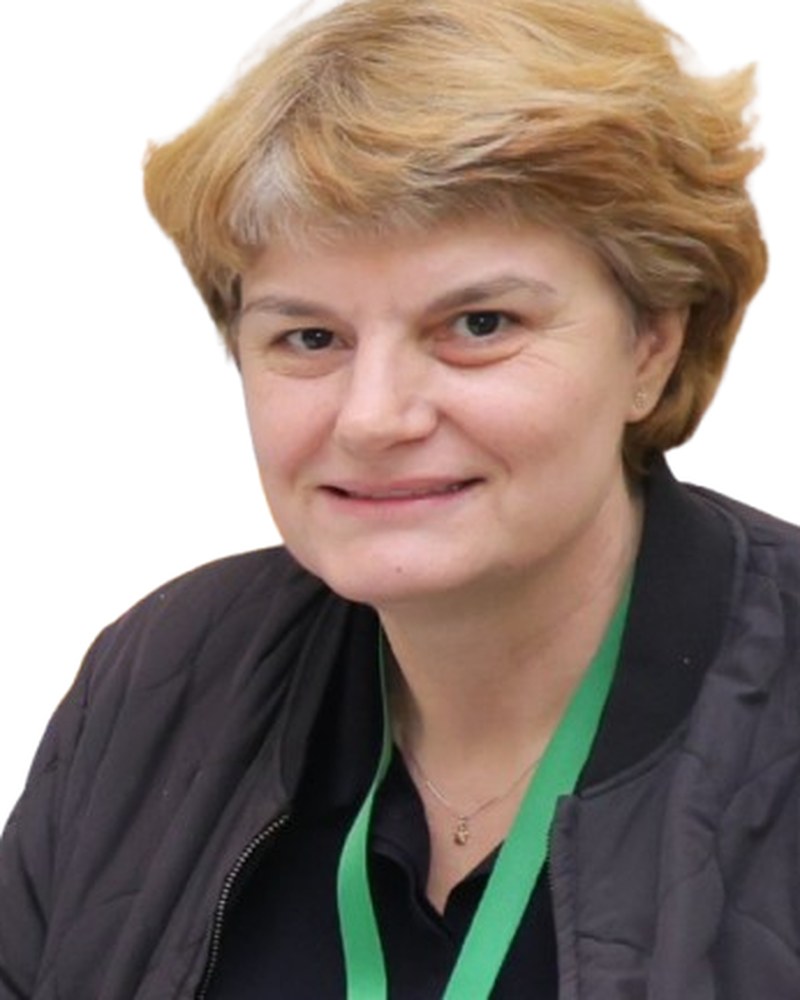
Florinica Radulescu
This paper examines intermodal ambiguity as a philosophical problem concerning the constitution of perceptual sense. Its starting point is the definition of intermodal perception proposed by Bahrick and Hollich, namely the perception of unitary objects or events that make information available to more than one sense. This definition already raises the central question of the paper: how can perception present us with unified objects, bodies, voices, gestures, and situations, if perceptual experience depends on the integration of heterogeneous visual, auditory, tactile, and proprioceptive information? The paper is situated at the intersection of empirical research on multisensory integration and philosophical debates on the unity of consciousness, embodiment, and perceptual realism. In psychology and cognitive neuroscience, authors such as Welch and Warren, Ernst and Bülthoff, Körding et al., Vatakis and Spence, Lalanne and Lorenceau, and Bolognini, Russo and Vallar have shown that perception does not simply add separate sensory inputs. It weighs them according to reliability, temporal and spatial proximity, causal probability, semantic congruence, and contextual expectations. Classic cases such as the McGurk effect, the ventriloquist effect, and the rubber hand illusion show that perceptual experience can remain unified even when sensory information is partially discordant. These cases do not merely reveal perceptual error. They show how the perceptual system attempts to stabilize a coherent scene under conditions of ambiguity. The philosophical framework of the paper draws on Bennett and Hill’s discussion of sensory integration and the unity of consciousness, Bayne’s work on the unity of conscious experience, de Vignemont’s account of multimodal unity, and O’Callaghan’s analysis of the multisensory character of perception. These approaches are brought into dialogue with phenomenological and embodied accounts of perception, especially Merleau-Ponty’s Phenomenology of Perception, Gallagher’s How the Body Shapes the Mind, Noë’s Action in Perception, and Wiese’s account of experienced wholeness in relation to Gestalt theory and predictive processing. Against radical interpretations that move from perceptual ambiguity to scepticism, simulation hypotheses, or the idea that perceived reality is merely mental, the paper defends a more modest realist position. Intermodal ambiguity does not prove that perception is fundamentally deceptive. It shows that our access to the world is mediated, embodied, selective, and revisable. The paper argues that ambiguity has epistemic relevance because it makes visible the processes through which salience, evidence, and perceptual unity are stabilized. The unity of perceptual sense is therefore not the absence of ambiguity, but the provisional stabilization of a world that can be perceived, understood, acted upon, corrected, and shared.
Florinica Carmen Radulescu is a high school teacher and doctoral researcher at the School of Philosophy, University of Bucharest, under the supervision of Professor Mircea Dumitru. Her academic background combines philosophy of mind, cognitive science, philosophy of perception, artificial intelligence, ethics and educational research. Her doctoral work examines intermodal ambiguity, multisensory integration, predictive processing and the epistemic implications of AI-mediated education.
Her doctoral training has included courses in analytic and continental philosophy, modern metaphysics, computational linguistics, quantitative data analysis, academic writing, research ethics, public communication and brain-machine interfaces. She has also participated in international academic programmes, including the Philosophy of AI Summer School, “Reasoning and Agency in AI”, held at Venice International University.
She is the author of the article “Education and Ethical Awareness of AI Technologies and Their Use in Academia”, published in the Journal of Digital Pedagogy. Her research and educational projects have been presented in national and international contexts. She presented “Meaning and Reference in the Study of Memes” at the Cognitive Science Student Conference in 2024, the DIAMOND Framework at ASEF ClassNet17 in Manila, and the “Bias Busters” project at ASEF ClassNet18 in Maribor.
In 2026, she presented papers on technology, perception, intermodal ambiguity and the unity of perceptual experience at conferences organised by the University of Bucharest and Babeș-Bolyai University.