Gabriel Peredo Albornoz
Carlos Prado Mendoza — Centro Cultural Kuska de Sabidurías Ancestrales, Cochabamba, Cochabamba, Bolivia, Plurinational State of / Sociedad Boliviana de Historia Natural, Cochabamba, Cochabamba, Bolivia, Plurinational State of / Asociación de Médicos Tradicionales de Apillapampa, Cochabamba, Cochabamba, Bolivia, Plurinational State of
Luca D'Ascia — Independent Researcher, Antioquia, Medellin, Colombia
This transdisciplinary study bridges neuroscience, neurophilosophy, and Indigenous Knowledge Systems to propose a new model for understanding the subconscious and its alterations. We introduce the Quechua concept of Pakasqa Nuna—the subconscious or “hidden spirit”—as a crucial interface for accessing the “unseen world” (Eddington, 1929) of spiritual and subtle energies (Sugano et al., 1994). Through a consilient approach (Wilson, 1998) that integrates ethnomedical evidence, altered states of consciousness, and contemporary findings in biology and quantum physics—the metaphor of the arrow of time (Rovelli, 2017), fractal communication (Blaisdell et al., 2013), the spirit of teaching plants (Luna, 1981)—the authors analyze practices and experiential testimonies as well as indigenous worldviews to provide a perspective on how access to Pakasqa nuna, through ancestral Andean medicine techniques, allows for the treatment of spiritual disorders such as Mancharisqa (Prado-Mendoza, 2016), a type of mental disharmony that is not covered in Western diagnostic systems such as the DSM-5, suggesting that its dimension is similar to the approaches of neuropsychoimmunoendocrinology (González-Díaz et al., 2017). The study suggests that reconceptualizing mental health from this perspective not only broadens the neurocognitive-biological-cultural model, but also offers tools for addressing global crises—such as pandemics and climate change—by reintegrating spirituality into the concept of life.
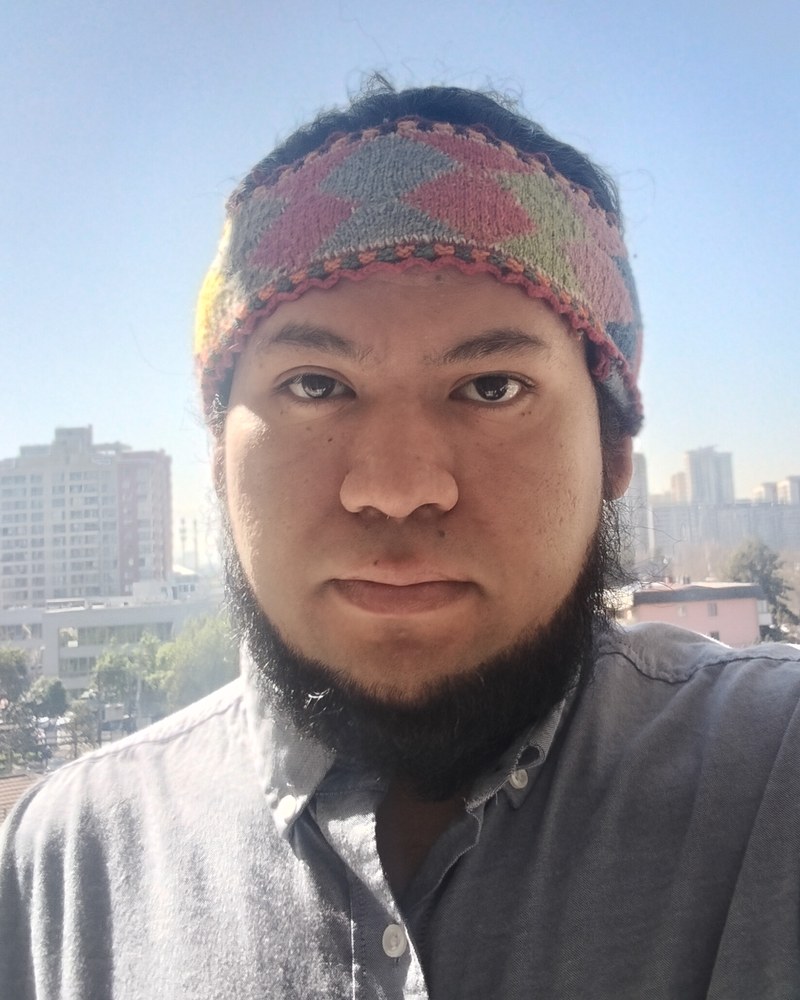
Bachelor of Communication from the Universidad Mayor de San Simón. Ph.D. student in Biodiversity Conservation and Management at the Universidad Santo Tomás (UST), under the supervision of Prof. Dr. César Marín at Soil Laboratory of the Center for Research and Innovation on Climate Change (CiiCC). His main research focuses on agent-based modeling of Indigenous Knowledge in biodiversity conservation and anticipatory systems applied to the prevention of climate and health-related disasters. He is developing his doctoral thesis on the application of the framework of the Mutual Nurturing of Ancestral Andean Wisdom to understand the relationality and symbiosis between arbuscular mycorrhizal fungi, medicinal plants, and the memory of traditional medicine in the Atacama Desert. He is a descendant of Ainu and Quechua peoples as qolliri (traditional healer) and Pachaqampiqamayuq (Healer of the Earth), a title bestowed by the Gathering of Wise Guardians of the Ancestral Knowledge of Abya Yala. He has trained with representatives of indigenous and scientific knowledge such as Abadio Green Stocel, Carlos Barrios, Carlos Prado Mendoza, Taita Shanti Agui, Fritjof Capra, Roberto Restrepo Arcila, and Luis Eduardo Luna. He served as an advisor to the national policy on Intercultural Community Family Health (SAFCI) in 2013 and to the Kuska scientific mission at COP28 in 2022. Advisor to the Technical Committee of the Law Project on the “Declaration of Cultural, Material, and Intangible Heritage of Wachuma, Ayahuasca, Chacruna, and Villca, as well as their associated knowledge and the protection and conservation of medicinal plants approved by the Senate of the Plurinational State of Bolivia. Bolivia Focal Point for the Ikwasheduna Four Pillars Project (UNESCO) and the Spiritual Reserves of Humanity (UNESCO-Rede de Ecosistemas) and the Talantaña Proposal of Tiwanaku (Kuska-UCB). Some of his main research been acknowledged and collected at Transdisciplinary Horizon at Swiss Academy of Arts and Sciences. He has participated as a speaker at conferences on Artificial Intelligence and Interspecies Communication organized by the GEO Indigenous Alliance, at conferences on Complexity Sciences and Anticipatory Systems at UNAM, and will soon speak at the World Biodiversity Forum at the University of Zurich. He has co-authored a book on Traditional Andean-Amazonian Medicine and is the lead author of a chapter in a book edited by Dr. Frederic Andres on neurophilosophy of the subconscious from an Indigenous Knowledge standpoint.