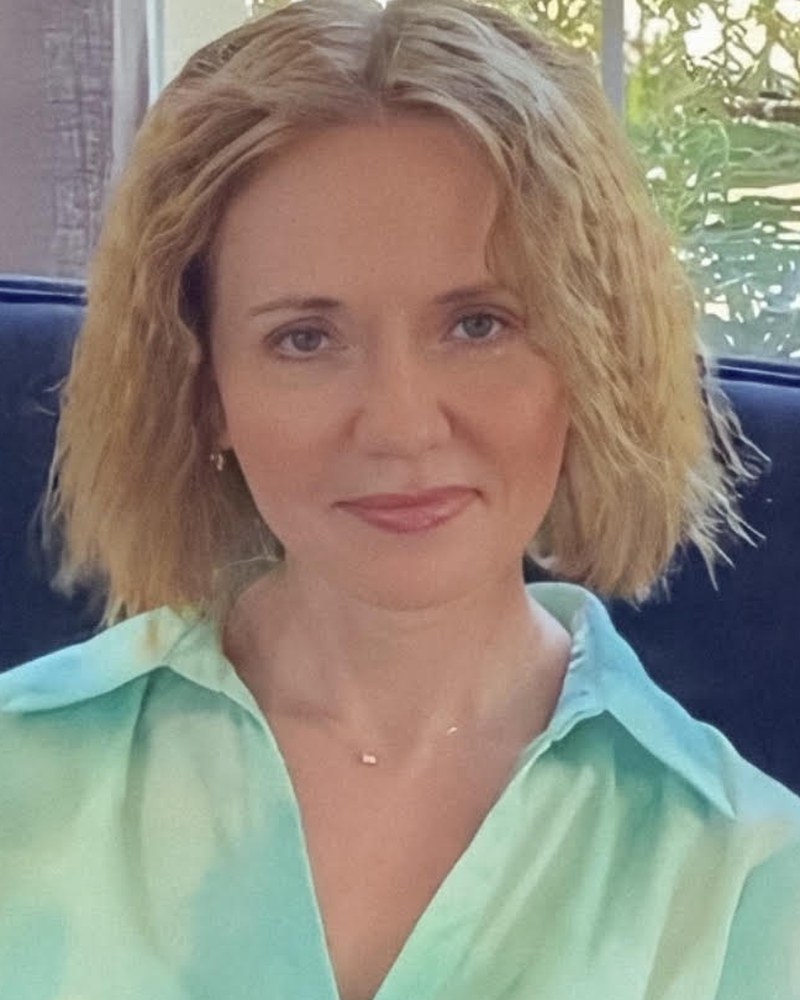
Inna Hodge
What if consciousness cannot see itself not because of a lack of practice — but because the body is structured to keep it out? This began with a different question: why can a person understand they need to change — yet keep reproducing the same patterns? The answer: what is reproduced is not circumstances but a mode of organisation, and it lives in the body. The body does not age from time. It wears out because muscle tone never turns off — operating not for movement, but for holding form. Continuously, consuming resources to preserve what already exists. This holding conceals reality — and destroys the body. Why does no one notice? Because tone held for years ceases to feel like tension. It becomes background — what a person takes for their body, for themselves. This is the mechanism of not-seeing: while the system holds its own form, consciousness has no access to what is happening. I call this holding. The discovery came through the belly. It was the only place where I could directly stop holding. I could not consciously change my head, weight, or tongue. But when I stopped holding my belly — everything else began to change. Why the belly? It lies at the centre of gravity and connects to the diaphragm. Stopping its holding allowed the system to reorganise. What followed was uncontrollable. The belly dropped irreversibly. Breathing began to engage belly, ribs, and chest simultaneously. Weight shifted down, into the sacrum. Head, neck, tongue, face, jaw — each change followed the previous like dominoes. Nothing was assembled manually. And with each step, presence increased. This led to a hypothesis of two architectures. In the first, tone holds form continuously. A signal demanding change does not pass: it accumulates and discharges through emergency exits — scrolling, overeating, breakdown, illness, crisis. Presence is minimal; the system is occupied with holding, not living. In the second, the signal does not accumulate. It distributes through the body, load transfers through the skeleton. Form changes when life demands it. This is an architecture of conductivity. The transition is irreversible: not a strategy changed — the structure itself. When the structure changes, not only the body changes. What changes is the organising principle of life. What used to be held through control begins to rest on facts. What used to require emergency exits ceases to need them. Form ceases to be a condition of existence. If holding is the system's way of not seeing its own organisation, the question becomes different. Not: how to achieve awareness? But: what architecture does a body produce when it seeks awakening? Perhaps consciousness is the degree to which a system can see its own organisation. And presence is the degree of its participation in its own process of life.
About the Author
Inna Hodge is an independent researcher of the organization of living systems.
Before beginning her current research, she worked for more than seventeen years as a life coach, helping people identify and dismantle persistent life programs that continued to shape behavior regardless of conscious intention. During this period she worked with hundreds of clients, developing systematic methods for observing persistent behavioral patterns.
Over time, one question became central to her work: why can a person understand they need to change their life — and keep reproducing the same one? This question led beyond coaching methods and psychological explanations to a long-term investigation of the body as an observable living system.
Through this research, she identified the mechanism of holding — a continuous muscle tone that operates not for movement but to preserve existing form, consuming resources and limiting the system's capacity for presence and self-organisation. This led to the hypothesis of two body architectures: one that maintains form through holding, and one that sustains life through conductivity, allowing the system to reorganise without continuous control.
The research expanded across twelve levels of investigation — from holding and its cost, through space, organisation, volume of life, presence, and continuity — asking at each stage what actually changes when a living system transitions from one architecture to another.
Her findings are documented in seven books, published in Russian and English, including The Body That Knows Life, What Makes Change Irreversible, New Architecture of the Body, and Fact and Interpretation, among others.
Her current research explores how the organisation of a living system shapes the body's architecture, presence, conscious experience, and the capacity for life to reorganise without continuous control.