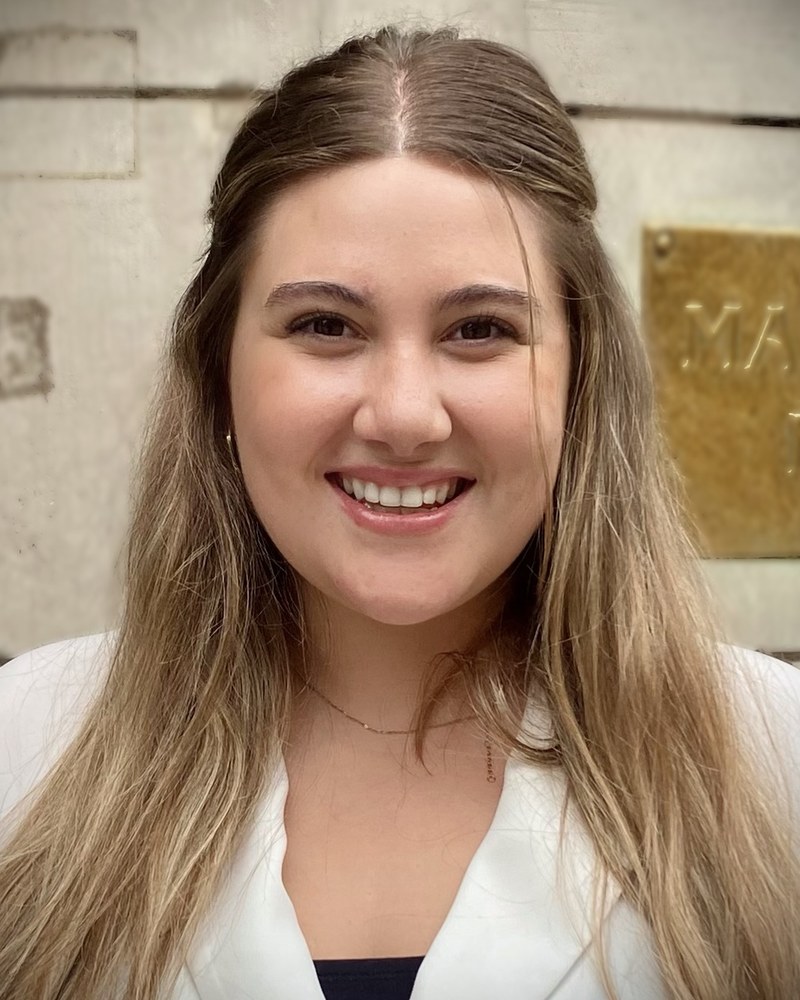
Isabel Risco-Narvaez
Dirk Bouwmeester — Leiden Univeristy, Leiden, Netherlands, Netherlands / Univeristy California Santa Barbara, Santa Barbara, California, USA
Understanding consciousness as an emergent or fundamental property of the universe remains one of the most profound scientific challenges. Within this context, astrobiology provides a unique interdisciplinary framework, bridging physics, biology, and cosmology in the search for the origins of both life and mind. Recent theoretical models (Neven et al., 2024) have proposed that quantum correlations could be modulated by the degree of consciousness of a biological system through the administration of anesthesia, suggesting experimentally testable links between neural substrates and quantum processes. However, such testing requires a minimal yet complete living neural system—one capable of integrated information processing, sensory–motor coordination, and environmental prediction, while remaining experimentally tractable. In this work, we introduce Hypsibius exemplaris, the tardigrade, as a novel model organism for the experimental study of consciousness at its minimal biological scale. Tardigrades, microscopic extremophiles capable of surviving in space and in cryptobiotic states, possess a fully functional nervous system composed of a compact brain and distributed ganglia, fulfilling—though in minimal form—the principal conditions described by leading theories of consciousness: Global Neuronal Workspace (GNWT), Higher-Order Thought (HOT), Integrated Information Theory (IIT), and Predictive Processing (PP). Unlike other models, which lack embodiment and sensorimotor loops, tardigrades integrate perception, movement, and regulation, offering a unique living platform where theoretical and quantum hypotheses about consciousness can be biologically grounded. Using two-photon microscopy combined with the calcium-sensitive fluorescent dye Fluo-4 AM, we developed a methodological pipeline to visualize and quantify neuronal activation at both tissue and single-cell levels. Autofluorescence mapping, Fluo-4 signal calibration, and depolarizing stimulation with KCl allowed the detection of spontaneous and evoked calcium transients in tardigrade neural systems. These experiments constitute, to our knowledge, the first demonstration of neural calcium activity in tardigrades using two-photon microscopy. Neural activation was identified in sensory organs with fluorescence traces displaying characteristic depolarization kinetics: rapid rise, slower decay, and oscillatory recovery. Beyond their technical innovation, these results suggest that tardigrades can serve as experimental proxies for minimal consciousness, providing measurable correlates of information integration and environmental responsiveness. Their suitability for high-resolution imaging, combined with their resilience and simplicity, makes them an ideal biological interface for future tests of quantum–neural correlations and for bridging the gap between theoretical models of consciousness and living systems. Ultimately, this study lays the groundwork for a new experimental paradigm uniting astrobiology, quantum biology, and consciousness research. By extending neuroimaging to one of the simplest complete nervous systems known, we propose that the study of tardigrades may illuminate how consciousness emerges—or perhaps persists—at the boundary between matter, life, and awareness.
Isabel Risco Narváez is a neuroscientist and astrobiologist whose research explores the intersection between consciousness, quantum processes, and the origins of life. Her interdisciplinary background bridges neurophysiology, biophysics, and cosmology, focusing on how minimal neural systems can serve as experimental models for studying consciousness from an astrobiological perspective. Her work combines two-photon neuroimaging and calcium signal analysis to investigate neuronal activation in extremophile organisms such as tardigrades, aiming to connect measurable neural dynamics with theoretical models of consciousness and quantum biology. She holds a BSc in Neuroscience from University College London (2020–2023), where she specialized in neurophysiology, computational neuroscience, and biochemistry. Her undergraduate research centered on developmental and educational neuroscience, complemented by mentoring and teaching activities within the department. She is currently completing an MSc in Astrobiology at Birkbeck, University of London (2023–2025), taking part in collaborative modules with University College London and King’s College London in exobiology, astronomy, and the philosophy of quantum mechanics. Her master’s dissertation, “Quantum Origins of Life,” investigates experimental approaches to test the relation between neural systems, quantum correlations, and the emergence of consciousness. Her international training includes the ESA Academy Experiments Programme (ESTEC, Netherlands) and the ESA/ELGRA Gravity-Related Research Summer School (Belgium), where she contributed to projects integrating space biology and biophysics. She has also participated in early research initiatives with the International Space School Education Trust (ISSET) and FireTechCamp at Imperial College. Her scientific contributions have resulted in publications in peer-reviewed journals, including Scientific Reports, Cryobiology, and Transplantation. These works address cryopreservation and rewarming techniques using sound and ultrasound waves, reflecting her strong background in biophysical methods and experimental innovation. Isabel’s research has been presented internationally, including at the GRC on Quantum Biology (2025,Tuscany,Italy), where she discussed interpretations of quantum mechanics and their implications for neurophysiological systems and the origin of life. She has also attended the UKPlanetaryForum EarlyCareerMeeting (OxfordUni) and part of the organization of this year meeting in London. In 2026, she attended the Quantum Biology conference hosted in the NBI and the 26th edition of the Quantum Probability and Information hosted in Växjo, Sweden.Her leadership roles include serving as Team Leader for an ISS experimental proposal (2nd Place Award), Student Representative at Birkbeck College and mentor/UCL. She is a Fellow of the Astrobiology Society of Britain and the Royal Astronomical Society, representing a new generation of scientists working to unify neuroscience, astrobiology, and quantum theory.