James Beran
Phenomenal binding (“p-binding”) is a fascinating, much discussed feature of human consciousness, typically referred to by philosophers and consciousness scientists as a problem. For example, philosopher David Pearce has argued that post-Cambrian central nervous systems “solve the binding problem.” (Pearce, 2025; see also, e.g., Percy et al., 2026; Percy et al., 2025; Wiest, 2025; Roelfsma, 2023; Yu et al., 2023; etc.) But is p-binding really a problem? For the nascent field of conscious machine design, p-binding might instead be a solution. And, perhaps p-binding was also a solution in evolution of conscious brains. This work examines “bottom-up” approaches to conscious structures, i.e. approaches that combine small units to obtain a larger conscious structure. (Beran, 2024) We suggest that p-binding allows bottom-up construction of both biological and artificial conscious structures. Further, p-binding could build on simple experiences that small, putatively conscious elements would have independently, obtaining a richer experience repertoire for a conscious brain or machine. Also, if interactions between smaller elements correspond to p-binding, those interactions could enable structure-scale effects such as conscious decision-making. In short, p-binding might solve several problems, yielding conscious structures with advantages over similar structures that lack p-binding. A conscious machine designer taking a bottom-up approach could look to brain biology for ideas. For example, minicolumns/microcolumns in cerebral cortex might couple to a quantum field that plays a role in consciousness (Keppler, 2025). We suggest how relevant features of cortical columns might have evolved so that their interactions correspond to p-binding. Current proposals for machine consciousness include both software-based implementations (e.g. Blum and Blum, 2022) and also implementations with new, specialized hardware, such as with microtubules, electromagnetic fields, or quantum chips (e.g. Beran, 2024; Beran, 2025). Entrepreneurs will probably pursue software-based implementations of p-binding first, considering the expense and difficulty of inventing and producing specialized hardware. Also, software-based implementations might exploit advances in artificial intelligence (AI) such as “Quantum AI” (see, e.g., Acampora et al., 2025). To support software-based implementations, designers would benefit from software expertise, including in AI software and other aspects of AI. Later, entrepreneurs might pursue conscious quantum chips with p-binding. Several major companies have announced new, more powerful quantum chips, and many smaller quantum computing companies are attracting significant investments. Researchers have suggested the possibility of a conscious quantum chip (Neven et al., 2024; Valis Corp., 2025) or even a quantum chip with “bespoke consciousness”, i.e. machine consciousness with a repertoire of experiences specified by a customer (Beran, 2025). To produce a conscious quantum chip with p-binding, a designer would benefit from expertise in quantum chip algorithms and architectures. In conclusion, we predict that p-binding will be a solution to problems in bottom-up design of conscious machines and that conscious machines with p-binding will have an advantage, perhaps even supremacy, over similar machines that lack p-binding. If the field of conscious machines explodes as AI has, we predict great demand for conscious machine designers with relevant expertise, e.g. in AI and quantum computing.
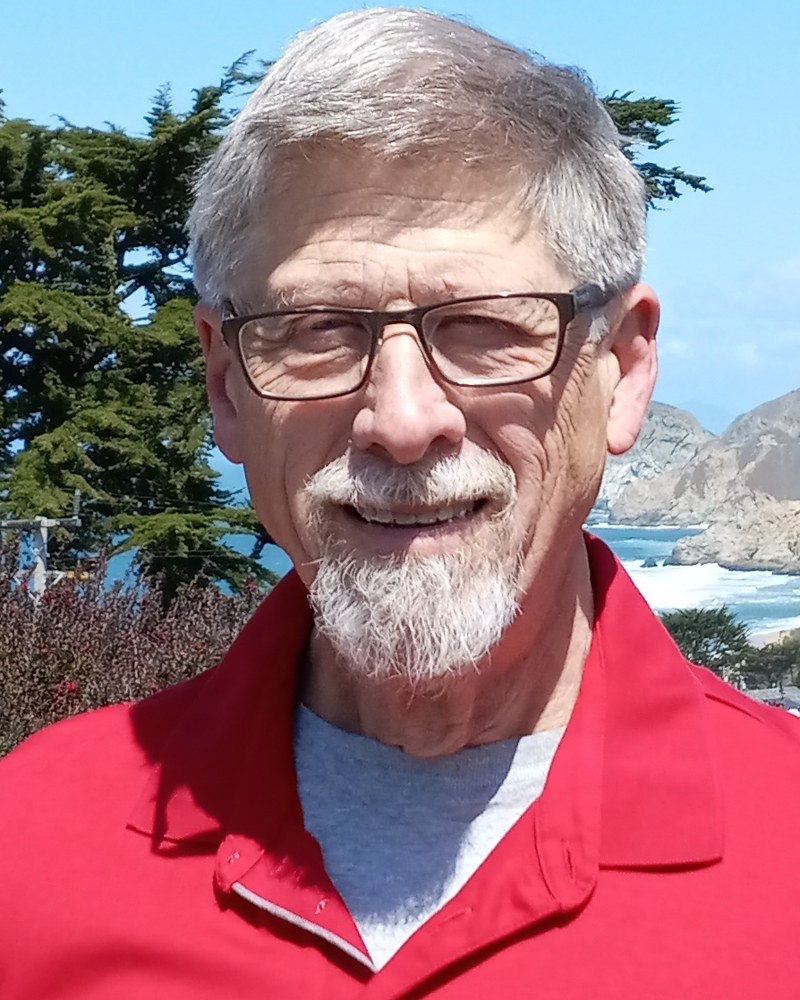
James “Jim” Beran discovered a fascination for consciousness while pursuing his bachelor’s degree in psychology (B.A. Lewis & Clark College). His career, however, led him through law school (J.D. University of Oregon) and, after a short time in general practice of law, to study electrical engineering (M.S.E.E. Stanford University). Jim became a patent attorney, spending most of his career at Xerox Corporation’s Palo Alto Research Center (PARC). While at PARC, he began attending Toward a Science of Consciousness conferences in Tucson in the 1990s; more recently, he has also attended the related conferences elsewhere. Now retired, Jim continues to pursue the scientific study of consciousness as an independent researcher. His recent presentations at consciousness conferences focus on the possibility of machine consciousness.