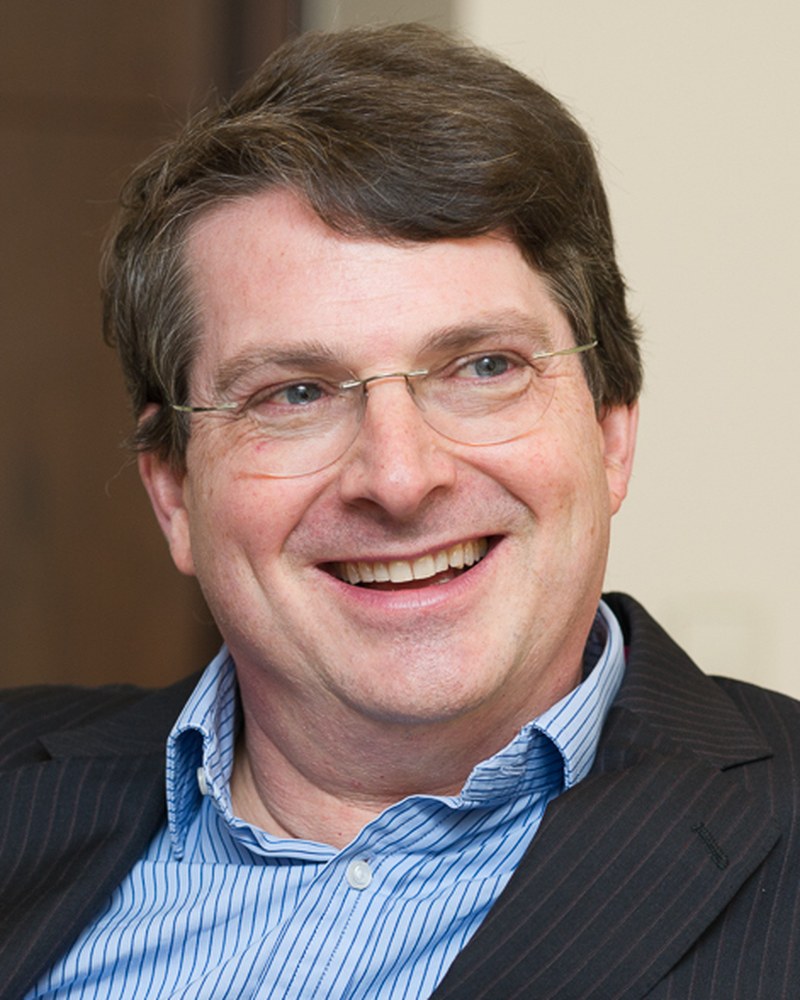
James Tagg
Debate over whether artificial intelligence will encounter a fundamental limit often focuses on engineering constraints: data, compute, energy, or model architecture. This paper examines a deeper boundary established by twentieth-century mathematics. In 1970, Yuri Matiyasevich completed the work of Martin Davis, Hilary Putnam, and Julia Robinson on Hilbert’s tenth problem, proving that no general algorithm can determine whether an arbitrary polynomial equation has an integer solution. Together with Gödel’s incompleteness theorems and Turing’s undecidability results, this establishes that some well-defined mathematical questions cannot be resolved by any mechanical procedure. Because contemporary AI systems are computational processes, they are necessarily subject to these limits. The existence of such limits is mathematically settled; their practical significance is not. Undecidable problems may lie largely outside the domains relevant to scientific and technological progress. Alternatively, they may constrain the capacity of machines to generate genuinely novel concepts, identify unanticipated research questions, or make discoveries that require moving beyond an established formal framework. This talk distinguishes three frequently conflated claims: that AI cannot solve every formal problem; that AI will encounter practical performance ceilings; and that AI cannot reproduce the open-ended character of human scientific discovery. Only the first follows directly from computability theory. The others remain empirical and philosophical questions. Recent evidence that AI can increase scientific productivity while concentrating research within established areas provides a useful test case. Such systems may be exceptionally effective at searching known problem spaces while being less capable of identifying valuable questions outside them.
James Tagg is a serial entrepreneur and award-winning author. He was one of the original inventors of the touchscreen. He founded Truphone, the world's first global mobile network, making the first mobile phone call over the Internet and developing the eSIM. He holds over 200 patents. His first book, Are the Androids Dreaming Yet?, explores the limits of Artificial Intelligence and the differences between humans and computers.