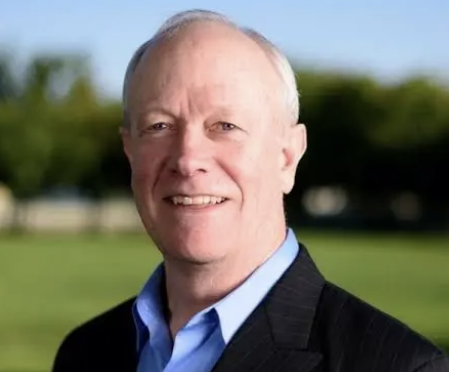
Jerry McNerney
The Simulation Hypothesis posits that our universe, including our conscious selves, is a simulation on a computational device in an advanced society. The SH is seemingly impossible to prove or disprove in the most general case of an advanced computer that is as yet unknown to us. In the case of digital computers, it can be proven that our universe cannot be simulated on a digital computer using currently understood dynamic simulation tools. The proof rests on the property that in Special Relativity, simultaneity is dependent on the inertial reference frame. Quantum computers, on the other hand, as the technology develops may be capable of simulating our universe using the quantum computing technique of optimizing an appropriate operator such as the Hamiltonian or the Lagrangian. Such an optimization would naturally land on the fine tuning parameters of our universe. The question of how precise the fine tuning parameters must be leads to consideration of how precisely the universe is determined, which has implications on free will. This Quantum Simulation Hypothesis theory provides a single universe alternative to current theories that hypothesize the existence a possibly infinite branching of actual universes.
Senator Jerry McNerney was elected to the Senate in November 2024, after serving 16 years in the U.S. Congress. His 5th District includes Alameda County’s Tri-Valley area and all of San Joaquin County.
McNerney served in Congress from 2006-2023, where he was a member of several Congressional committees, including the Veterans Affairs Committee, the Committee on Science, Space and Technology, and the Committee on Energy and Commerce. He also chaired the Artificial Intelligence Caucus, the Congressional Grid Innovation Caucus, and the WiFi Caucus. He authored the AI in Government Act.
During his time in Congress, he also worked on numerous issues to benefit veterans and fought relentlessly for the new veterans’ health facility near French Camp now serving the region’s veterans.
A native of Albuquerque, New Mexico, McNerney earned bachelor's and master's degrees and a Ph.D. in mathematics at the University of New Mexico. Prior to serving in Congress, he spent more than 20 years as an engineer and consultant in the energy and clean energy industry, helping develop cutting-edge wind technologies and wind turbines.
In the California State Senate, McNerney serves as chair of the Revenue and Taxation Committee and the Select Committee on the Nonprofit Sector, and is a member of the Privacy, Digital Technologies, and Consumer Protection Committee; the Energy, Utilities and Communications Committee; Budget and Fiscal Review Committee; Budget Subcommittee #2 on Resources, Environmental Protection, and Energy; the Agriculture Committee; the Military and Veterans Affairs Committee; and the Joint Committee on Fairs Allocation and Classification.
He also is co-chair of the California Legislative Delta Caucus and is a member of the Bay Area Caucus and the California Technology and Innovation Caucus. In addition, he is the Senate's representative on the Delta Protection Commission and the Sierra Nevada Conservancy Governing Board.
McNerney and his wife, Mary, have been married since 1977 and live in Pleasanton. His oldest son, Michael, served as an officer in the US Air Force and is now a serial entrepreneur in cyber security living in the Bay Area with his wife and two children. McNerney’s daughter, Margaret, is a Ph.D. neuroscientist working at the Palo Alto VA and teaching at Stanford. His son, Greg, is a Ph.D. biophysicist and now works at Intel Corporation in Beaverton, OR.