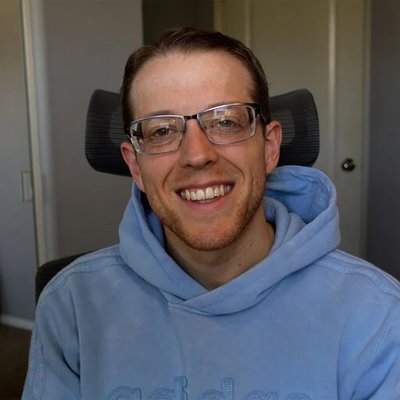
Joshua Roeloffs
Jack Tuszynski — Department of Mechanical and Aerospace Engineering (DIMEAS), Politecnico di Torino, Turin, Piedmont, Italy / Department of Physics, University of Alberta, Edmonton, Alberta, Canada / Allen Discovery Center, Tufts University, Medford, MA, USA
The standard objection to quantum effects in the brain rests on an inherited assumption that biological quantum function requires coherence to persist long enough to carry a computation, and that thermal noise at physiological temperatures prevents this. This assumption was imported from quantum computing and has shaped the debate for over two decades. The present paper rejects this assumption at its foundation and provides a theory-agnostic deductive argument for why quantum effects at subneuronal scales participate in higher-order cognition including conscious state maintenance. De Broglie's relation predicts that electronic quantum behavior becomes the natural physical regime as functional structures approach nanometer dimensions, and the semiconductor industry confirms this prediction, as maintaining classical switching at few-nanometer scales has required progressively stronger architectural intervention at each generation node. Microtubule tryptophan networks operate at 1 to 2 nm spacing, which places them within this regime as a matter of established physics. Two possibilities follow: a biological system at these scales could suppress quantum effects to maintain classical operation, or it could harness them. Biological systems do not possess the lithographic precision, gate architecture, or dielectric engineering through which semiconductor devices achieve suppression, and Cao et al. (2020) showed that biology takes the other path, as they found that photosynthetic energy transport depends on quantum mechanics governing the interaction between the system and its environment, and that biology harnessed decoherence to direct energy flow. Microtubule tryptophan networks meet this reframed standard through nonclassical energy migration spanning 6.6 nm that classical Förster theory cannot account for (Kalra et al., 2023), superradiant cooperative behavior across over 10⁵ transition dipoles with robustness that increases with system size (Babcock et al., 2024; Patwa et al., 2024), and cooperative dynamics that complete approximately fifty times faster than thermal decoherence can disrupt them (Nishiyama et al., 2024). With the substrate established, six pharmacological and cross-species constraints link it to conscious state maintenance. Anesthetics reduce microtubule energy migration by 12 to 15 percent, and anesthetic potency tracks collective tubulin oscillation changes with R² = 0.999 across chemically diverse compounds (Craddock et al., 2017). Volatile anesthetics suppress organized responsiveness across eukaryotic life including organisms without nervous systems, and microtubule-stabilizing drugs delay anesthetic-induced unconsciousness with Cohen's d = 1.9 (Khan et al., 2024). Open energy-pumped architecture addresses physiological viability, and psychedelic phenethylamines that enhance microtubule polymerization while suppressing default mode network activity are associated with intensified awareness even as neuronal-level self-referential activity is broadly suppressed (Timmermann et al., 2025; De Abreu et al., 2023). Together, these constraints support the hypothesis that quantum effects at subneuronal scales participate in the maintenance of higher-order neural function and conscious states.
Josh Roeloffs is an independent researcher based in Los Angeles whose work investigates the role of quantum processes in higher-order brain function. Jack A. Tuszynski is a Professor at the Politecnico di Torino and the University of Alberta with nearly 600 published papers spanning quantum biology, biophysics, and computational modeling of protein dynamics, and he is a leading figure in the experimental and theoretical investigation of microtubule quantum properties including anesthetic interactions with tubulin (Craddock et al., 2017), coherent energy transfer feasibility in microtubules (Craddock et al., 2014), microtubule electrical properties (Tuszynski et al., 2020), and the holographic brain paradigm (Cavaglià, Deriu, and Tuszynski, 2023; Cavaglià and Tuszynski, 2026).
Together, Roeloffs and Tuszynski published a mechanistic framework in Frontiers in Human Neuroscience in April 2026 proposing that self-referential processing in the default mode network regulates transitions between quantum and classical modes of brain function through electromagnetic modulation of microtubule coherence dynamics (Roeloffs and Tuszynski, 2026). The framework develops a two-channel regulatory architecture connecting sub-picosecond quantum events to second-scale cognitive fluctuations and generates testable predictions relating default mode network activity, flow states, anesthesia, and psychedelic phenomenology to shifts along the quantum-classical processing spectrum. Roeloffs is also the author of The Classical Brain to the Quantum Mind (Springer, May 2026), which extends this framework into a broader theoretical account with a foreword contributed by Tuszynski. Following publication of the Frontiers paper, Roeloffs and Tuszynski were invited to present the work as guest lecturers at the Azrieli College of Engineering in Jerusalem, Israel.
The present submission develops a companion argument from this research program, assembling six pharmacological and cross-species constraints linking subneuronal quantum processes to the maintenance of conscious states. This work contributes to the growing body of evidence that quantum processes at the subneuronal level play a functional role in cognition and consciousness.
Link to paper: https://doi.org/10.3389/fnhum.2026.1783138
Link to book: https://doi.org/10.1007/978-3-032-20068-6
Link to recent guest lecture: https://youtu.be/iXSpf9By9Io?si=emrI27tXcUtOhFCO