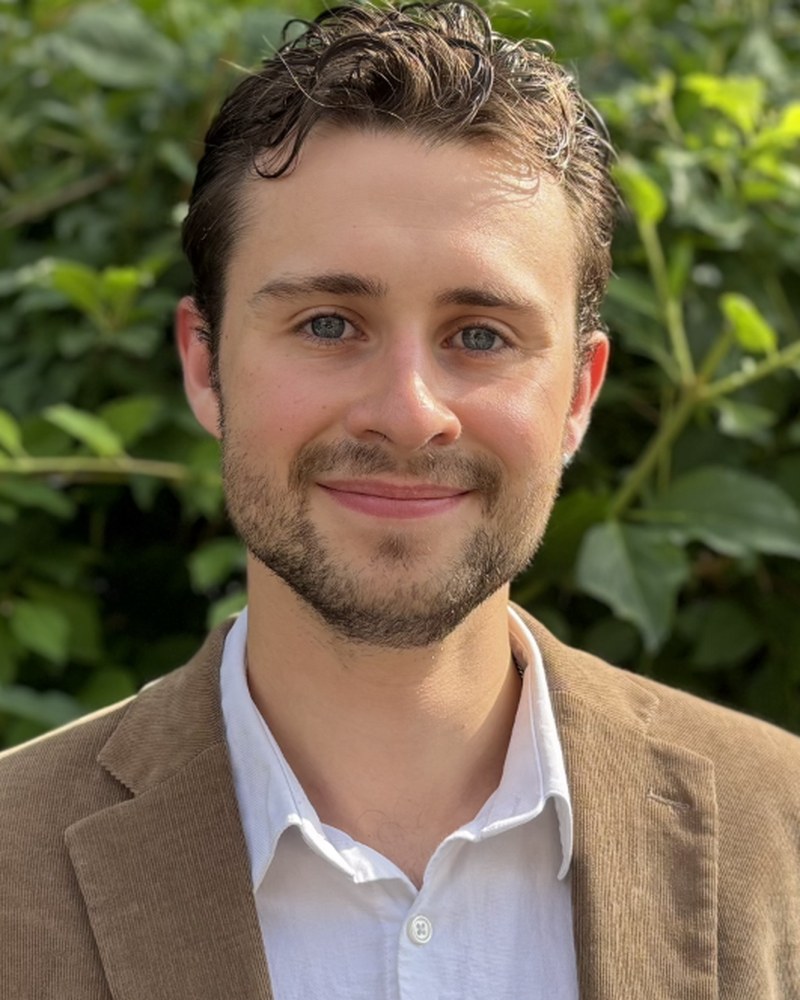
Keaton Jahn
Philosophers have long distinguished between “proper” and “common” sensibles – that is, properties that seemingly appear in only one sense (like color) and those accessible by two or more (like shape) – debating which properties fall into which camp, why, and what that suggests about their metaphysical status. Merleau-Ponty resists this dichotomy. Perception, he argues, is not the presentation of isolated qualities from an archimedean point. It is a mode of being in the world. The living body, as the subject of perception, orchestrates a rich inter-sensory and motor network in the perception of every quality, even when one sense is dominant. In a word: there are no proper sensibles. His evidence is characteristically diverse: a critical history of the mind/body problem, innovative interpretations of psychological and physiological research, and, of course, his signature observations from the quotidian miracles of everyday perception. In this paper, I (1) explicate Merleau-Ponty’s ambitious thesis in Phenomenology of Perception Part 2 Section 1 that there are no proper sensibles; (2) critically assess his most important cross-disciplinary arguments for it, including phenomenological interpretations of experiments on brain-damaged patients’ motor responses to color stimuli, the visual-tactile recognition skills of the newly-sighted (post cataract-removal surgery), and mescalin-induced episodes of synesthesia; and (3) indicate the weighty implications of his unique methodology for perceptual phenomenology at large. I conclude that Merleau-Ponty’s theory of sensory perception challenges foundational principles of phenomenology elaborated by Edmund Husserl. His boundary-breaking work offers a controversial and compelling method for studying our embodied experience of everyday perceptual skills, which ultimately demands a re-assessment of the epistemic boundaries between the psychological, physiological, and phenomenological sciences.
Keaton Jahn is entering his fourth year as a PhD student in Philosophy at Boston University. He earned a Bachelor of Arts in Liberal Arts in 2022 at St. John's College, Annapolis MD. His primary area of research is Husserlian and Husserl-inspired phenomenology of perception. He's especially interested in the role of the lived body in our experience of moral values. His work routinely draws on authors including Edmund Husserl, Max Scheler, Edith Stein, Nicolai Hartmann, and Maurice Merleau-Ponty.
In July 2025, he published "On the disclosure of moral values in the arts: a value-realist account" in Continental Philosophy Review (https://doi.org/10.1007/s11007-025-09699-x).
His refereed presentations include "An Affair with the World: Embodiment and Attention in Value Perception" at The 5th International Research Summer School in Genetic Phenomenology (Warsaw, Poland, Sep. 2025) and "On the Disclosure of Moral Values in the Arts: A Value-Realist Account" at the Indiana Philosophical Association (Indianapolis, IA, Nov 2024).
He has won awards including the Best Graduate Paper Prize at the Indiana Philosophical Association in 2024 and the college-wide Best Senior Essay Paper Prize at St. John's College in 2022.
He has organized the Boston Phenomenology Circle Annual Spring Symposia & Semesterly Workshops since Apr 2025.