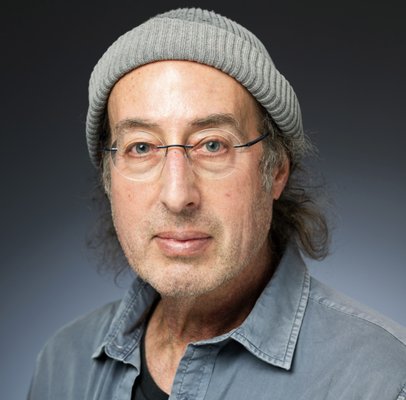
Kenneth Kosik
Ruifeng Han — University of California Santa Barbara, Santa Barbara, CA, USA
Angela Morales Bontempo — University of California Santa Barbara, Santa Barbara, CA, USA
Christian Bustamante — University of California Santa Barbara, Santa Barbara, CA, USA
Dirk Bouwmeester — University of California Santa Barbara, Santa Barbara I, CA, USA
Anesthetics are a powerful heuristic tool for the study of consciousness. They are a diverse set of chemically unrelated compounds that share the property of specificity for consciousness. Among the compounds in this toolbox is the inert noble gas Xenon, widely considered to be safe while supporting hemodynamic stability and rapid recovery. We have delivered natural Xenon to human brain cortical organoids and primary neuronal cultures over a graded set of gage pressures and observed its effects on neuronal activity with high density micro-electrode arrays and calcium dyes in a two photon. Under baseline conditions, neuronal activity in brain organoids approximates the brain activity of a second trimester fetus in which the predominate activity is periodic bursting. Within the bursts we have reported highly structured low dimensional activity clustered by their more rapid firing rates that form a characteristic geometric manifold (Van der Molen et al Nat Neurosci 2025) while inter-burst activity is high dimensional. Xenon degrades the burst phase separation by reducing low-dimensional highly correlated units. We interpret this effect as a Xenon-induced dissociation of networked units, a phenomenon that speculatively might bear some fundamental relationship to the ignition of consciousness.
Kenneth S. Kosik, M.A. M.D. is a physician scientist who served as professor at the Harvard Medical School from 1996-2004 when he relocated as the Harriman Distinguished Professor of Neuroscience and Co-Director of the Neuroscience Research Institute at the University of California Santa Barbara. Awards include Whitaker Health Sciences Award (MIT), Milton Foundation (Harvard), Moore Award (Amer Assoc of Neuropathologists), Metropolitan Life Award, Derek Denny-Brown Award (Amer Neurological Assoc), Zenith and Temple Awards (Alzheimer Assoc), Ranwell Caputo Medal (Argentina), NASA Group Achievement Award, the Premio Aventis (Colombia), Potamkin Prize, fellow AAAS. His work, including the characterization in Colombia of the largest family in the world with genetic Alzheimer’s has appeared in the New York Times, Wall Street Journal, New Yorker, BBC, CNN, PBS and CBS 60 Minutes. His 2016 University of California Santa Barbara commencement address is archived here https://www.youtube.com/watch?v=Z8OR81ucHyY. He co-authored Outsmarting Alzheimer’s Disease. In the past few years, he has focused on brain organoid physiology that he has published in the primary research literature, written about in Nautilus and presented at a recent Gordon Conference.