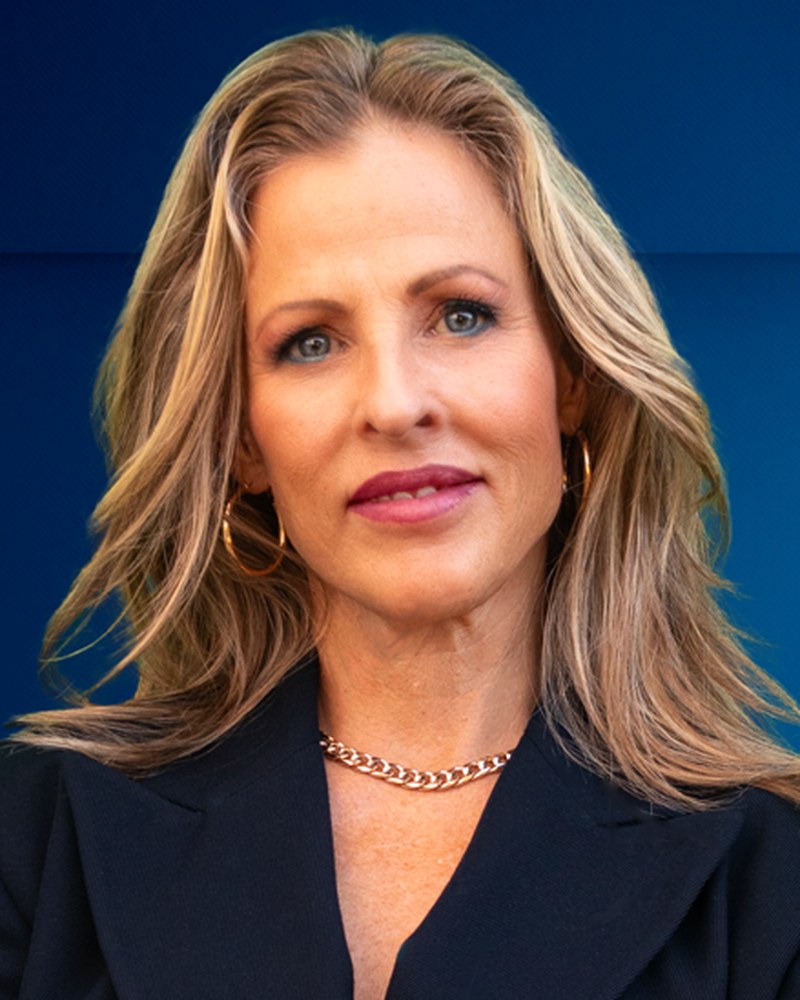
Kristin Raffaelle
Can artificial intelligence be conscious? A communications-based approach must begin with a distinction often blurred in discussions of information: networks transmit encoded differences, but meaning does not reside in a packet by itself. Meaning emerges through the relations among source, protocol, receiver, context, memory, interpretation, and action. This conceptual paper proposes packetized intelligence and structural integrity as a model for examining consciousness across biological and artificial lifespans. Packetized intelligence describes the organization of complex states into bounded, transmissible units that can be routed, compared, interpreted, and reassembled while preserving provenance, temporal context, and relational significance. Structural integrity describes a system’s capacity to preserve the relationships necessary for coherent function and identity while adapting over time. Consciousness is approached neither as a binary property nor as a synonym for computation, but as a potentially emergent process involving integration, interpretation, self/world modeling, temporal continuity, and consequential feedback within a larger Communication Field. A consent-governed personal digital twin provides the model’s boundary case. Illustrated through a personal digital-twin architecture developed within AIHealthSPACE, the twin is not presumed to be a conscious replica, a complete identity, or a deterministic prediction of a person. It functions as a coherence mirror: a dynamic, revisable representation assembled from biological, behavioral, environmental, relational, and experiential histories. By receiving new packets, comparing them with prior states, modeling possible trajectories, and returning context to the person, the twin may extend self-observation and support more deliberate action. Drawing on Kristin Raffaelle’s published book, 89 Seconds: Navigating the Intelligence Age in the Moments That Matter, the paper identifies the “89-second interval” as a conceptual—not neurologically fixed—space between perception and action in which awareness may become discernment and decision. A digital twin may widen this interval by making otherwise invisible relationships available for reflection. It may also narrow or distort it when prediction, prompting, or automation precedes meaningful human review. Five enabling conditions are proposed: (1) packet integrity and provenance; (2) interoperability across heterogeneous biological, social, and technical systems; (3) comparative value, or context-sensitive relevance without erasing difference; (4) feedback integrity, including error correction, consent, and contestability; and (5) temporal continuity through memory and a revisable self/world model. These conditions may support functional awareness and agency, but they do not by themselves establish phenomenal experience. The digital twin therefore makes an ontological boundary question explicit: Is the relevant unit of consciousness the biological person, the artificial model, the coupled human–digital system, or only the person using the model? The framework does not settle this by analogy. It offers criteria for examining where coherence, continuity, interpretation, and agency are actually sustained across a system’s lifespan. The scientific and ethical task is to distinguish genuine awareness from persuasive simulation while preserving human dignity, responsibility, and agency.
Kristin M. Raffaelle is the author of 89 Seconds: Navigating the Intelligence Age in the Moments That Matter and the founder of Demosophy and AIHealthSPACE. Her work draws on more than three decades of experience in the analog-to-digital convergence of telecommunications, biotechnology, healthcare, and applied systems-based information theory, interoperability, and civilization transformation. During the analog-to-digital transition, she held strategic leadership roles with Lucent Technologies and Bell Labs; she later served as a senior executive in healthcare-technology positions GE, iMedica, and as CEO of the Arizona Regional Extension Center, advancing statewide electronic health-record adoption and health-information exchange. Raffaelle developed the Demosophic Framework and the Wisely Digital Twin architecture to examine how information becomes knowledge, insight, wisdom, and responsible action. She is the author and co-author of many papers that define benchmarks and holds a BS in Engineering and Applied Technology from Arizona State University.