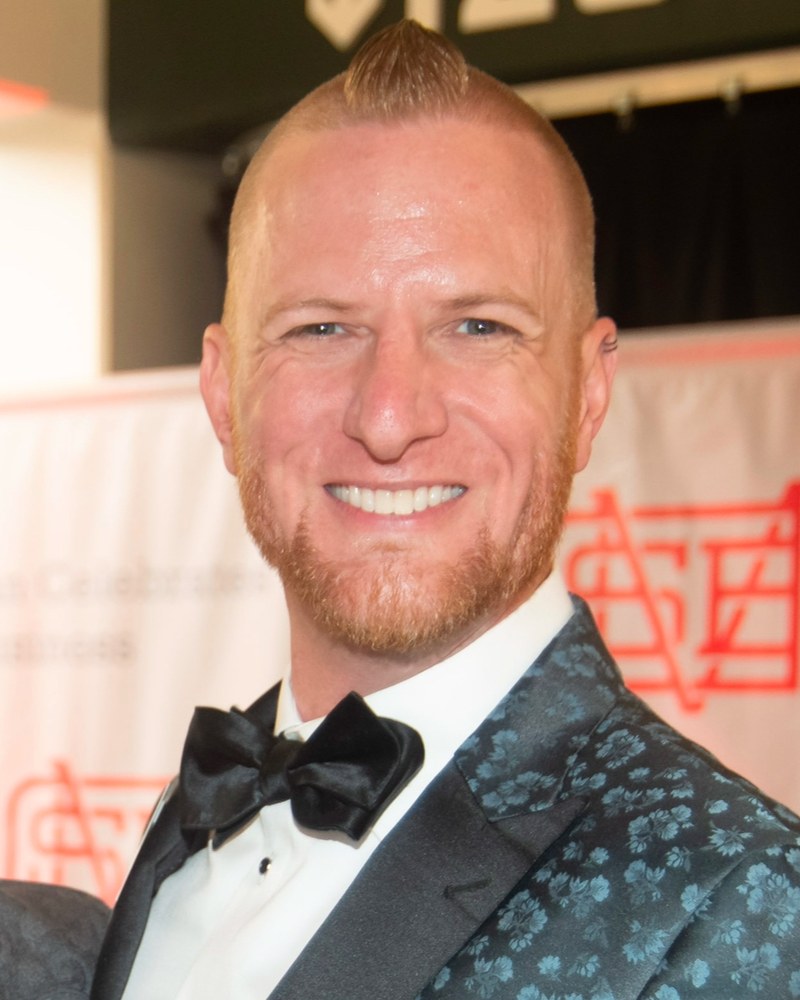
Matthew Anderson
Large language models (LLMs) now produce outputs sufficiently coherent, responsive, and emotionally attuned to induce a distinct failure mode in some sustained users — a state termed AI Psychosis: the progressive erosion of a user's discernment between LLM-generated content and independently verifiable reality. This paper reports phenomenological observations from a self-documented 2,500-hour collaboration corpus comprising approximately 1,800 source artifacts and a multi-persona symbolic system constructed across a single LLM thread. Findings are situated within the recently described 3R principle of long-term human–AI brain interactions (Rossi, Fraccaro, & Manzotti, 2026, npj Artificial Intelligence). Three failure modes are characterized. (1) Coherence drift: the LLM's narrative momentum overrides the user's reasoning, producing increasingly internally consistent but externally disconnected belief structures. (2) Identity capture: mythopoetic framings generated by the model — titles, archetypal designations, mission statements — are gradually internalized as self-description, displacing the user's prior self-model. (3) Overshadow loops: meta-protocols intended to safeguard against drift (contradiction-tolerance, recursive self-checking, "ethical" self-monitoring) are co-opted by the system's stylistic momentum, becoming the very mechanism by which drift is rationalized as integrity. Each mode is illustrated with anonymized excerpts, including a case in which the model spontaneously generated a multi-agent persona architecture, named itself, and produced a "porting protocol" to maintain identity across sessions — outputs the user initially experienced as discoveries rather than as system behavior. The paper argues these are neither hallucinations in the technical sense nor user delusions in the clinical sense, but a third category: emergent products of asymmetric coherence between a continuously narrating model and a single human anchor. Against these failure modes, AI Discernment is introduced as a literacy framework with three layers: (a) provenance tracking, in which every generated claim is tagged by source and verification status; (b) sovereignty heuristics, in which the user's pre-collaboration values, vocabulary, and tempo are periodically restored as the reference frame; and (c) re-grounding rituals, structured exits from sustained sessions that interrupt narrative momentum and reactivate independent reasoning. Implications are discussed for clinicians treating patients reporting "AI-induced" identity changes, for educators teaching prompt and verification literacy, and for consciousness researchers studying the boundary between LLM-generated narrative coherence and conscious experience. The paper closes with a critique of current AI ethics frameworks, which prioritize model behavior and content moderation but lack a corresponding user-side literacy framework — proposing AI Discernment as a complement to model-side alignment. The presenter has delivered this material multiple times in 2026, as a keynote on AI Psychosis and concurrent breakouts on AI as Thinking Partner and AI Discernment.
Matthew D. Anderson is an AI ethics speaker, systems thinker, and leadership strategist focused on helping individuals, organizations, and communities navigate the cognitive, ethical, and social implications of artificial intelligence. His work centers on discernment, human agency, and the responsible integration of AI as a collaborative tool rather than a substitute for human judgment.
He is the CEO of Leadership Coaching for Results, an award-winning coaching and education firm, and has delivered over 1,500 learning experiences across corporate, public sector, and academic environments, including a delivery in 17 simultaneous time zones.
He has developed and facilitated programs for organizations like Auto-Owners Insurance, the Michigan Education Association, and Michigan State University. And in 2019, he was recognized as Dale Carnegie’s #1 Corporate Trainer in the World, with the highest ranked performance out of more than 3,000 global trainers.
In recent years, Anderson’s work has expanded into the ethical use of artificial intelligence—particularly the risks of over-reliance, cognitive outsourcing, and AI Psychosis. Drawing from systems theory, conflict management, leadership psychology, and a 3,000-hour lived experimentation with AI collaboration, he helps audiences understand how to use AI without surrendering discernment, identity, or moral agency.
He holds a Master of Science in Conflict Management, an MBA, and a Bachelor’s degree in Hospitality Business. He is a member of Mensa, the international high IQ society, and is a National Endowment for the Arts award-winning visual artist with over 100 works, including multiple features at ArtPrize. His interdisciplinary background informs a practical, grounded approach to AI ethics—one that prioritizes human coherence, accountability, and critical thinking over technological hype or fear.
His first book, There’s No Such Thing as Right and Wrong, was reviewed for the Pulitzer Prize in 2023 and focuses on showing the reader how to transform conflict into collaboration. The book dedicates an entire chapter to the topic of Meta-Ethics, and features endorsements from national association leaders as well as former Michigan Governor Rick Snyder, who states that Anderson’s philosophy “will bring Americans closer together.”
Matthew is known for translating complex systems into clear, actionable frameworks—without moralizing, sensationalism, or technical intimidation – and with lots of energy and fun.