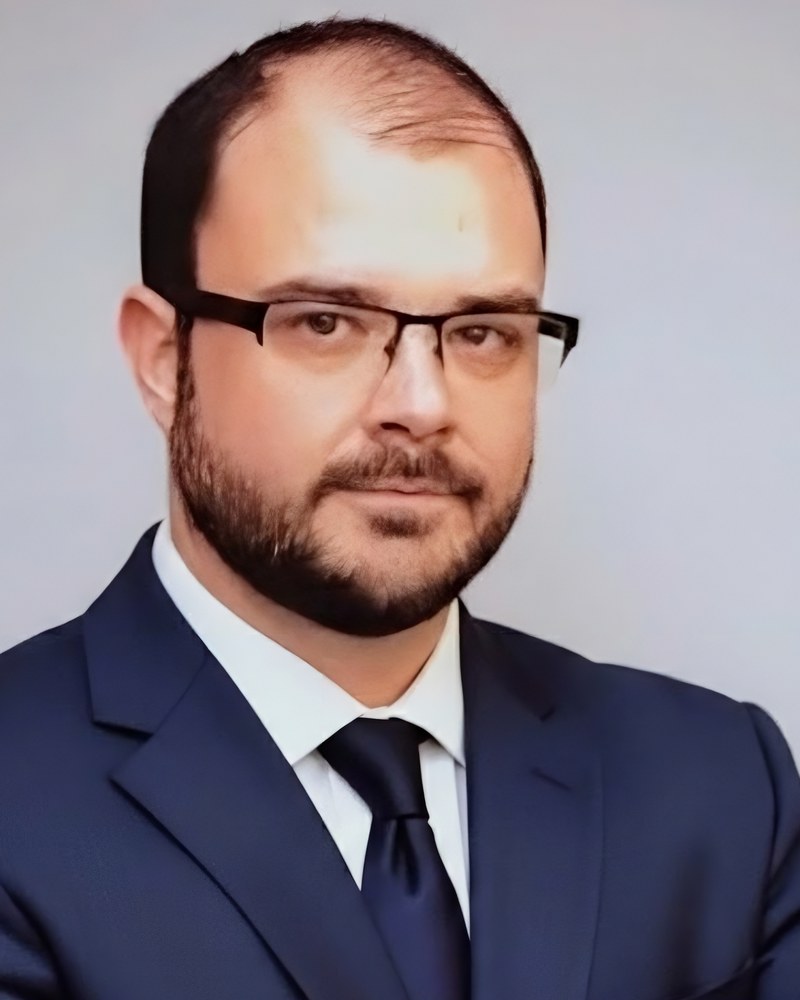
Nathan Thornhill
Do the dynamical signatures that theories of consciousness tie to access depend only on what a system computes, or also on how that computation is physically carried out? The question is usually argued through thought experiments — most sharply the "unfolding argument," which notes that any recurrent brain could in principle be matched by a feedforward network with identical behaviour. If behaviour cannot tell them apart, the disagreement has to be settled by the internal dynamics themselves, not by what the systems do. This study makes that comparison measurable. A demixing method separates how much of a population's moment-to-moment activity is driven by incoming input from how much it is generated by the population's own recurrence — a distinction several theories (recurrent processing, global workspace, integrated information) treat as central. Validated on synthetic systems with known dynamics before any real data, the method was applied to two very different substrates doing similar cognitive work: single-unit and high-density (Neuropixels) recordings from rats and primates making perceptual and value-based decisions, and five transformer language models constructing multi-step answers. The two substrates fall on opposite sides of a categorical divide. Every neural dataset was dominated by its own recurrence (external input explained at most a tenth of the next-state variance); every language model leaned far more on its input, roughly half — a fivefold gap. Cortex further recruits its recurrence when a task demands inference; the models mostly do not. Most tellingly, at the behavioural moment a rat commits to a perceptual choice, its cortical dynamics settle into a stronger attractor — locked to the commitment, not to the stimulus (a small but well-powered rise, present in a clear majority of sessions). The feedforward models show no such settling and "commit" only at their final layer, because a feedforward stack has no internal temporal regime to settle into. Because the brain-versus-model comparison varies task and architecture at once, a pre-registered control isolates the cause: recurrent and feedforward networks trained to matched accuracy. The commitment-attractor signature separates the two families and tracks architecture, not task — a matter of how, not what. Pre-registered negative tests show the cortical effect is invisible to the trial-averaged and scalar read-outs one would otherwise reach for, which is why a time-locked measure was needed. No phenomenal experience or machine sentience is claimed. What is measured is decision commitment, which is not conscious access; that gap is the central limitation. What the measurement shows is that a property several access theories treat as load-bearing is present in cortex and structurally absent from a feedforward model on an analogous task — turning a conceptual debate into a decidable, falsifiable measurement.
Nathan M. Thornhill is the creator of CiteStamp (citestamp.com), a citation-verification tool for researchers, and the founder of the Institute for Complexity Science and Advanced Computing (icsacinstitute.org), an independent, open-access research institute in Fort Wayne, Indiana. ICSAC publishes interdisciplinary work under Creative Commons licensing with no article-processing charges, providing a venue for independent and cross-disciplinary research outside traditional institutional channels.
His current work develops measurable, falsifiable tests for questions in the science of consciousness that are usually argued conceptually. The present submission spans biological and artificial substrates, to ask whether the dynamical signatures tied to conscious access depend on what a system computes or on how the computation is implemented. The approach is built on established systems-neuroscience and machine-learning tools (subspace state-space identification; input-aware dynamical similarity analysis) and applied to public rodent and primate decision datasets alongside open transformer language models, with the central control pre-registered and hash-frozen before analysis.
More broadly, Thornhill's research asks how the internal organization of a system — rather than its input–output behavior — can be measured on a common footing across very different substrates, from cortical populations to large language models. The program emphasizes pre-registration, adversarial controls, honest reporting of negative results, and fully open, reproducible code and data.
Thornhill's background combines healthcare administration and technology consulting with self-directed work in complexity science, dynamical systems, and machine learning. He welcomes discussion of methodology, the computation-versus-implementation framing, the unfolding argument, and this work's relationship to recurrent-processing, global-workspace, and integrated-information accounts of consciousness.