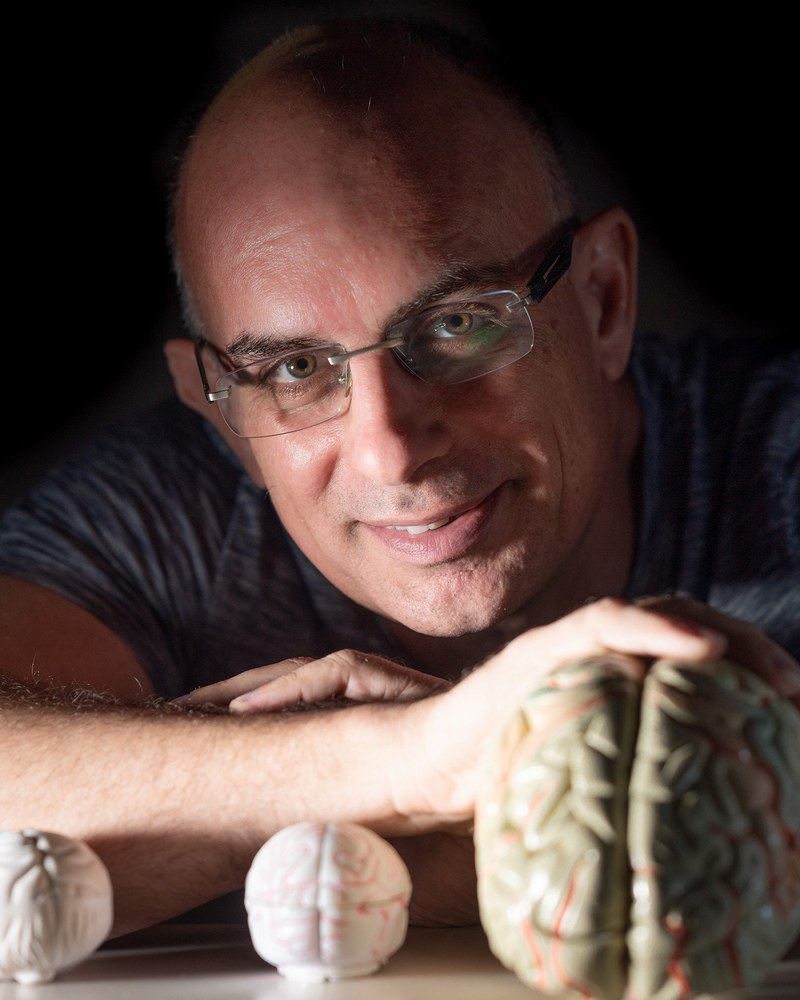
Oren Shriki
Inbal Algom — Ben-Gurion University of the Negev, Beer-Sheva, N/A, Israel
Contemporary theories of consciousness have generated important conceptual advances, yet the field remains fragmented, with relatively few proposals offering a mechanistic and empirically testable account of how neural activity gives rise to subjective experience. In this talk, I will present the ConCrit (Consciousness through Criticality) framework, which proposes that the brain's proximity to critical transitions provides a unifying dynamical principle underlying conscious experience. The first part of the talk will introduce the concept of critical brain dynamics, the hypothesis that cortical networks operate near a transition point between order and disorder. I will review the computational advantages associated with near-criticality, including enhanced information transmission, maximal dynamic range, optimal responsiveness to perturbations, increased repertoire of metastable states, and flexible integration-segregation balance. Different forms of critical transitions will be discussed, together with the mechanisms by which neural systems may regulate their distance from criticality through adaptive and homeostatic processes. Building on these foundations, I will describe how the ConCrit framework provides a mechanistic interpretation of several leading theories of consciousness. According to ConCrit, conscious experience emerges from neural systems operating sufficiently close to criticality, whereas reduced proximity to criticality constrains the richness and flexibility of ongoing brain dynamics. I will review converging evidence from studies of anesthesia, sleep, disorders of consciousness, and psychedelic states, highlighting findings suggesting systematic alterations in critical brain dynamics across different levels and contents of consciousness. I will further discuss recent work demonstrating a hierarchical gradient of proximity to criticality across the cortex, with higher-order transmodal regions exhibiting signatures of stronger critical tuning than primary sensory areas. Notably, regions associated with the default mode network (DMN) appear near the apex of this hierarchy, raising intriguing questions regarding the relationship between critical dynamics, internally generated cognition, self-related processing, and the structure of conscious experience. The ConCrit framework also generates novel predictions regarding altered states of consciousness. In psychedelic states, shifts in proximity to criticality may help explain both the expansion of experiential richness and changes in large-scale functional organization. Similarly, alterations in temporal experience, including the subjective slowing, acceleration, or dissolution of time reported during meditation, psychedelic experiences, and pathological conditions, may reflect changes in the brain's intrinsic dynamical timescales associated with departures toward or away from critical regimes. Finally, I will outline key limitations, open questions, and experimental directions. By grounding phenomenological theories of consciousness in measurable neural dynamics, ConCrit aims to advance a more integrated and testable science of consciousness.
Prof. Oren Shriki is an Associate Professor at Ben-Gurion University of the Negev, where he heads the Computational Psychiatry and Neurotechnology Laboratory. He received his PhD in Computational Neuroscience from the Hebrew University of Jerusalem and completed postdoctoral training at the National Institute of Mental Health (NIMH), USA.
His research combines computational modeling, complex systems theory, and multimodal neuroimaging to investigate the dynamical principles underlying brain function and dysfunction. He is particularly known for his contributions to the study of critical brain dynamics, examining how neural systems operating near critical transitions may optimize information processing, cognition, and adaptive behavior. His work spans theoretical neuroscience, EEG and MEG analysis, machine learning, brain-computer interfaces, and the development of biomarkers for neurological and psychiatric disorders.
In recent years, Prof. Shriki has focused on the relationship between critical brain dynamics and conscious experience. Together with colleagues, he developed the ConCrit (Consciousness through Criticality) framework, which proposes that proximity to criticality provides a mechanistic basis for several prominent theories of consciousness. His research integrates evidence from anesthesia, sleep, disorders of consciousness, psychedelics, and large-scale brain organization to advance a testable science of consciousness grounded in neural dynamics.
Through his interdisciplinary work, he seeks to bridge theoretical neuroscience, consciousness studies, and neurotechnology to better understand how complex brain activity gives rise to the richness of human experience.