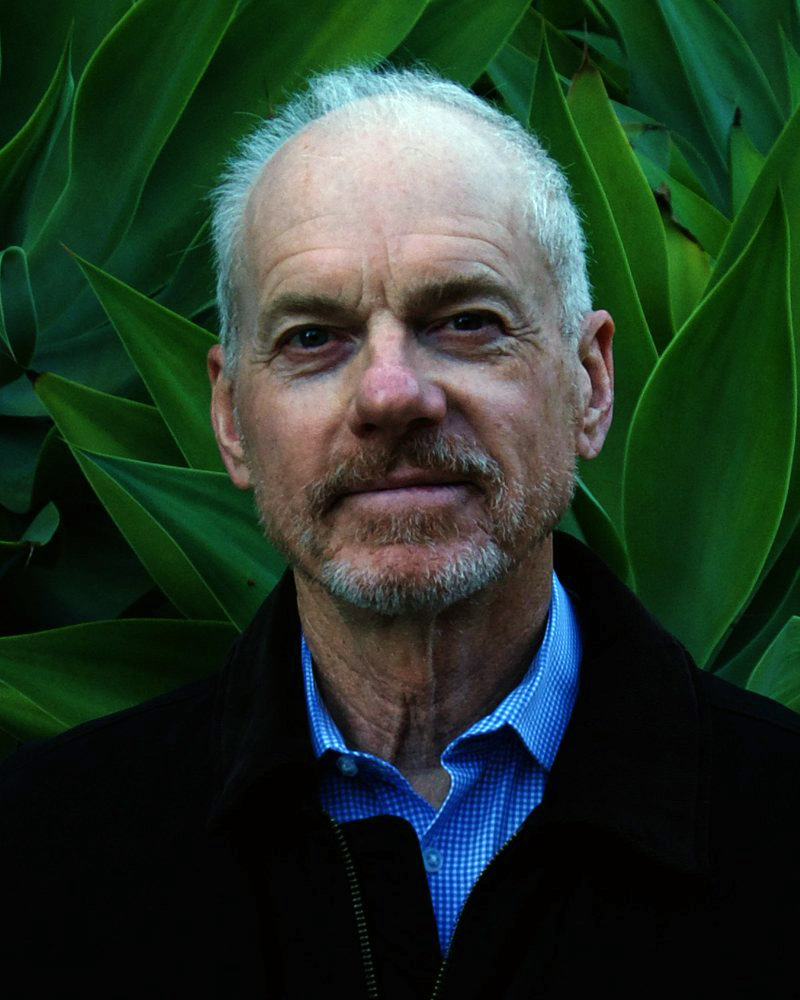
Paul Skokowski
Providing a physical explanation of qualia comprises the “hard problem” of consciousness. Here we consider the qualia delivered through sensation by establishing the thesis of sensory naturalism, which recognizes our senses as detectors of physical properties in the world. Sensory naturalism challenges the widespread assumption in the biological and physical sciences that qualia can be understood solely by studying the brain or computational mechanisms. The theory is shown to preserve the powerful feature of multiple realization while identifying qualia, the contents of our sensory experiences, as physical properties in the world.
Paul Skokowski is director and co-founder of the Center for the Explanation of Consciousness at Stanford University, where he teaches in symbolic systems and philosophy, and is a fellow of St. Edmund Hall, Oxford University. He has been McDonnell-Pew Fellow at Oxford’s Centre for Cognitive Neuroscience, and a visiting professor in philosophy at the University of California, Berkeley. Previously, he was a research physicist at Lawrence Livermore National Laboratory, where he pursued research in laser fusion and high-density plasmas. He was director of the Institute for Scientific Computing Research for the University of California, where he led research in neural networks, intelligent sensing and parallel supercomputing. He was professor of surfing/search producer at Yahoo! Inc. from 1997-2000. He is author of the book "Sensing Qualia: Solving the Hard Problem of Consciousness", University of Chicago Press, 2026. He is also editor of the book "Information and Mind", Stanford CSLI Press 2021, and has published widely in academic journals and books in philosophy, cognitive science, physics, and artificial intelligence. He has received major grants in physics and AI, in addition to grants for research in philosophy and cognitive science. He received a PhD in philosophy from Stanford University, and an MA in physics and philosophy from Oxford University.