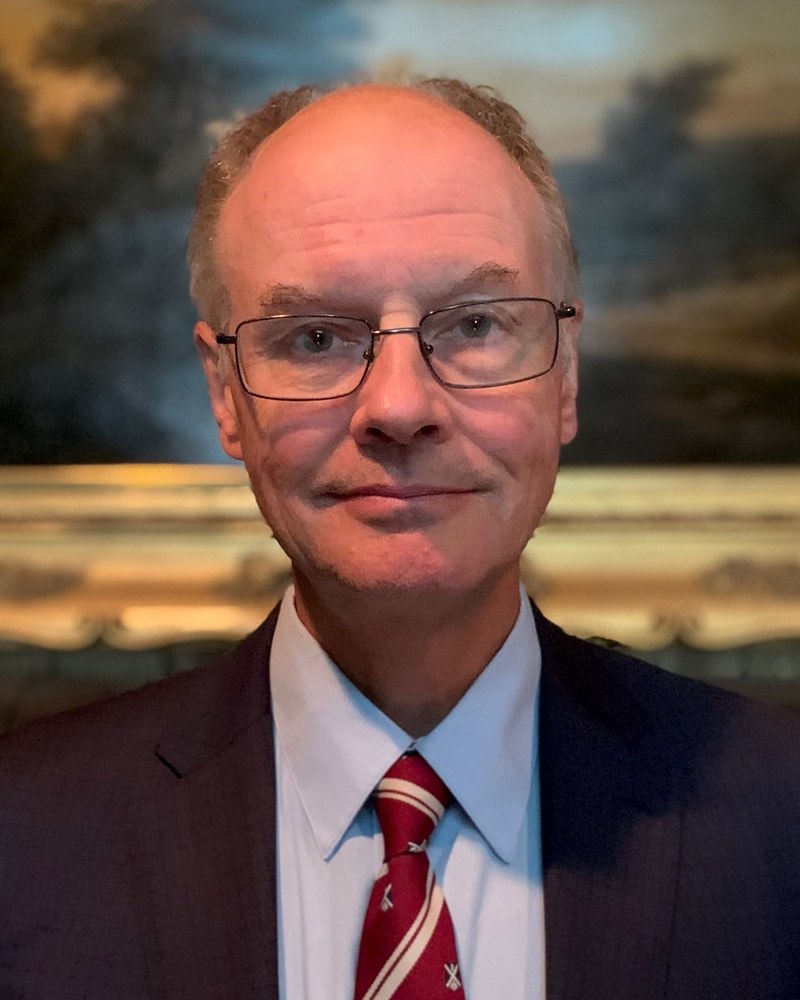
Peter Lugten
Background. Living beings bring more order to the world, and are required by the second law of thermodynamics, to simultaneously produce more disorder through metabolic heat dissipation. Consciousness in living beings produces even more order, enhancing survival and reproduction, and incurs an entropy debt that must be paid separately, and non-metabolically, through heat dissipation produced by Landauer’s principle: the erasure of information within the "explanatory gap" of the hard problem. Consciousness may depend on the properties of tryptophan in microtubules and their ability to dissipate heat through superradiation as required by Landauer. After the post-mortem decomposition of microtubules, consciousness will have no mechanism for the necessary heat discharge, which would violate Landauer’s principle and thus the second law. Any actual such survival would imply life-before-death to be solipsism. Aim. My aim is to distinguish near-death experiences and out-of-body experiences from life-after-death in biophysical terms, and to explain how they might arise as a result of natural forces. Proposal. It is hypothesized that near-death and out-of-body experiences, and their vivid nature, arise from the disinhibition of microtubular consciousness after electroencephalographic brain activity has stopped, but while microtubular Tryptophan is still being activated by ultraviolet photons. These are hypothesized to be transmitted to the brain primarily via light falling on the retina or skin, carried to the brain through mitochondria and microtubules acting as optical waveguides. Additionally, bioluminescent ultra-weak photon emissions accompany membrane depolarization at the moment of death. It is hypothesized that the relativistic transactional interpretation of quantum mechanics could explain the entanglement of this photonic microtubular input, as potentialities, with environmental photons in order to account for rare, veridical near-death extraocular perceptions. Veridical Auditory NDE/OBEs require a coordinated stimulation of Heschl’s gyrus by ambient sound, which might be accomplished by adiabatic mechanical propulsion of axonal solitons along the Eighth Cranial nerve, or possibly transcranial perception of low frequency sound waves triggering glutamate-induced microvolt fluctuations coupled to photon emissions. Conclusion. Ultimately, the approach of death can be accompanied by a pseudo-solipsism of "added time" that could seem like an eternity for the deceased person even as microtubular stimulation decreases.
I am a graduate of the University of Edinburgh with a degree in Veterinary Medicine and Surgery (1979). After 40 years in general practice, I became an independent researcher, publishing journal papers that present solutions to major problems within philosophy. These including the nature of truth, knowledge and falsehood, "active subjectivism" and phenomenology, the neural mechanics that deliver genuine free will, inner speech and its relation to the Modular-with-Feedback Theory of Free Will (with coauthor Alain Moran), and the Landscape of Consciousness-recognized Entropic Theory of the Emergence of Consciousness. My paper, "A Hypothesis to Explain Near-Death Experiences and Out-of-Body Experiences" is currently under review by the editors of the Journal of Neurobehavioral Sciences. I have presented papers at the Biannual International Zoom Conference on the Philosophy of Sir Karl Popper since 2021, and presented the Entropic Theory of the Emergence of Consciousness at the last 4 The Science of Consciousness events, beginning in 2023. I am particularly pleased to have won the Poetry Slam competition at the TSC Barcelona conference with my entry, "Two Demons, Solving the Hard Problem of Consciousness".