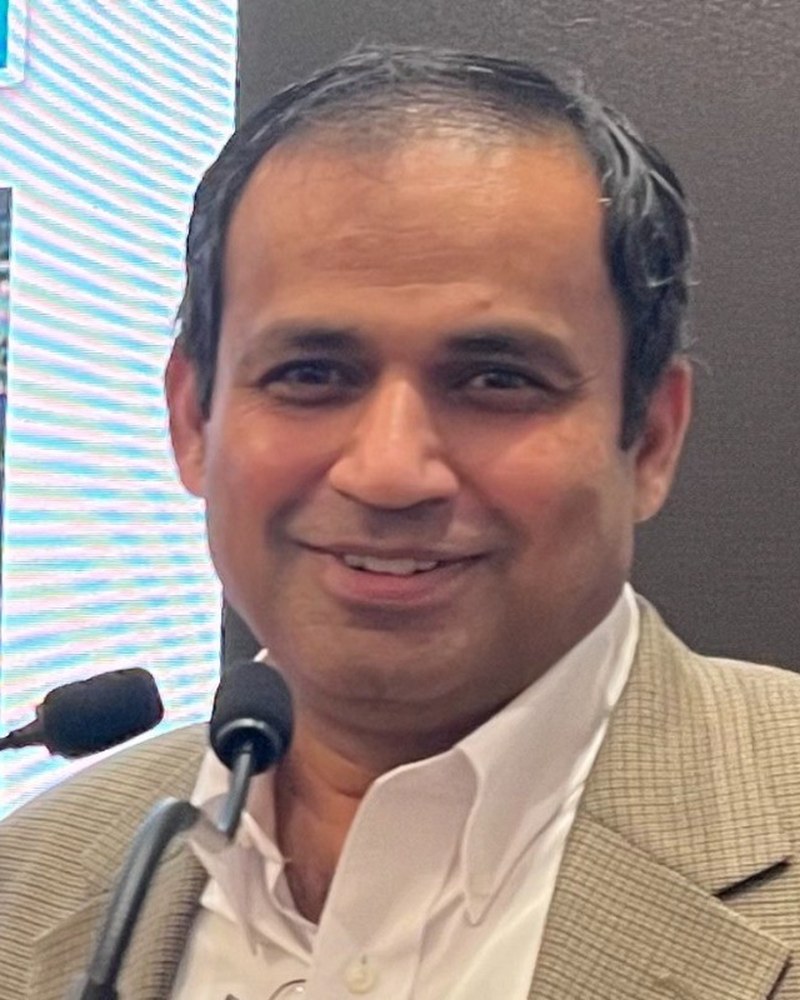
Prakash Bhat
MatterSpaceTime (MST) Theory proposes a unified ontological framework where matter, space, and time are not separate entities but mutually constraining aspects of a single mixed-dimensional manifold whose dimensionality can vary locally. This framework provides a natural setting for understanding how quantum behavior at the subsystem level can give rise to irreversible macroscopic phenomena while still permitting limited retro-causal effects. In this work, I argue that consciousness emerges precisely at the interface where quantum subsystems transition between distinct local dimensional configurations, leading to phenomenological properties such as unity, temporal binding, and directed experience. A central result of MST is that global entropy increases throughout the current expansion epoch of the universe, defining the forward arrow of time, yet quantum subsystems embedded in locally higher-dimensional regions may exhibit effective time-reversed evolution without violating this global thermodynamic constraint. This addresses a tension between quantum linearity and gravitational nonlinearity by proposing that nonlinearity is not added to quantum theory; rather, it emerges when many quantum systems collectively deform the underlying mixed-dimensional manifold. Such deformation appears as curvature—and consequently, as gravitational influence—on the embedded subsystems. Consciousness is modeled as a boundary-maintaining process where a subsystem repeatedly re-stabilizes its local dimensional configuration via quantum gravitational feedback. This feedback loop generates a self-referential information structure with the capacity to integrate inputs across spatial and temporal boundaries. In this view, subjective continuity arises because retro-causal micro-dynamics allow the subsystem to "smooth out" fluctuations by propagating partial information backward through its own local boundary. This enables temporal binding and could account for the experimentally observed "backwards referral" phenomena in neurocognitive processing, distinguishing MST from purely forward-time buffering (postdiction) accounts: on the MST proposal, temporal reintegration is a physical process within the stabilized region rather than a representational relabeling after a fixed delay. The MST framework naturally accommodates Penrose–Hameroff Orch-OR by providing a geometric mechanism for objective reduction in which collapses correspond to dimension-changing events at local nodes of the manifold. If such events screen decoherence on the timescales argued in the Orch-OR literature (Hagan, Hameroff & Tuszynski 2002; Hameroff & Penrose 2014), they would permit quantum-level integration over multiple microtubule sites. Thus, MST offers a broader ontological picture within which quantum brain models become not only plausible but expected. Finally, this retro-causal structure would provide a physical substrate for nonlocal correlations between neural states, should entangled neural states exist, and may explain why certain cognitive and perceptual processes exhibit timing anomalies inconsistent with classical causality. I conclude that MST provides a coherent, physically motivated account of consciousness as the emergent stabilization of mixed-dimensional quantum subsystems. This framework connects quantum physics, gravity, and phenomenology within a single ontology and suggests avenues toward testable predictions—most directly, that perceptual timing anomalies should track the dynamics of boundary stabilization rather than fixed neural delays—for neuro-physics, quantum biology, and the study of anomalous timing in perception.
Prakash Bhat is an AI researcher and engineer affiliated with Dot Star Research Group: https://dotstarinc.com/dot-star-research-group/
He is working at the intersection of physics, quantum biology, and consciousness studies. He developed the MatterSpaceTime (MST) framework and has presented related work at Minkowski Institute spacetime conferences. His background includes roles at major technology(Amazon) and financial firms(Citi).
Scholar Profile:
* ORCID: https://orcid.org/0009-0003-5466-9922
* Google Scholar: https://scholar.google.com/citations?user=H1QQ6l4AAAAJ
https://www.linkedin.com/in/prakashbhatiit