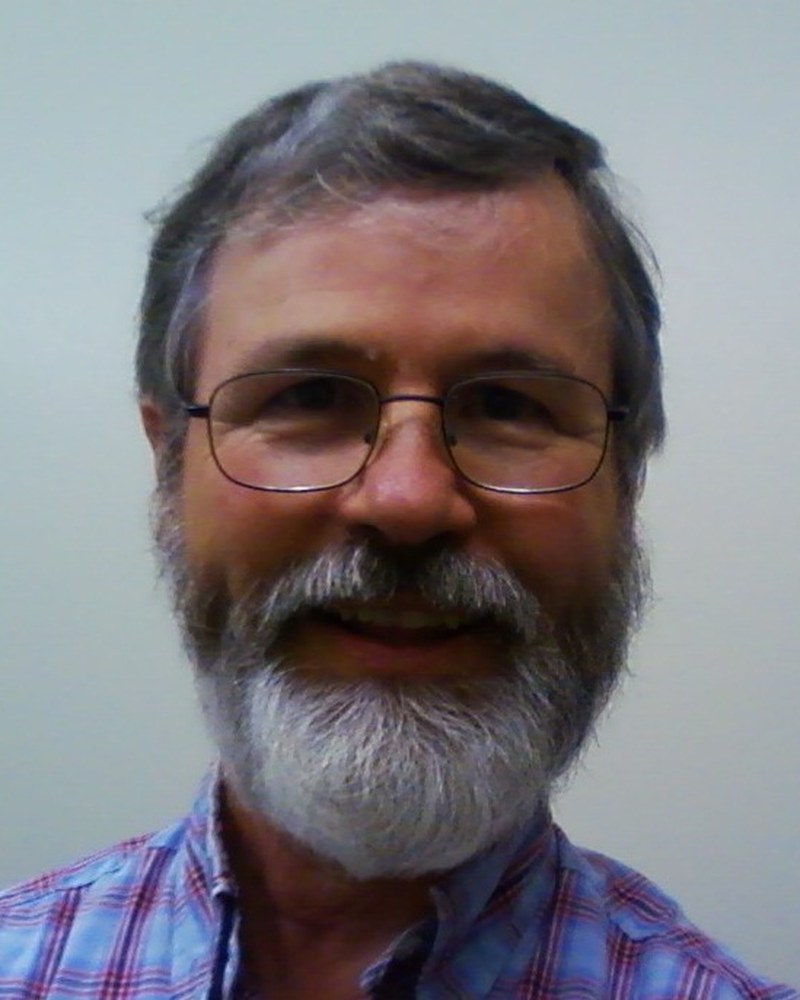
Richard Gauthier
The subjective-objective divide remains a central bottleneck across contemporary physics, neurobiology, and consciousness research. Mainstream physicalism relies on a bottom-up reductionism that treats consciousness as an emergent epiphenomenon, while alternative dualisms frequently succumb to the combination problem. This paper introduces to Western science and philosophy Prabhat Ranjan Sarkar’s fundamental concept of tanmatra, a Sanskrit word originally from ancient Samkhya philosophy. A tanmatra is a sensory inference or generic essence associated with physical vibrations, such as redness associated with certain photon frequencies. Emitted from physical matter, tanmatras travel through sensory organs and nerves to produce subjective sensory qualia in minds, opening a new approach to consciousness research. To develop this concept mathematically for consciousness and quantum research, the paper then introduces Tanmatron Field Theory (TFT) as a proposed dual-aspect research program that extends standard Quantum Field Theory (QFT) by coupling physical fields to a five-dimensional Tanmatric State Vector ΦTanmatric. Based on the consciousness cosmology of P. R. Sarkar (Ananda Sutram), TFT formalizes the Law of Attributional Capacity as a constant scalar invariant conservation law (∑In=CTotal=100). Using the observed invariant relationship between physical vibrational frequency and subjective quality, the principle of Physical Phase-Locking establishes how subjective qualities are deterministically bound to physical wave dynamics. Rather than relying on probabilistic frameworks to identify tanmatric gateways from sensory nerves to the mind, TFT defines biological Appropriative Points (A-points) as deterministic spatial boundary conditions located at anatomical "geographical dead ends" in the primary sensory cortex (Layer IV of V1, Heschl's Gyrus). At these terminal coordinates, TFT proposes that the physical signal uncouples, and its quantitative energy is conserved within a total dual-aspect Lagrangian system as mental tanmatras project onto and vibrate the mental plate (Citta), observed by the Aham as qualitative experiences (qualia) and physical objects. By replacing bottom-up fragmentation with a top-down field interaction hypothesis, this paper presents a unified tanmatra-based framework offering novel resolutions of thirteen foundational consciousness (1-13) enigmas and six quantum (14-19) enigmas: 1) Descartes’ Mind-Body problem, 2) Chalmers' 'Hard Problem', 3) Locke’s Inverted Spectrum, 4) Searle’s Chinese Room, 5) Jackson’s 'Mary’s Room', 6) Nagel’s Bat's Perception anomaly, 7) Direct vs. Indirect Realism, 8) the Binding Problem, 9) AI Consciousness, 10) Block's Absent Qualia Enigma, 11) the Evolutionary Enigma of consciousness, 12) Panpsychism's Combination Problem, 13) Non-Local Awareness during flatline events (NDEs/Anesthesia), 14) the Double-Slit Experiment, 15) the Copenhagen Measurement Problem, 16) the Schrödinger's Cat Enigma, 17) the Many-Worlds Interpretation (MWI) exclusion, 18) the Einstein-Podolsky-Rosen (EPR) Paradox / Bell's Theorem, and 19) the Quantum Zeno Effect. We demonstrate that the six quantum resolutions form a complete foundational set that subsumes secondary quantum paradoxes such as Wigner's Friend and the Delayed-Choice Quantum Eraser. Finally, we outline an empirical research program to search for A-points—utilizing volatile anesthetic interdiction at primary cortical gateways—and propose Eco-Phenomenological Virtual Reality (VR) applications to test TFT and explore its potential for validating P. R. Sarkar's Neohumanism. The paper is located at the author's website https://richardgauthier.academia.edu/research
I have a B.Sc. in physics from MIT, an M.Sc. in physics from the University of Illinois, and a Ph.D. in psychology from Stanford University. I taught secondary school physics for two years in the US Peace Corps in Ghana, and worked at Bell Labs for three years as an applied psychologist in Whippany, NJ. I spent ten years teaching yoga philosophy and meditation as a traveling yogic monk in Europe with the Ananda Marga yoga movement, 5 years on an ecological agriculture support project in Poland, and 18 years as a physics instructor at Santa Rosa Junior College in California before retiring. I was interested in researching consciousness in the '70's at Stanford, but Stanford wasn't ready for this, so I did research in physiological psychology and then in human perception for my doctorate. I've given many physics presentations at regional and annual American Physical Society meetings on alternative physics ideas on the structure of electrons.