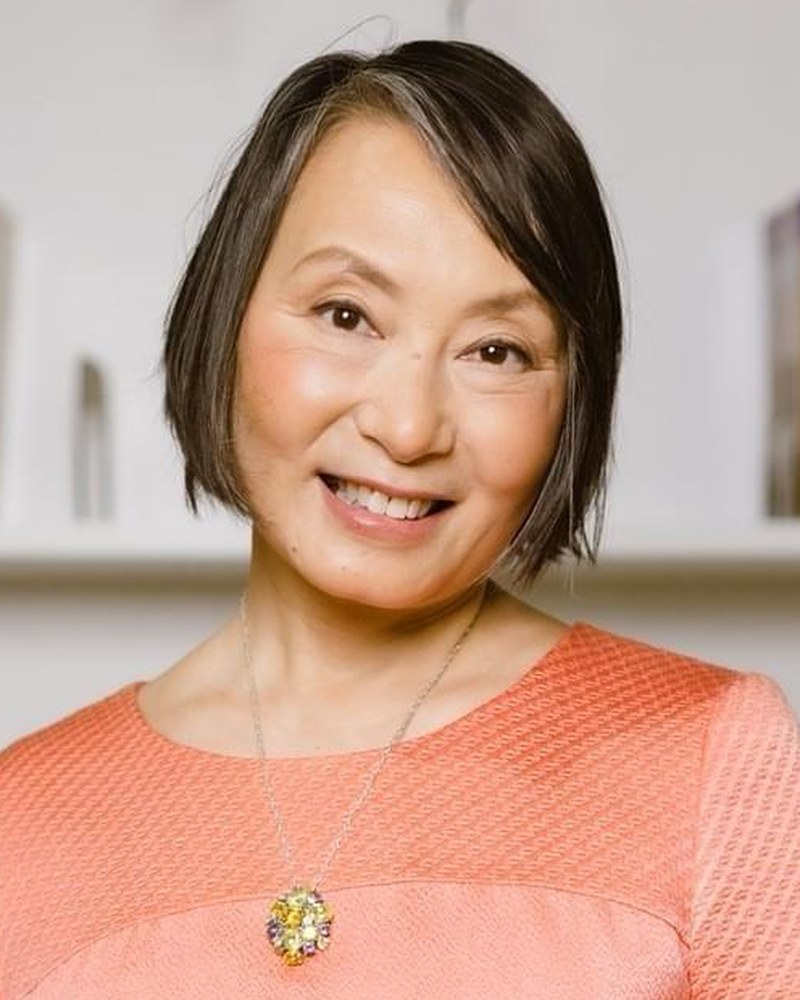
Rulin Xiu
Zhigang Sha — Tao Academy, Toronto, Ontario, Canada
We present a Quantum Theory of Consciousness (QTOC) grounded in a novel interpretation of quantum physics and demonstrate its explanatory power through a quantum framework for the mechanism of sleep. Part I — Quantum Theory of Consciousness. Both consciousness and quantum phenomena share a fundamentally subjective and indeterministic character — a correspondence that, we argue, is not coincidental but implies that consciousness is a quantum phenomenon. QTOC rests on two principles. First, the basic constituent of everything is the quantum vibrational field, which carries matter, energy, and information, and is mathematically described by the wavefunction. Second, conscious experience arises when an organism's internal detectors absorb quantum vibrations through resonance, thereby receiving and processing information, energy, and matter from the field. This five-step process — from vibrational field to detector activation to information processing to energetic change to experienced matter — constitutes the quantum mechanism of consciousness. This framework resolves both the measurement problem and the hard problem of consciousness: wavefunction collapse is the natural consequence of detector-reception of quantum vibrations, and subjective experience is the direct result. QTOC provides the mathematical foundation to unify all major models of consciousness: Integrated Information Theory's Φ, General Resonance Theory, Global Workspace Theory, and quantum field theory approaches can each be derived as special cases, calculable from the wavefunction of the relevant system. The theory predicts a universal quantum vibrational field and explains large-scale brainwave synchrony — including its correlation with Schumann Resonances — as the brain resonating with Earth's ionospheric cavity. Quantum entanglement and error-correction codes applied to neural networks offer a new account of memory formation and retrieval. Part II — Quantum Mechanism of Sleep. Building on QTOC, we propose that the sleep-wake cycle is a fundamental biological rhythm of quantum measurement and quantum coherence. During wakefulness, continuous detector activation by the Reticular Activating System (RAS) constitutes an ongoing process of quantum measurement. While necessary for perception and action, this continuous measurement leads to decoherence and erosion of quantum entanglement — the depletion of “positive information.” Sleep is therefore biologically necessary as a state of reduced quantum measurement that restores coherence and entanglement. NREM sleep — particularly deep slow-wave sleep — is a state of increasing quantum coherence in which the brain rebuilds entanglement and replenishes positive information; synchronized slow waves are macroscopic signatures of this restoration. REM sleep is a state in which the highly coherent brain interacts directly with the organism's integrated information field (IIF), giving rise to dreaming and REM's cognitive functions. The NREM–REM cycle follows naturally: coherence built during NREM enables IIF interaction in REM; the intense information processing of REM induces decoherence, driving the system back into NREM. This framework generates testable predictions: increased quantum coherence signatures during NREM sleep; unique information-theoretic flow during REM; and a measurable correlation between waking coherence — as in long-term meditators — and reduced sleep need. By grounding sleep in a rigorous quantum theory of consciousness, this work opens a new frontier connecting quantum biology, neuroscience, and the science of mind.
About Dr. Rulin Xiu
Dr. Rulin Xiu, a pioneering quantum physicist and string theorist, stands at the forefront of a revolutionary scientific paradigm. As co-founder of Tao Science and Research Director of the Hawaii Theoretical Physics Research Center, Dr. Xiu has dedicated her life's work to pursuing the Grand Unification Theory—a single mathematical framework that could explain everything from the smallest quantum particles to the vast cosmos, and from the nature of consciousness to the mechanics of creation itself.
Dr. Xiu earned her Ph.D. in Theoretical Physics from the University of California, Berkeley, where she specialized in string theory and grand unification. She completed postdoctoral research at both the Houston Advanced Research Center and Harvard University's Lyman Laboratory of Physics. With over 20 scientific and two books to her name, Dr. Xiu has established herself as one of the leading scientists in the quest to unify science and spirituality at the most fundamental level.
Her innovative research extends far beyond traditional physics. Working together with Dr. and Master Sha, Dr. Xiu has developed what she calls the quantum theory of consciousness proposing that consciousness itself can be understood and scientifically studied through quantum physics. Their "holographic quantum theory of consciousness" reveals mathematically how all natural physical laws and phenomena emerge from the hologram created by consciousness. Her recent work on the quantum theory of the soul, quantum theory of life, and quantum approaches to mental health represents a paradigm shift in how we understand the relationship between mind, body, spirit, and the fabric of reality.
What sets Dr. Xiu apart is her unique ability to bridge the mystical and the measurable. Using the holographic principle, she has derived a grand unified theory that encompasses string theory, information theory, thermodynamics, and general relativity within a single quantum theoretical framework. Her approach doesn't just seek to understand the universe—it seeks to unlock the code that allows us to consciously participate in creation itself.
Dr. Xiu is also an active spiritual teacher and healer who leads people on the extraordinary journey as she translates cutting-edge theoretical physics into practical wisdom for manifestation, healing, and conscious creation.
Dr. Rulin Xiu has co-chaired two Tao Science conference with over 300 and 700 participants each. In 2019, the first Tao Science retreat in Hawaii drawn more than 2000 online participants worldwide, 500 people in person.