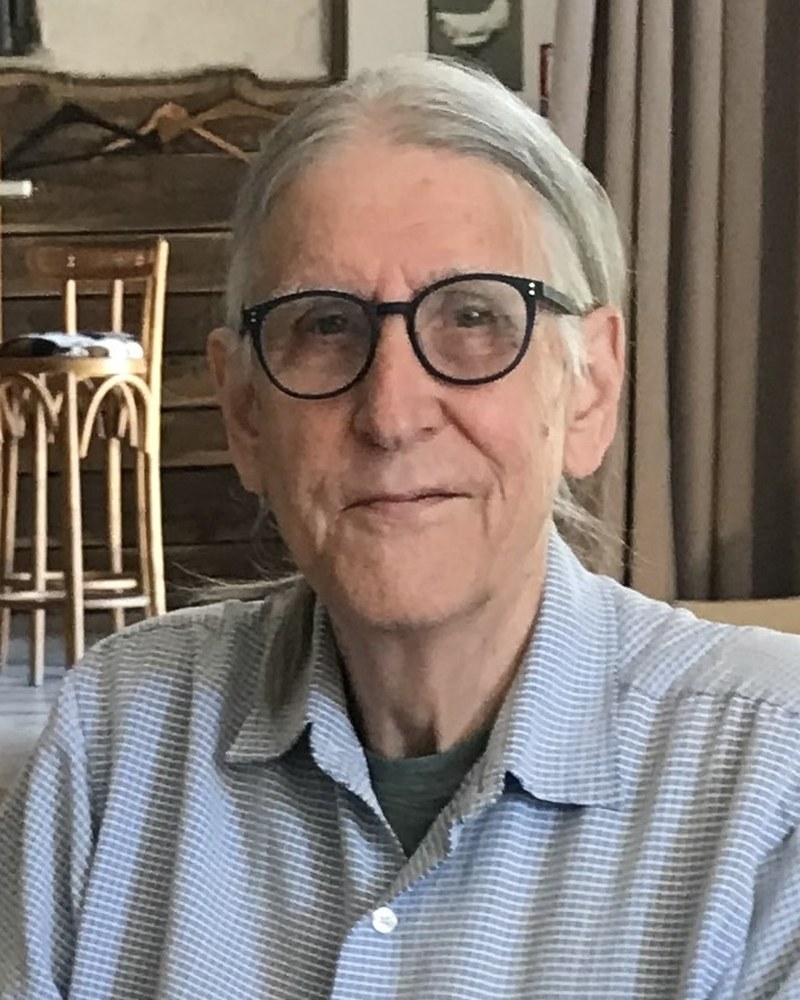
Scott Makeig
Throughout time, the fundamental question facing mankind is this: 'Who am I?' In a concrete sense, each of our lifetimes represents our individual attempt to answer this question. In a more abstract sense, answering some portion of this question has long been a primary challenge in philosophy, psychology, neuroscience, and religion. After studying human brain dynamics for over 40 years, I will consider how psychology and neuroscience may be used to recognize and model the current rapid evolution of self concept and experience -- and what may remain out of the purview of external evidence-based investigation.
Scott Makeig completed a Bachelors degree, ‘Self in Experience’ at the
University of California Berkeley in 1972, a Masters in Music Theory (abt) at
the University of South Carolina, and a Ph.D., ‘Music Psychobiology,’
from the University of California San Diego (UCSD). After a year in
Ahmednagar, India as an American India Foundation research fellow, he became
a research psychobiologist, first at the UCSD Department of Psychiatry and then at
the Naval Health Research Center. In 1999, he moved to the Salk
Institute, La Jolla, and then in 2001 to UCSD as a Research Scientist to develop and direct the Swartz
Center for Computational Neuroscience (SCCN, sccn.ucsd.edu). He formally retired this year, but intends to contribute to funded neuroinformatics projects he pioneered.
His primary research interests have been in developing and applying high-resolution 3-D functional EEG
imaging and analysis to high-density EEG and iEEG data and to concurrent, high-density human EEG
and biobehavioral data, a modality he termed mobile brain/body imaging (MoBI) in 2009. He and
colleagues pioneered the use of time/frequency and independent component analysis (ICA) in EEG and
biomedical signal processing and continue to develop and support the widely used open source EEGLAB software environment for electrophysiological signal processing (sccn.ucsd.edu/eeglab).