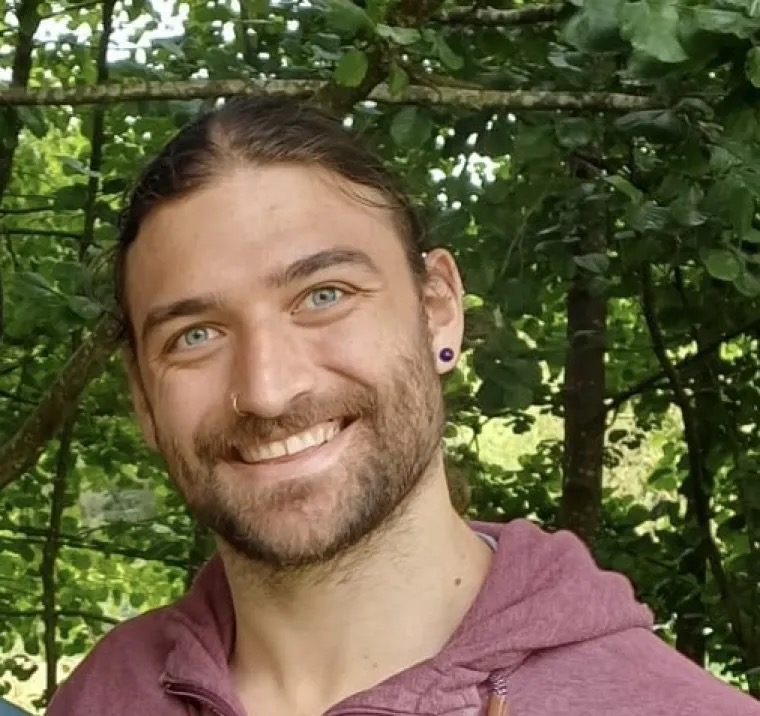
Sebastian Ehmann
Nikoloz Mosahvili — West Chester University of Pennsylvania, West Chester, PA, USA
John Cuzzupe — West Chester University of Pennsylvania, West Chester, PA, USA
Brooke Tompkins — West Chester University of Pennsylvania, West Chester, PA, USA
Jodi McKibben — West Chester University of Pennsylvania, West Chester, PA, USA
Michael Gawrysiak — West Chester University of Pennsylvania, West Chester, PA, USA
Psychedelic compounds have re-emerged as a major scientific focus due to their pronounced effects on consciousness and therapeutic potential across multiple mental health conditions. Evidence suggests that their consciousness-altering properties are central to clinical effects, facilitating salutogenic experiences that promote psychological change and longer-term well-being. However, most evidence derives from highly controlled trials with restrictive eligibility criteria, limiting generalizability to real-world medically supervised settings. In parallel, Psychedelic Service Centers (PSCs) have proliferated internationally to expand access, yet empirical data on individual predictors of benefit and durability of change remain scarce. This study was conducted in collaboration with a PSC in Valle de Bravo, Mexico, administering psilocybin and DMT in a medically monitored 5-day retreat. Participants (N = 56) completed assessments at baseline, post-retreat, and at 1- and 2-month follow-up. Aim 1 tested whether baseline psychedelic preparedness and trait mindfulness predicted acute altered states (psychological insights, emotional breakthroughs, mystical and challenging experiences) using multiple regression. Aim 2 examined longitudinal changes in mindfulness and self-transcendence using linear mixed-effects models with orthogonal time trends and FDR-adjusted contrasts. For Aim 1, conventional and heteroskedasticity-robust (HC3) models showed that baseline mindfulness positively predicted mystical and challenging experiences, whereas preparedness showed no effects; neither predictor was associated with psychological insight or emotional breakthroughs. For Aim 2, nondual awareness (NDA) showed a significant nonlinear increase from baseline to 1-month follow-up that remained elevated at 2 months, whereas mindfulness showed a transient nonlinear elevation from PRE to FUP1, followed by a decline back to baseline levels at FUP2. More transparent body boundaries increased from PRE to POST and FUP1 but returned toward baseline at FUP2, indicating a transient effect. In contrast, there was a strong spatial shift from an egocentric to an allocentric frame of reference from PRE to POST, and this remained significant at both follow-ups, reflecting a more robust and partially sustained change. Secondary exploratory regressions revealed no significant associations of baseline mindfulness or psychedelic preparedness with self-transcendence measures at 1-month follow-up, although a trend-level association emerged between baseline mindfulness and NDA. In addition, exploratory joint models testing whether psychedelic-induced altered states predicted 1-month self-transcendence outcomes found that no acute experience measure independently predicted any outcome. However, follow-up single-predictor analyses indicated that mystical experiences, psychological insight, and emotional breakthroughs, but not challenging experiences, were each associated with greater body boundary transparency at 1 month, with no corresponding associations for spatial frame of reference or NDA. Collectively, these findings indicate that higher baseline dispositional mindfulness was associated with greater mystical and challenging experiences, whereas neither mindfulness nor psychedelic preparedness predicted other acute altered states. The retreat was associated with transient increases in mindfulness, medium-term increases in body boundary transparency, and more sustained increases in NDA and allocentric spatial reference. Exploratory analyses further suggested a trend-level positive association between baseline mindfulness and NDA at 1 month, and positive associations of mystical experiences, psychological insight, and emotional breakthroughs with body boundary transparency at follow-up. These findings should be interpreted cautiously, given limited statistical power and substantial attrition at follow-up.
My research encompasses two primary domains of investigation:
1. the study of advanced meditation and meditative development and
2. the transdiagnostic exploration of aberrant self-processing from a clinical consciousness perspective.
Leveraging a multimethod multimodal (fMRI, EEG) approach and using transcranial focused ultrasound (tFUS), psychedelic compounds, and meditative interventions, my research investigates spatiotemporal neural dynamics and phenomenological correlates in both clinical populations and advanced meditators. Through this work, I aim to gain insight into the clinical benefits, the neurocognitive mechanisms, and ontological implications underlying deep self-transformation and self-transcendence.