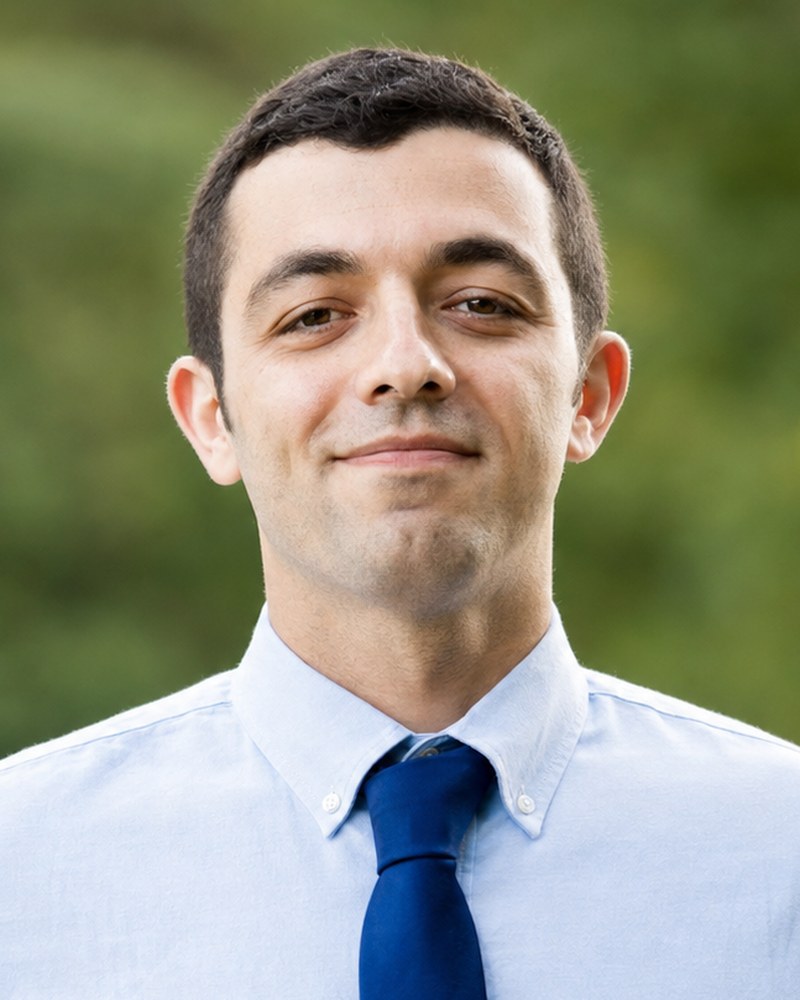
Sina Mousavi
Mohammad Ali Taheri — Cosmointel, Vaughan, Ontario, Canada
Farzad Ahmadkhanlou — University of California at Irvine, Irvine, CA, USA
In the 1980s, Mohammad Ali Taheri introduced a set of non-material and non-energetic phenomena termed T-Consciousness Fields (TCFs), each characterized by distinct functions. According to T-Consciousness theory, the universe comprises three fundamental components: matter, energy, and T-Consciousness. This framework posits that this non-physical, non-energetic consciousness is the origin of information that governs the "software" of the universe, distinct from its material "hardware". Within this framework, TCFs are diverse, each possesses specific functions, and serve as subsets of the Cosmic Consciousness Network, which underpins the informational domain of the universe. Although TCFs cannot be directly measured by conventional scientific instruments, their effects on various physical systems can be reliably investigated through repeatable and controlled experiments. Earlier studies examined pseudo-random generators, Monte Carlo models, and a wide range of biological and physical systems, which reported measurable changes after the application of TCFs. The present work extends the research to true random number generation based on quantum processes. Two devices were used: a gain-switched laser system paired with an interferometric phase-conversion stage, and an LED-based physical random number generator. Each device was tested under control conditions and under exposure to several types of TCFs, using identical acquisition protocols. All datasets were recorded sequentially and analyzed both as full populations and in segmented temporal intervals. The results showed clear and repeatable changes in the distributional properties of the generated values, with strong statistical support. Mean values in the laser-based system decreased by approximately 2-10 percent relative to controls, and median values decreased more substantially, in some cases by more than 60 percent. Shannon entropy declined by roughly 2-8 percent, and Min-entropy by 5-19 percent, depending on field type. These changes were confirmed using two-way ANOVA and Tukey post hoc comparisons, which showed statistically significant differences for nearly all field conditions, with adjusted p-values < 0.001. Frequency distributions shifted away from intermediate bins and toward the extreme ends, with total probability changes reaching up to about 12 percent for the strongest condition. The LED-based study independently corroborated these findings, which demonstrates a consistent and significant reduction in mean, median, and entropy values across all TCF-treated samples. These outcomes indicate reduced phase dispersion during spontaneous emission and a higher likelihood of coherent pulse formation, even when the laser operated below threshold. The absence of any material or energetic intervention, and with consistent statistical significance across independent runs, excludes conventional physical explanations. The overall pattern suggests that the introduction of TCFs alters the system’s internal information state and produces measurable changes in probability distributions at the hardware level. Temporal segmentation shows distinct signatures in different field types, including immediate shifts, progressive directional changes, and stabilization patterns that differ from control behavior. The convergence of distributional changes, entropy reductions, and statistically significant differences across multiple analytical methods demonstrates that TCFs can affect quantum-level stochastic processes in controlled physical systems.
Dr. Sina Mousavi is a geotechnical and geoenvironmental engineer. He earned his Ph.D. in Civil Engineering with a specialization in Geotechnical Engineering from the University of Nebraska-Lincoln, where he also served as a postdoctoral research associate. His areas of interest and expertise include geotechnical engineering, environmental engineering, instrumentation, and statistical data analysis. Additionally, he has more than 12 years of research experience in the T-Consciousness Fields (TCFs) area. He is a licensed Professional Engineer (P.E.) in the state of Wisconsin.