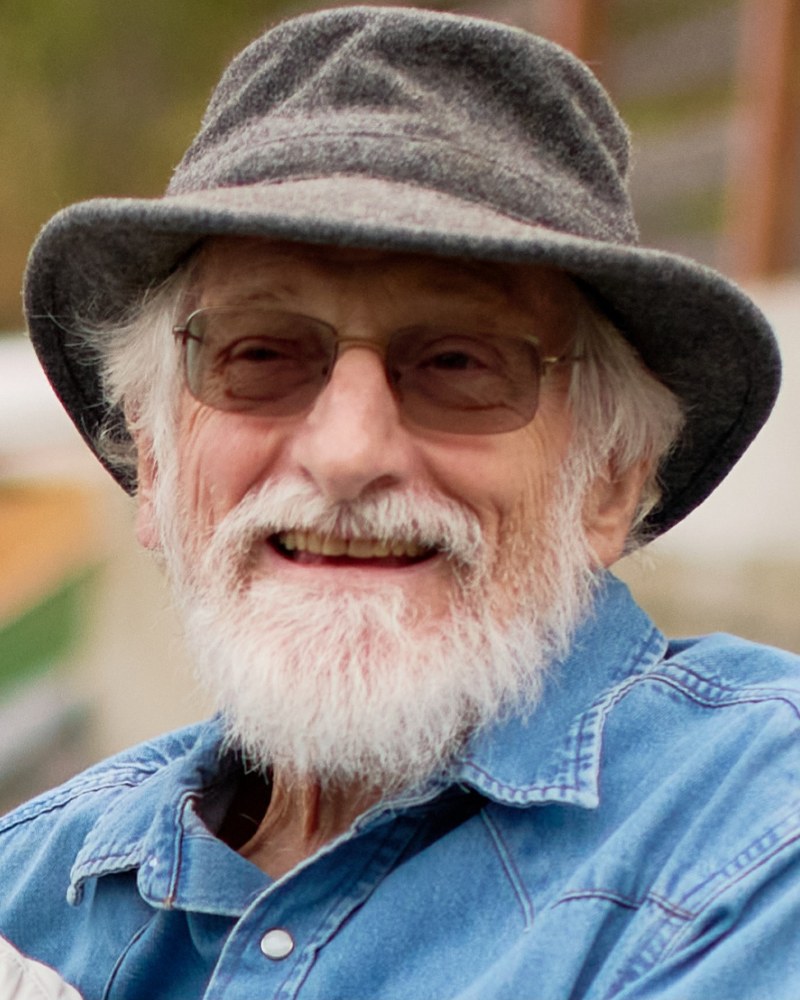
Steven Tackett-Nelson
Proposal: Neither spacetime nor mind has mass, location or extension, yet matter interacts with both. Minimal Observation by Spacetime (MOST), “just enough observation to collapse indeterminacy”, connects brain and mind. Spacetime geometry causes eigenvalues at human scale, indeterminacy at quantum scale. Human experience is a wave in an ocean of matter, propagating through calories and oxygen. Observation of an unconscious brain process creates a mental state. Argument: Size divides quantum from classical. Spacetime properties include separation, electromagnetic/gravitational field propagation, virtual particle creation, and discontinuities involving cosmic inflation and singularities. Without spacetime, matter is one speck of everything at once. Without matter, spacetime has no properties. “Complementary dualism”. Interpretations of quantum theory modify spacetime. Many worlds creates parallel universes. GRWf collapse theory adds flashes. De-Broglie-Bohm adds a pilot wave. Environmental decoherence is inevitable at human scale. MOST maintains no particular interpretation, only that spacetime collapses indeterminacy. Von Neumann concluded it is inessential whether a detector or the human brain is ultimately referred to as the “observer”. Gravitation moves stars without a “graviter”, each star responding to total spacetime curvature. MOST is observation without an observer. No homunculus necessary; thought is inevitably intentional. “Panobservationalism.” Quantum is as quantum does. An electron isn’t made of special quantum stuff. It’s a “quantum particle” because quantum theory explains its activities. Quantum concepts explain mental phenomena like order effects and bistable perception; mind is somewhat quantum. Childhood memories persist although the atoms of childhood bodies are long gone. We are ongoing patterns organizing matter, not the atoms manifesting those patterns. Body is matter, mind rides the wave, perhaps in Nambu-Goldstone mode. Complementary dualism again. Current thoughts mainly determine one’s next thoughts. Brain processes are iterative, driven and damped by simultaneous and often incompatible unconscious processes. These create superimposed “next possible mental states”, each with a probability of observation. Observed “actual mental states” are experience, data points of “what it is like” to be you, available for recall and reflection. Unlike Whitehead’s actual occasions, the observation process carries neither history nor qualia. Implications: Observations are ontologically foundational, “process monads”, discrete points of classical reality, which is only a “dust” of closely-spaced experiential data points. “Solid” objects have spatial and temporal gaps between observations. Mass and gravity interact to concentrate both. Indeterminacy and spacetime could interact similarly, concentrating observation. Brain complexity increases information and indeterminacy; integrated information theory unwittingly implicates indeterminacy. Extremely concentrated gravity creates spacetime singularities, thermodynamic entities quite unlike ordinary gravity. Concentrated observation could create “observational singularities”, quite unlike minimal observation. Consciousness doesn’t cause collapse, minimal observation causes collapse, and in brains, consciousness. Consciousness just is ongoing observation of iterated brain processes. Repeated observation of a brain process makes it more conscious and reinforces it. Mind is more like empty space than like matter. Instead of “no observer”, “spacetime observation” could imply cosmopsychism. Observation is non-commutative and temporally asymmetric, creating before and after, irreversibly creating information. Human time is perpetual “now”; time translation symmetry and energy conservation are inapplicable. Mental events could affect matter.
I have a BS in sociology from the University of California at Davis, MD and Psychiatry residency at University of Missouri – Columbia. I am retired from patient care and as medical director at several hospitals and clinics, still on retired staff at Salem Hospital. I am a past president of the Oregon Psychiatric Physician’s Association and taught for years at the University of Missouri - Columbia and Oregon Health Science University. I am happily married with children for 50 years. I garden extensively, build stone walls and perform music competently, occasionally beautifully. This is my first presentation for a philosophical audience.