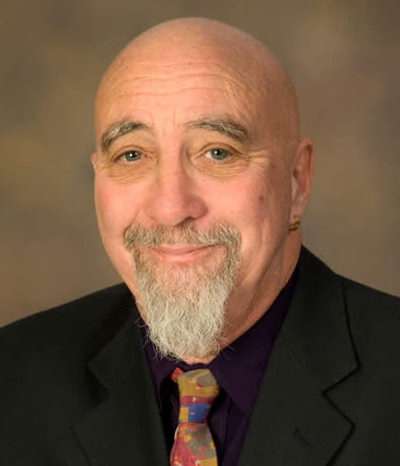
Stuart Hameroff
This panel will explore the computability of consciousness and whether artificial intelligence can ever be conscious. Bringing together perspectives from neuroscience, philosophy, physics, and computer science, the discussion will examine whether conscious experience can be fully explained by computation or whether it depends on processes that cannot be captured by algorithms. The panel will also consider how consciousness in AI could be defined, tested, and recognized, as well as the ethical, societal, and public policy implications of potentially conscious AI, including questions of moral status, responsibility, and governance. Stuart Hameroff will contribute his perspective on quantum processes in the brain and their possible role in consciousness.
Stuart Hameroff, MD, is an anesthesiologist and consciousness researcher at Quantum Life Technologies. He previously served as a professor of anesthesiology and psychology at the University of Arizona, where he cofounded and directed the Center for Consciousness Studies and helped establish The Science of Consciousness conference series. In collaboration with Nobel Laureate Sir Roger Penrose, he developed the orchestrated objective reduction (‘Orch OR’) theory, which proposes that quantum processes in neuronal microtubules inside brain neurons are essential to consciousness. His research spans anesthesia, anti-aging, and quantum optics of microtubules. Hameroff sees a possible path to conscious AI through biomimetic, organic quantum gel systems developed by Anirban Bandyopadhyay.