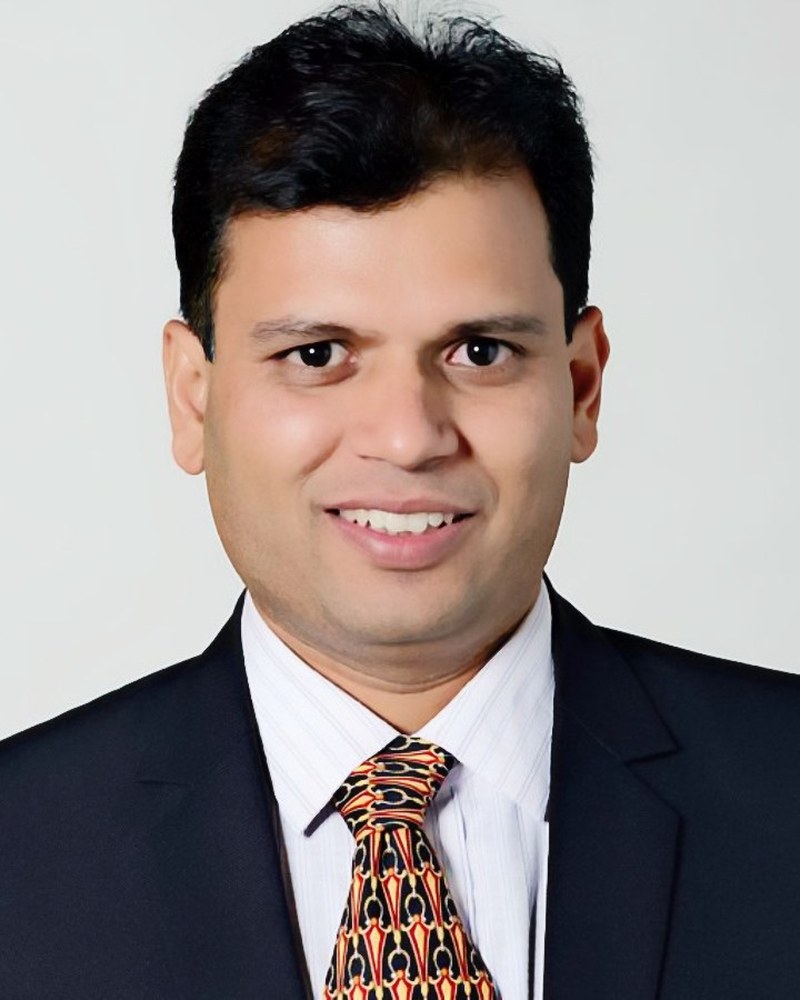
Sunil Khandbahale
The inquiry Kōhaṃ? i.e. “Who Am I?” addresses one of philosophy’s oldest and most urgent questions: What is the true nature of the self? Contemporary debates on personal identity often revolve around psychological continuity, memory, or bodily persistence, yet these frameworks leave untouched the mystery of the conscious subject who witnesses all change. Drawing on the author’s multilingual book Kōhaṃ? Who Am I? Discovering the Oneness of Consciousness Through Self-Inquiry and over a decade of global workshops, this paper advances the Advaita Vedānta thesis that consciousness itself, not body, mind, or personality but is the only real Self. Advaita Vedānta maintains that Brahman, pure awareness, is sat-cit-ānanda: existence, consciousness, and bliss. Through the method of neti-neti (“not this, not this”), practitioners systematically withdraw identification from social roles, physical form, subtle energies, thoughts, and even the sense of “I” as an individual thinker. The process traverses the five kośas (sheaths) and the four experiential “bodies” (gross, subtle, causal, and supra-causal), revealing that waking, dreaming, and deep sleep are all witnessed by the same changeless awareness. What remains after all negation is not a private mind but one infinite consciousness which is unborn, undying, and identical in all beings. Workshops and retreats conducted across India, Europe, and the Americas between 2015 and 2024 provide a rich body of phenomenological evidence. Participants consistently report a shift from ego-centered identity to a direct recognition of universal presence, accompanied by lasting increases in well-being, relational harmony, and compassion. These findings resonate with emerging research in neuroscience and contemplative science, which documents neural correlates of nondual awareness such as reduced activity in the default mode network and heightened gamma-band synchrony while also highlighting the limitations of purely third-person measurement. Positioned within the Science of Consciousness 2026 theme “Philosophy – Personal Identity and the Self,” this paper argues that true personal identity is not a collection of memories or physical traits but the timeless consciousness that enables all experience. By integrating first-person methods with contemporary philosophy and empirical inquiry, Kōhaṃ? offers a rigorous, experiential framework for rethinking selfhood. Recognizing consciousness as the single, boundless reality dissolves the apparent conflict between individual and universal, opening a path toward global understanding and ethical responsibility. In an era marked by cultural divisions and technological distractions, this ancient yet ever-relevant insight invites a radical revaluation of what it means to be a person.
Dr. Sunil Shivaji Khandbahale is an interdisciplinary scholar, technologist, entrepreneur, and author whose work bridges Advaita Vedānta, philosophy of consciousness, ethics, governance, and human-centered technology. He is an MIT Sloan Fellow in Global Leadership and Innovation from the Massachusetts Institute of Technology.
Born in a small farming village in Maharashtra, India, Dr. Khandbahale is a self-taught technologist and pioneer in Indian language computing. In 2001, he created India’s first Marathi digital dictionary, later expanding this work into multilingual language technologies, including online dictionaries, mobile applications, SMS-based lexical tools, and spell-checking systems. He is the founder of KHANDBAHALE.COM, a digital platform supporting all 22 scheduled Indian languages and serving over 200 million users globally.
Over the past 25 years, he has developed 100+ open-access technologies and social innovations across education, language preservation, health, culture, and civic engagement. His initiatives include SamaySangit (music-based well-being technology), Dnyaneshwari Radio, Sanskritbharati Radio, Kumbhathon (innovation ecosystem for the Kumbh Mela), and GodavariAarti.org focused on ecological and civic consciousness.
Dr. Khandbahale is the author of more than 50 books spanning Indian philosophy, ethics, management, governance, and spirituality. His multilingual book Kōhaṃ? Who Am I?—available in eight languages—presents self-inquiry as a rigorous experiential and philosophical method grounded in Advaita Vedānta and aligned with global inquiries into consciousness and personal identity.
His philosophical training has been shaped through long-term study in the traditional Guru–Shishya lineage under Advaita teacher Dr. Kisan Maharaj Sakhare at Sadhakashram, Alandi. This background informs his research on selfhood, nondual awareness, and ethics-based governance.
Dr. Khandbahale has collaborated with organizations including Google, Microsoft, and Meta, and has advised governments, universities, startups, and enterprises on leadership, ethics, and inclusive innovation. His contributions have received national and international recognition, including honors from the President of India.
His current work explores a future-oriented framework of Human–Artificial–Spiritual Intelligence, integrating ancient wisdom with contemporary science and technology.
More Information at Personal Website: https://sunilkhandbahale.com/