Thomas Varley
Vaibhav Pai — Tufts University, Medford, MA, USA
Mike Levin — Tufts U, Med, MA, USA
Josh Bongard — University of Vermont, Burlington, VT, USA
Two decades of research have linked the dynamics of brain information processing to the level and content of consciousness. Low-awareness states such as anesthesia, coma, and NREM sleep are reliably associated with decreased levels of information integration and connectivity, while psychedelic states have been associated with increased entropy and more chaotic information flows. This has led to a number of proposals, such as the Entropic Brain Hypothesis, that explicitly link the structure of information dynamics to phenomenological consciousness. Here, we show that essentially all of the information-theoretic features that have been associated with consciousness in the brain are also present in non-neural tissue – specifically, artificial organoids derived from Xenopus laevis embryos known as “basal Xenobots.” By adapting analytical pipelines pioneered in computational neuroscience and applying them to imaging of Xenobot tissue, we can analyze the structure of emergent information-processing dynamics in systems that have previously gone under-studied in this regard. Despite their non-neural nature, dynamic calcium imaging reveals that basal Xenobots show statistically significant levels of multicellular information integration, as indexed by a battery of measures previously validated in neuroscience; including meso-scale functional connectivity, time-directed information transfer, statistical synergy, and non-trivial Lempel-Ziv complexity. We then explore non-neural analogues of “psychopharmacology”. In neuroscience, consciousness-altering drugs have been key tools for linking biological substrate to phenomenological consciousness via information dynamics; here we show an analogous pipeline is tractable in non-neural systems. We found that exposure to extracellular ATP (eATP) induces changes in patterns of information integration in Xenobots similar to what psychedelic drugs produce in the brain (reductions in functional and effective connectivity, increased Lempel-Ziv complexity, etc). As a signaling molecule, eATP is known to regulate a variety of processes, including cellular responses to danger and stress, so the finding that exposure disrupts multicellular coordination and increases entropy may inform future research on the emergence of multi-cellular organization. We do not claim that these results say anything definitive about the possibility of Xenobot consciousness, however, they raise substantive questions about the nature of information integration in neural and non-neural tissues. Collectively, we challenge the common perspective that the nervous system occupies a privileged position with respect to these information-theoretic signatures, instead suggesting that “information processing” is a feature of biological systems writ large – with profound implications for the possibility of “cognition” (and possibly consciousness) in non-neural systems.
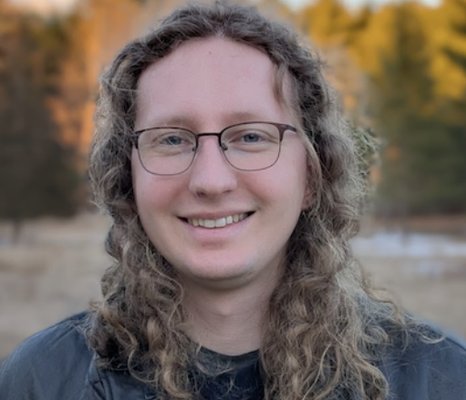
Thomas F. Varley earned an MPhil in Clinical Neurosciences from the University of Cambridge in 2018 and a dual PhD in computational neuroscience and complex systems science from Indiana University in 2023. They currently work as a postdoc at the Vermont Complex Systems Institute where they research emergent multicellular coordination and information-processing dynamics in neural and non-neural systems.