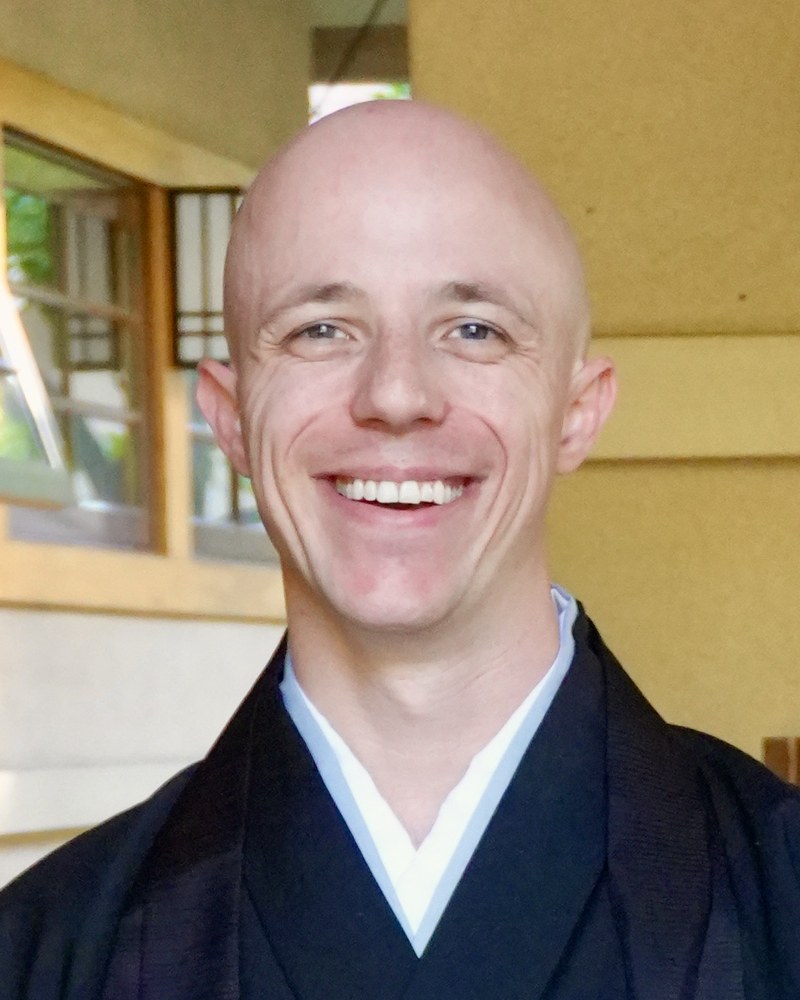
William Thomas
Consciousness research increasingly depends upon first-person reports while providing relatively little systematic training in first-person observation. Participants are routinely asked to examine and describe the structure of their own experience, yet the field rarely addresses whether either subjects or investigators have developed the capacity to observe experience prior to conceptual interpretation, narrative reconstruction, or theoretical overlay. This raises a methodological question: how might consciousness research cultivate more reliable first-person investigators? This presentation explores whether Zen Buddhism, particularly within the Soto tradition, may offer a valuable resource for addressing this challenge. Rather than approaching Zen primarily as a religious doctrine or philosophical worldview, the presentation examines it as a long-standing investigative discipline centered on the direct observation of experience. In this framework, the practitioner functions simultaneously as observer and field of inquiry. The discussion situates Zen alongside developments in neurophenomenology, contemplative science, and other first-person methodologies. While contemporary research increasingly acknowledges the importance of subjective experience, ordinary introspection remains strongly shaped by narrative habits, cognitive biases, and preexisting conceptual frameworks. Psychedelic research has similarly generated extraordinary interest and rich phenomenological reports, yet the intensity, symbolic content, and retrospective interpretation associated with such states can complicate careful observation of experience itself. The challenge may therefore lie not only in collecting first-person data, but in cultivating investigators capable of observing experience with greater phenomenological precision. Within Soto Zen, practice is not oriented toward producing definitive conclusions about consciousness or affirming particular metaphysical claims. Unlike systems organized around doctrinal belief or theoretical explanation, Zen does not require practitioners to arrive at predetermined conclusions regarding the nature of consciousness. The investigation remains open-ended, with direct experience taking precedence over metaphysical commitment or conceptual closure. Practice instead functions as a sustained inquiry into experience as it unfolds, including the observation of how cognition organizes, filters, and interprets perception. Shikantaza ("just sitting") cultivates a mode of non-goal-directed observation, while the teacher-student relationship provides an ongoing process of phenomenological correction capable of identifying subtle forms of self-confirming interpretation. From this perspective, Zen may be understood as a systematic training in first-person observation. Rather than seeking to explain experience, practice repeatedly returns attention to experience as it unfolds, while the processes through which cognition organizes, interprets, and narrates experience become objects of investigation themselves. Practice therefore does not seek to eliminate thought or interpretation, but to observe how meaning and conceptual structure arise within experience, allowing experience itself to become more directly available to observation. Rather than advocating the incorporation of Zen into laboratory protocols, this presentation asks whether consciousness research might benefit from researchers developing greater first-person investigative capacity themselves. If consciousness is both the object of study and the medium through which inquiry occurs, traditions dedicated to refining attention to experience and awareness of the interpretive processes that accompany it may represent an important, though underexplored, methodological resource.
William Thomas is a Sōtō Zen priest in Silicon Valley, organizational behavior consultant, and founder of Zen Work Lab, a forum that brings together tech leaders, researchers, and contemplative practitioners to explore the future of work, AI ethics, and mental health through dialogue and community practice.
His work focuses on bridging contemplative practice and scientific research to explore how they can inform healthier workplace cultures and human-centered approaches to technological innovation. He has more than a decade of Zen training, including a monastic residency at the San Francisco Zen Center, and trained under Les Kaye Roshi, former Zen teacher to Steve Jobs. William is a 2026 Mind & Life Summer Research Institute Fellow.