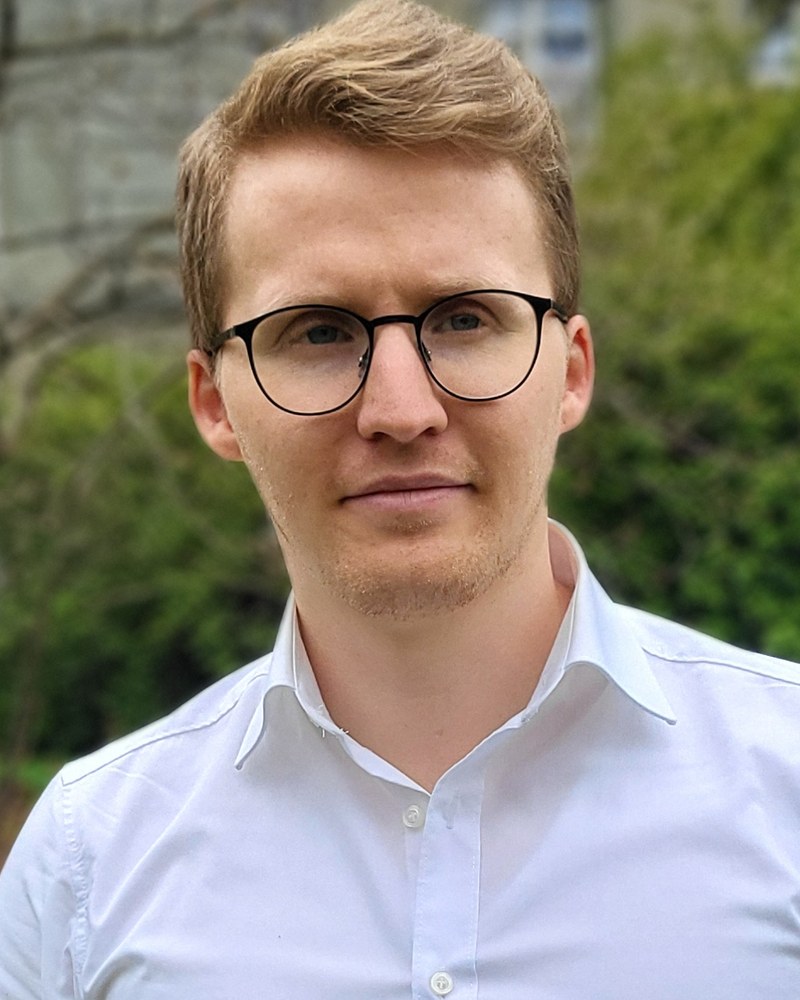
Yannik Steinebrunner
Explaining our intuition of acquaintance is highly relevant to understanding consciousness, especially for solving the “Meta-Problem”. Attempts to explain this intuition have failed. According to Chalmers, explaining our sense of acquaintance “is the key problem we have not yet solved”. In recent years, however, one interesting strategy has emerged. This is what François Kammerer calls the “evidential approach”. Its underlying idea is that phenomenal cognition is deeply integrated with epistemic, evidential cognition. Introspective representations of sensory states are red-herrings when trying to explain our intuition of acquaintance. Instead, we should think of them as being intertwined with how we represent special epistemological properties by employing introspective models of evidence. This paper pursues two aims. First, it argues that the evidential approach is indeed a very promising strategy for explaining our intuition of acquaintance. Second, however, it argues that so far, we are lacking the appropriate model of evidence. Currently the most advanced version of such a model––Kammerer’s “Meta-Cartesianism” (introduced in his new book)––faces serious problems. Most Meta-Problem theories trying to explain the intuition of acquaintance suffer from one of two flaws. Either they rely on primitive notions and relations, thus not really being able to give naturalistic explanations of our intuitions of acquaintance. Or they rely on generic accounts of (higher-order) introspection or introspective opacity, thereby failing to predict the distinctiveness of acquaintance intuitions altogether. The evidential approach evades both of these flaws. First, it explains acquaintance intuitions in terms of topic-neutrally characterized mechanisms of introspective representation. Second, it goes beyond standard introspective representational accounts by positing an additional representational layer of evidence that incorporates representations of strong epistemic properties. Models of evidence in this way can more or less be found in a few extant theories: conceptual models, inferential/justificatory models, higher-order models, and generative, Bayesian models. The most advanced model of evidence to date is Kammerer’s “Meta-Cartesianism”. According to this view, we have an innate theory of mind module––a “Cartesian Device” (CD)––which sub-personally deploys a metacognitive concept of direct evidence in our introspective tracking of non-inferential belief formation processes (such as sensory processes). It does so by tacitly employing an “Evidence-by-Resemblance Mechanism” (ERM), according to which we represent having direct evidence for state x once we are in a (phenomenal) meta-cognitive state *x* estimated as resembling x the most. I raise two objections. First, Meta-Cartesianism is not able to answer what Chalmers calls the “belief problem”: since acquaintance intuitions are exclusively phenomenal, we need a mechanism that predicts their occurrence only when introspecting phenomenal states, not when introspecting non-phenomenal states. But because an ERM-governed CD can be invoked to predict all kinds of non-phenomenal, meta-mental Cartesian intuitions, Meta-Cartesianism fails to predict our intuition of acquaintance. Second, even if Meta-Cartesianism succeeds in predicting acquaintance intuitions, it doesn’t do so correctly. Resemblance mechanisms and the Cartesian Device are vastly overpredictive of our intuition of acquaintance. I suggest that the resemblance rule may be replaced with an embedding-style quotation rule, yielding an “Evidence by Quotation Mechanism“ (EQM).
Yannik Steinebrunner completed his BA and MA in Philosophy at Basel University in Switzerland. He is currently pursuing his PhD, co-advised by François Kammerer, focusing on the meta-problem of consciousness and naturalistic models of acquaintance. He has presented his work at various conferences, including the 'First-Person Science of Consciousness Conference' in Mannheim, Germany, in 2025 and, recently, the 'The Conscious Mind at 30' celebration in Bochum, Germany. Both his BA and MA theses were awarded prizes at his home university.