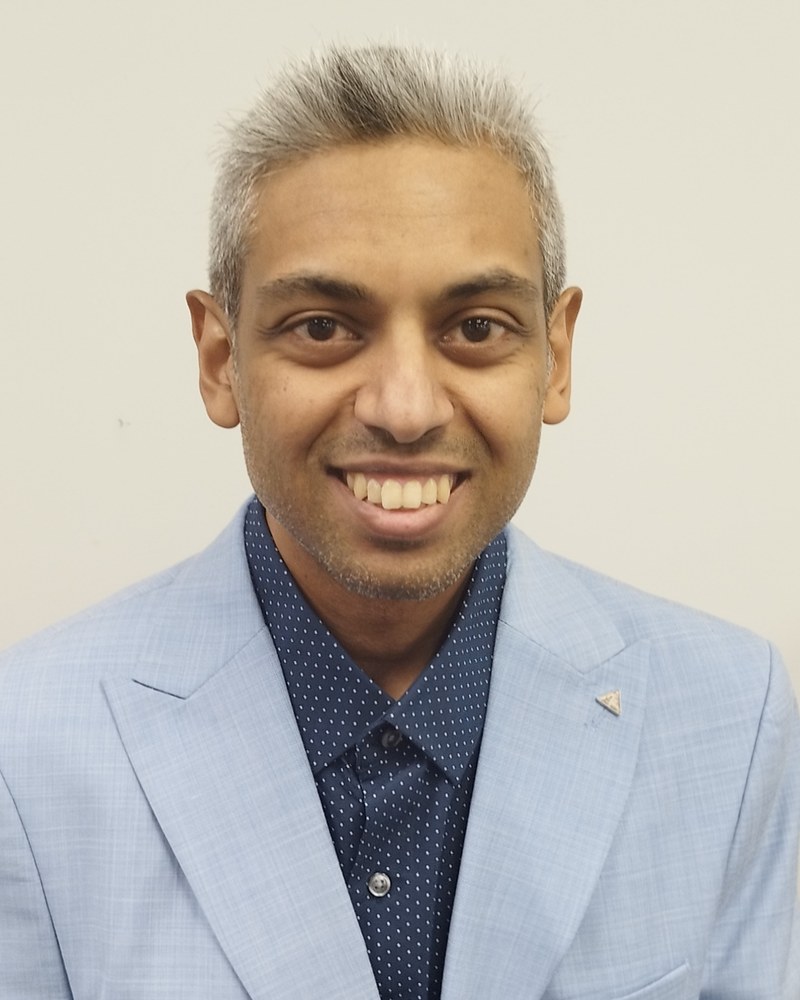
Yashine Goolam Hossen
Lea Gassab — University of Waterloo, Waterloo, ON, Canada
Travis Craddock — University of Waterloo, Waterloo, ON, Canada
Memory is often described as the storage and retrieval of information, yet remembering is an active and adaptive process. Memories are shaped by the order of experience, the context in which learning occurs, and the plastic changes that continue after an event has passed. Understanding these dynamics may be important for explaining how past experience becomes accessible in the present. We explore whether quantum-like mathematical frameworks can offer a useful description of memory and plasticity. In this context, “quantum-like” does not imply that the brain functions as a quantum computer or that microscopic quantum coherence is required. Rather, it refers to models that naturally represent context dependence, competing possibilities, order effects, and changes in the state of a memory during learning and recall. Using an associative-memory framework, we compare quantum-like and classical descriptions of adaptive learning. The results suggest that successful recall alone may not be sufficient to evaluate a memory model. A model should also preserve the temporal and contextual structure through which a memory was formed. This perspective shifts the central question from whether memory is simply stored to how plasticity continually reshapes what can be remembered. It also raises a broader question for consciousness research: could quantum-like dynamics help describe how learning, context, and the order of experience determine which memories, perceptions, or expectations become consciously accessible?
Yashine H. Goolam Hossen is a master’s student in Biology at the University of Waterloo, where he conducts research in Professor Travis Craddock’s Quantum Neurobiology Laboratory. He is also affiliated with the Department of Physics and Astronomy, the Waterloo Institute for Nanotechnology, and the Waterloo Institute for Complexity and Innovation (WICI). He previously completed a master’s degree in Physics with cum laude distinction at the University of KwaZulu-Natal in 2016, following undergraduate studies in Mathematics and Computer Science at the University of Mauritius in 2012. His interdisciplinary research combines psychology, biology, physics, mathematics, and computation to investigate memory, neural plasticity, biological information processing, and quantum-inspired approaches to neuroscience. His current work develops graph-based and state-space models to examine how learning, context, plasticity, and the order of experience influence memory formation and recall. He has three publications, with several additional manuscripts and preprints in development, including work in quantum biology, quantum sensing, artificial life, biological networks, artificial intelligence and cognition, and ultraweak photon emission. Yashine has recently presented his research on quantum-inspired memory and plasticity at scientific meetings, including the PATH symposium in Canada, the Quantum Biology Forum in the United States, QUEBS in Hungary, and QIP 2026 in Sweden. His distinctions include a Best Flash Talk Award and Graduate Dissemination Awards from the University of Waterloo supporting international research presentations. He has mentored undergraduate and graduate researchers in scientific computing, Python, high-performance computing, scientific writing, and reproducible research practices, and currently serves as a reviewer for the URNCST Journal. He has also contributed to Artificial Life activities organized through WICI and is a co-organizer of the special session on quantum biology at the 2026 Artificial Life Conference. His broader goal is to develop rigorous mathematical frameworks for complex biological systems while evaluating quantum and quantum-like concepts without exceeding the available scientific evidence.