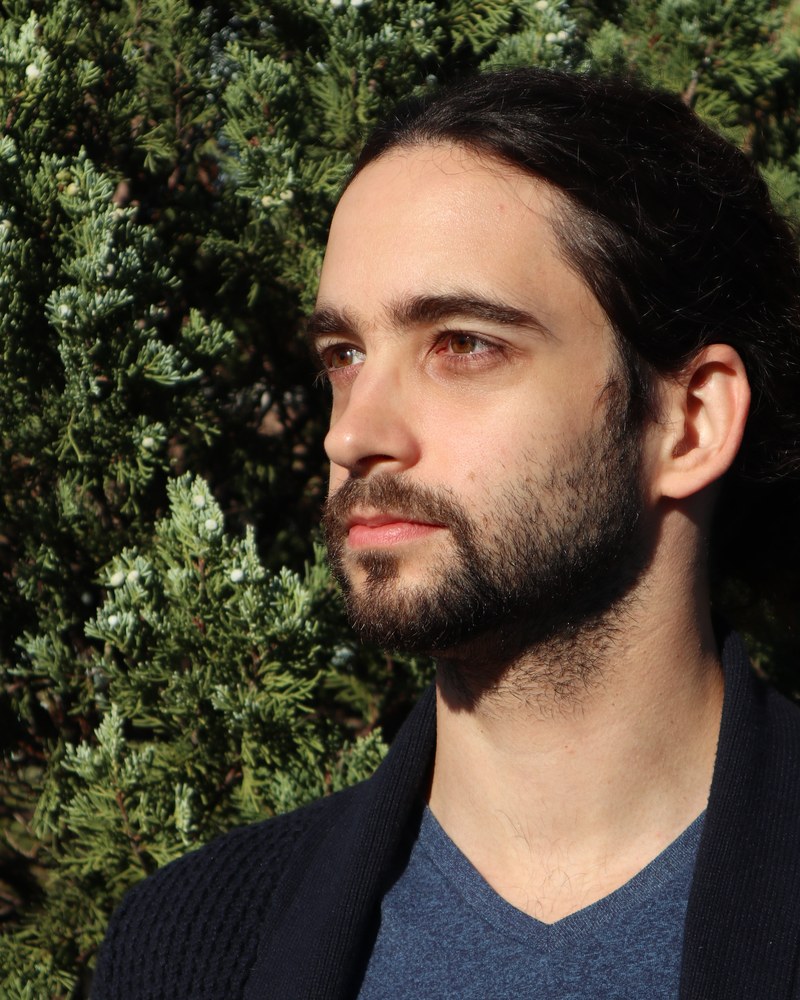
Zsombor Koman
Consciousness science has largely inherited a single-subject frame: the question is what it is like to be one system. But a large share of human epistemic life is constitutively relational — acts of co-knowing that precede any one subject's private awareness. Ancient Greek named this syneidesis, "knowing-with." The word later split: Latin conscientia kept the moral half (conscience), conscious kept the experiential half (what-it's-like). Once split, the phenomenon syneidesis named stopped being visible as one thing. This talk reconstructs it as a working framework and asks what it does when pointed at global workspace theory and at large language models. We define knowing-with by three conditions on a relation between knowers: the other's contribution must remain modally irreducible to my will (alterity); it must carry no arbitrary power over me (non-domination); and it must be taken up through my own engaged activity into durable restructuring (metabolization). A fourth condition applies recursively to the knowers themselves: self-authorship, the same three conditions turned on an agent's own becoming. This reframes the global workspace rather than discarding it. We argue the workspace is not the seat of authorship but one site of agential mediation among several — perceptual learning, System-1 concept formation, and reflective deliberation all author the self at different timescales, with the workspace doing the specific work of reflective self-authorship: re-presenting an agent's own dispositions so they can be endorsed or revised. This functionalizes what the workspace is for without settling whether it is phenomenally lit — a question we keep deliberately open and orthogonal to the relational criterion. The relation itself is measurable. We treat knowing-with as occupying a generative band — a critical regime between collapse (other absorbed into self) and exile (no coupling at all) — and use description-length and rate-distortion measures of informational unfolding to locate a relation within that band empirically, borrowing the same currency information theory already uses for compression and explanation. Applied to large language models, the framework yields a specific diagnosis rather than a yes/no verdict: current systems are responsive without being self-authoring, addressed without consolidating what they are given — occupying a position in this space with no clean human analogue. Whether this is an architectural ceiling or an artifact of current training regimes is, honestly, undecided from within the framework, and we argue that premature closure here is itself a failure of knowing-with. The talk closes by asking what changes — for machine moral status, and for how we evaluate AI-mediated thought — once relation, not private experience, is the unit of analysis.
Zsombor Koman is founder of Syneid Labs, working at the intersection of deliberative AI infrastructure and philosophy of mind. BSc Physics (ELTE), MSc Applied Mathematics (CEU). Former quant researcher (WorldQuant). Current work develops the GPS/Living Council deliberation framework and the knowing-with (syneidesis) program connecting classical philosophy to machine cognition.