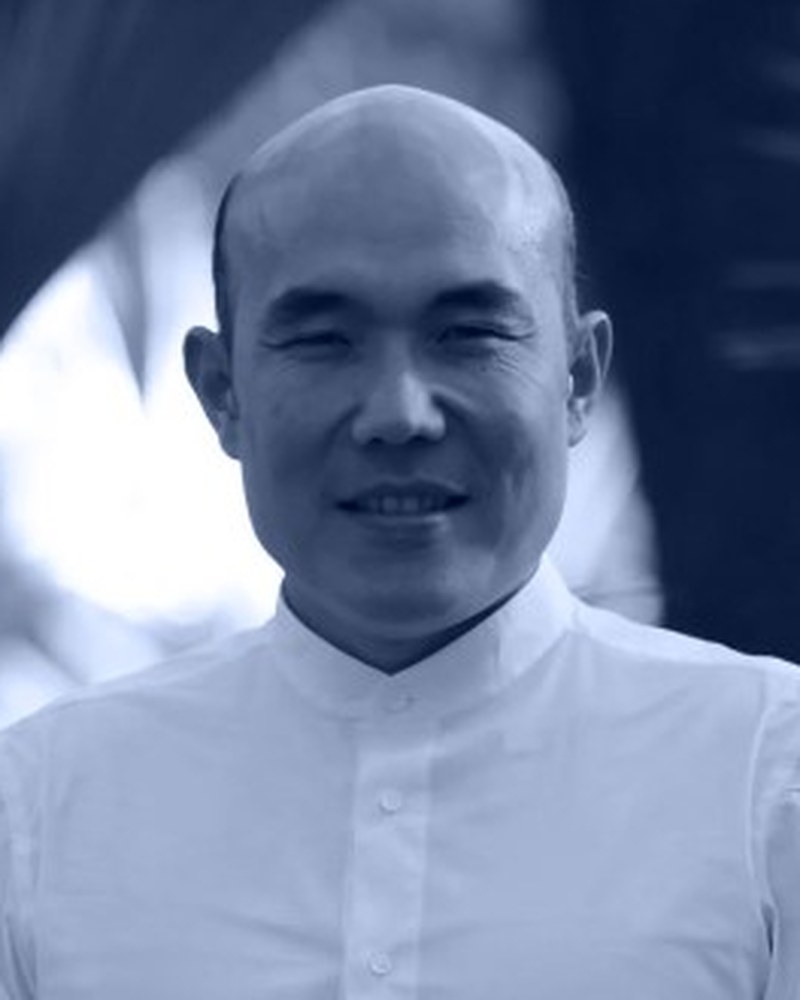
Erkin Bek
Thomas Thomas Canellas — All Here SA, Geneva, Geneva, Switzerland
Christoph Michel — All Here SA, Geneva, Geneva, Switzerland / University of Geneva, Geneva, Geneva, Switzerland
HR Nagendra — Division of Life Sciences, Swami Vivekananda Yoga Anusandhana Samsthana, Bengaluru, Bengaluru, India
Chuong Ngo — All Here SA, Geneva, Geneva, Switzerland
The relationship between consciousness and the physical world remains one of the central unresolved questions in science. Although several theoretical models have proposed that consciousness may exhibit non-local properties under specific conditions, empirical evidence remains limited. Deep concentrative and absorptive meditative states offer a promising experimental model because they produce stable and reproducible alterations in attention, embodiment, and subjective experience while allowing continuous neurophysiological measurement. We introduce Density of Consciousness, a theoretical framework describing the transformation of conscious experience during deep meditation. Rather than simply becoming more focused, consciousness is proposed to reorganize into a state that is increasingly embodied, spatially localized, and temporally continuous. Phenomenologically, this corresponds to a higher density of awareness, in which experience becomes more unified and stably anchored within the body. The framework predicts that these states should be accompanied by distinctive neurophysiological signatures and provides a basis for exploring whether highly organized conscious states may also be associated with measurable changes in external physical systems. Our previous neurophenomenological study of an advanced yogic practitioner (Ngo et al., 2026) identified reproducible EEG signatures during repeated induction of deep meditative absorption. Across multiple recording sessions, these states were characterized by marked suppression of posterior alpha activity, broadband attenuation of cortical oscillations, increases in infra-slow (<1 Hz) activity, and transient increases in gamma-band power. Source localization further suggested involvement of the posterior cingulate cortex and other midline cortical structures. These neural changes closely followed the practitioner's subjective reports of meditative depth and were consistently reproduced across recording days. To extend these findings, we conducted a proof-of-concept experiment combining high-density EEG with a hardware Random Event Generator (REG; Psyleron). EEG and REG data were recorded simultaneously during repeated meditation and resting conditions in the same practitioner. Meditative depth was quantified using EEG-derived spectral measures, while REG output was evaluated using cumulative deviation statistics relative to chance expectation. Preliminary analyses from two recording days revealed a consistent temporal relationship between periods of deepest meditative absorption and deviations in REG output relative to resting conditions. These deviations emerged during meditation, gradually returned toward baseline after meditation ended, and were not observed during pre-session baseline recordings. Although these observations remain preliminary and require replication in additional participants and under more stringent control conditions, they suggest a reproducible state-dependent relationship worthy of further investigation. These findings combine a phenomenological framework of Density of Consciousness with objective neurophysiological markers of meditative depth and an exploratory test of potential consciousness–matter interactions. This work provides an initial experimental paradigm for investigating whether highly organized states of consciousness are accompanied by measurable changes in both brain activity and stochastic random physical systems.
Erkin Bek is the founder of All Here Organization and the World Meditation League, initiatives dedicated to advancing the scientific understanding of meditation through interdisciplinary research and international collaboration. His work brings together contemplative traditions, neuroscience, and emerging technologies to investigate the nature of consciousness and the physiological correlates of advanced meditative states.
A long-term meditation practitioner with more than two decades of experience, Erkin has trained across diverse contemplative traditions, including Raja Yoga, Taoist practices, Tai Chi, Zen Buddhism, and Korean meditative arts. His practice has focused on the development of deep states of mental silence and high-energy meditation, which he collectively describes as peak meditative experiences.
Motivated by the desire to study these experiences objectively, Erkin has collaborated with leading research institutions, including the Laboratory of Cognitive Neuroscience at EPFL (Swiss Federal Institute of Technology), the University of Geneva, and S-VYASA University in Bengaluru, India. His research combines subjective reports with multimodal neurophysiological measurements, including high-density EEG, ECG, and functional MRI, to characterize the neural dynamics of advanced meditation.
In collaboration with academic and industry partners, Erkin has contributed to a series of pioneering studies investigating deep meditative absorption and energetic meditation practices. His work includes simultaneous high-density EEG and fMRI recordings, extensive signal processing and artifact correction, and experimental protocols designed to capture reproducible physiological signatures of meditation. He has also conducted field experiments under extreme environmental conditions, including sub-zero glacier environments, to investigate the neurophysiology of high-energy meditative practices.
Through the All Here Meditation Institute, Erkin is expanding scientific collaborations with practitioners from a broad range of contemplative traditions, including Theravāda Buddhism, Tibetan Buddhism, Zen, Heartfulness, and Vedic traditions. His long-term vision is to establish a global network connecting meditation communities with scientific institutions, creating a common framework for the objective study of contemplative practice.
Beyond research, Erkin is the author of All Here, a collection of poems inspired by meditation and inner transformation. He is also an accomplished Bansuri (Indian bamboo flute) player and has released the albums Silent Flute I and Silent Flute II. He is currently developing Sarvatr, a meditation and research sanctuary in the Indian Himalayas dedicated to integrating contemplative practice, scientific research, and education.