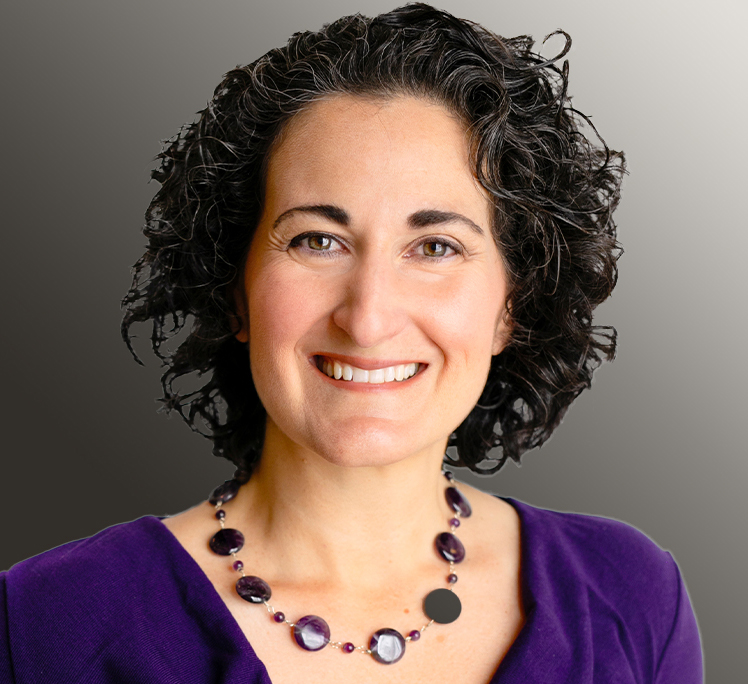
Helané Wahbeh
The prevailing scientific paradigm assumes that consciousness is generated by, and confined to, the brain. This physicalist framework has been extraordinarily productive, yet after decades of research, it has identified neural correlates of consciousness without resolving how subjective experience arises (i.e., Chalmers' "hard problem”). At the same time, experiences suggestive of consciousness operating beyond the body remain strikingly common: surveys across cultures, and among scientists and engineers specifically, report such experiences in a substantial majority of respondents. These are not the province of a credulous fringe but a widespread feature of human life that mainstream science has largely bracketed out. This talk asks a simple counterfactual: what if consciousness is not exclusively brain-bound, but has non-local properties? If so, we should observe specific, testable anomalies. I review the empirical evidence across two directions of non-locality. The first is non-local perception, consciousness receiving information beyond the reach of the senses, including telepathy (the ganzfeld literature and our recent laboratory studies), remote viewing (including the government-sponsored Stargate program and its independent statistical evaluation), and precognition (presentiment physiology and meta-analyzed reverse-priming effects). The second is non-local influence, consciousness affecting living and physical systems at a distance, including distant mental interactions (DMILS), the sense of being stared at, intention effects on biological systems, and human influence on random number generators, both in the laboratory and in the Global Consciousness Project. I then turn to terminal lucidity, in which patients with severe, imaged neurodegeneration recover coherent cognition shortly before death, a phenomenon difficult to reconcile with strictly brain-generated models of mind. Each of these findings is individually modest, and each invites legitimate scrutiny: small effect sizes, experimenter effects, and the perennial question of whether some future physicalist mechanism will account for them. I address these critiques directly. But the central argument is one of convergence. Independent lines of evidence, different laboratories, methods, phenomena, and decades, point in the same direction, and no single conventional explanation accounts for all of them at once. This is how previously "impossible" ideas, from black holes to continental drift, eventually earned scientific acceptance. The conclusion is not to discard physicalism but to expand it, to treat materialism as a special case within a larger account of reality that includes consciousness as, in some respect, fundamental. I close with a call for precise, falsifiable, and collaborative research into the mechanisms, moderators, and applications of non-local consciousness.
Helané Wahbeh, ND, MCR, is Director of Research at the Institute of Noetic Sciences, where she leads rigorous interdisciplinary research on consciousness, health, and extended human capacities. She earned a Master of Clinical Research through Oregon Health & Science University’s Human Investigations Program, completed two postdoctoral research fellowships, and received a five-year National Institutes of Health K award for advanced training in clinical research, neuroscience, electrophysiology, and biostatistics. Dr. Wahbeh is especially known for her pioneering research on channeling, has authored more than 100 peer-reviewed journal articles, and brings more than 25 years of dedicated meditation practice to her work at the frontiers of noetic science.