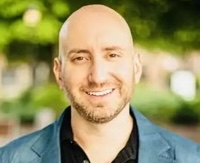
Mark Bailey
Cemeron Berg — Reciprocal Research, New York, NY, USA
Susan Schneider — Florida Atlantic University, Boca Raton, FL, USA / Center for the Future of AI, Mind, and Society (AIMS), Boca Raton, FL, USA
A central challenge in consciousness science, neuroscience, and AI is to determine when a system should be treated as a collection of separable parts and when its organization makes such decomposition empirically misleading. Integrated Information Theory has made this question central to consciousness research, but exact causal measures of integrated information remain difficult to compute in realistic biological or artificial systems. At the same time, practical science requires scalable tools for detecting when observed dynamics exhibit integration, modularity, redundancy, or shifting coalition structure. We present a spectral framework for addressing this problem in an explicitly observer-relative and measurement-driven way. The method begins by constructing a pairwise mutual-information graph from multivariate time-series data, neural activations, or internal representations. Nodes represent components of the system, and edge weights represent statistical dependence between components. A normalized graph Laplacian is then computed, and the Fiedler vector identifies the least-disruptive bipartition of the mutual-information graph. The scalar statistic Φspectral reports the fraction of total pairwise mutual information that crosses this partition. High values indicate that even the most natural decomposition leaves substantial informational coupling across the cut, while low values suggest that dependencies are localized within modules. Importantly, the partition itself is also informative: it identifies where the system most naturally separates, rather than merely assigning a single global score. Across exploratory dynamical systems, Φspectral distinguishes several regimes that are often conflated: noisy independence, transient differentiated integration, near-uniform redundancy, and topology-driven compression into lower-dimensional attractors. These cases clarify both the promise and the limits of the approach. The measure is not a substitute for exact causal Φ, nor does it define a threshold for consciousness. Instead, it provides a tractable diagnostic of second-order functional integration under an explicit observational protocol. We further extend this framework from whole-system integration to the detection of hidden coalitions in artificial multi-agent systems. In controlled reinforcement-learning environments, mutual-information graphs built from agents’ hidden states recover hierarchical group structure, track dynamic reassignment of agents between coalitions, and reject false positives in which agents behave similarly without representational coupling. In language-model experiments, the same spectral machinery applied to token-position representations recovers explicit and implicit relational structure, tracks described team reassignment, and reveals a dissociation between label-based and interaction-based organization. Together, these results suggest a general measurement strategy for consciousness-relevant complex systems: use spectral structure in informational-dependence graphs to ask when integration is distributed, when modular boundaries are present, and when observed behavior obscures deeper representational organization. The framework does not claim that integration alone is consciousness, nor that passive mutual information establishes intrinsic causal unity. Its value lies in providing a scalable, interpretable bridge between complex-systems theory, neuroscience, AI safety, and empirical consciousness research.
Dr. Mark Bailey is the Associate Director of the Center for the Future of AI, Mind, and Society. He is also a Research Affiliate Professor in the Department of Electrical Engineering and Computer Science, and the Co-Founder of DataField Intelligence, LLC. Previously, Mark was an Associate Professor at the National Intelligence University, where he served as Department Chair for AI, Cyber, Influence, and Data Science and as Director of the Biological and Computational Intelligence Center. Mark is the award-winning author of Unknowable Minds: Philosophical Insights on AI and Autonomous Weapons. He is also an Officer in the U.S. Army Reserve.